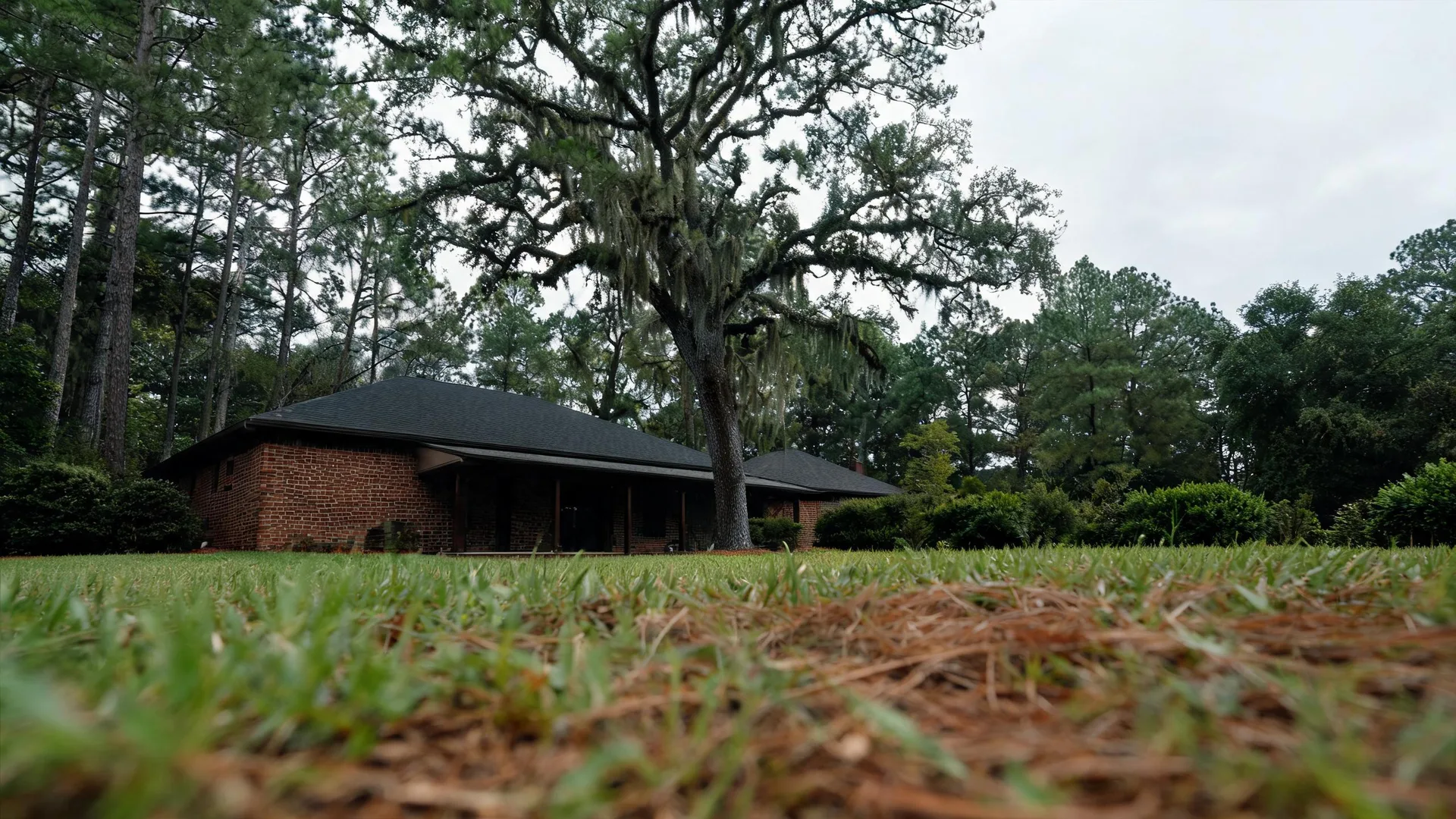
Low ground-level view across a lawn toward a single-story brick house with a dark shingled roof, framed by a large moss-draped oak and tall pine trees under an overcast sky.

Furnace Repair in Natchitoches, LA

Tell us about the job

Takes about a minute. No obligation.

RepairFurnace or heatingNatchitoches Parish, LA
Step 1 of 2

What ZIP code is the job in?

A cracked heat exchanger gets worse under heat

Every time the furnace fires, the heat exchanger expands, and a crack that started small opens wider under that stress. Left alone, a crack that once just leaked combustion gas can grow large enough to leak carbon monoxide into the air the blower moves through the house.


A bad igniter or flame sensor wears out its backup

When an igniter is failing, the furnace often tries again and again to light, and each failed attempt adds wear to the control board running the sequence. A problem with one part can turn into a problem with the board too if it runs too long in that state.

5 months
November through March, your furnace is on duty
39°F
the average winter night it heats against
3 winter storms
in ten years, the nights a failure hurts most
Isometric line illustration of a cutaway single-story house with a shingled roof, showing an interior furnace connected to ductwork and a tall vertical flue pipe, plus simple furniture in the adjacent room.
Your furnace works hardest from November through February.

NOAA nClimDiv, 1991–2020 normals

Furnaces in Natchitoches Parish only run about five months a year.

A furnace with that light a workload usually has a lot of good life left in it, so repair is worth doing.

Furnace trouble in Natchitoches shows up first in November

Heat runs November through March
Winter nights average 39°F
Climate zone 3A

Half the homes in Natchitoches Parish were built in 1984 or earlier, and half in 1984 or later, so furnace age here comes down to the house, not the parish. A furnace in a newer build still has most of its life ahead. One that's been running since the house was built in the 1980s is a different question, crack or no crack. Close to a quarter of homes in the parish are mobile homes, and those run on the same furnace types as any house, just with a shorter duct run to heat. None of that changes what a tech checks first. It changes whether the fix is worth doing, and that comes down to the unit in front of them, not where it sits.

It's usually worth repairing

It has an easier job here than in most places, so your furnace is often in decent shape. Repair is usually worth it.

Find a contractor
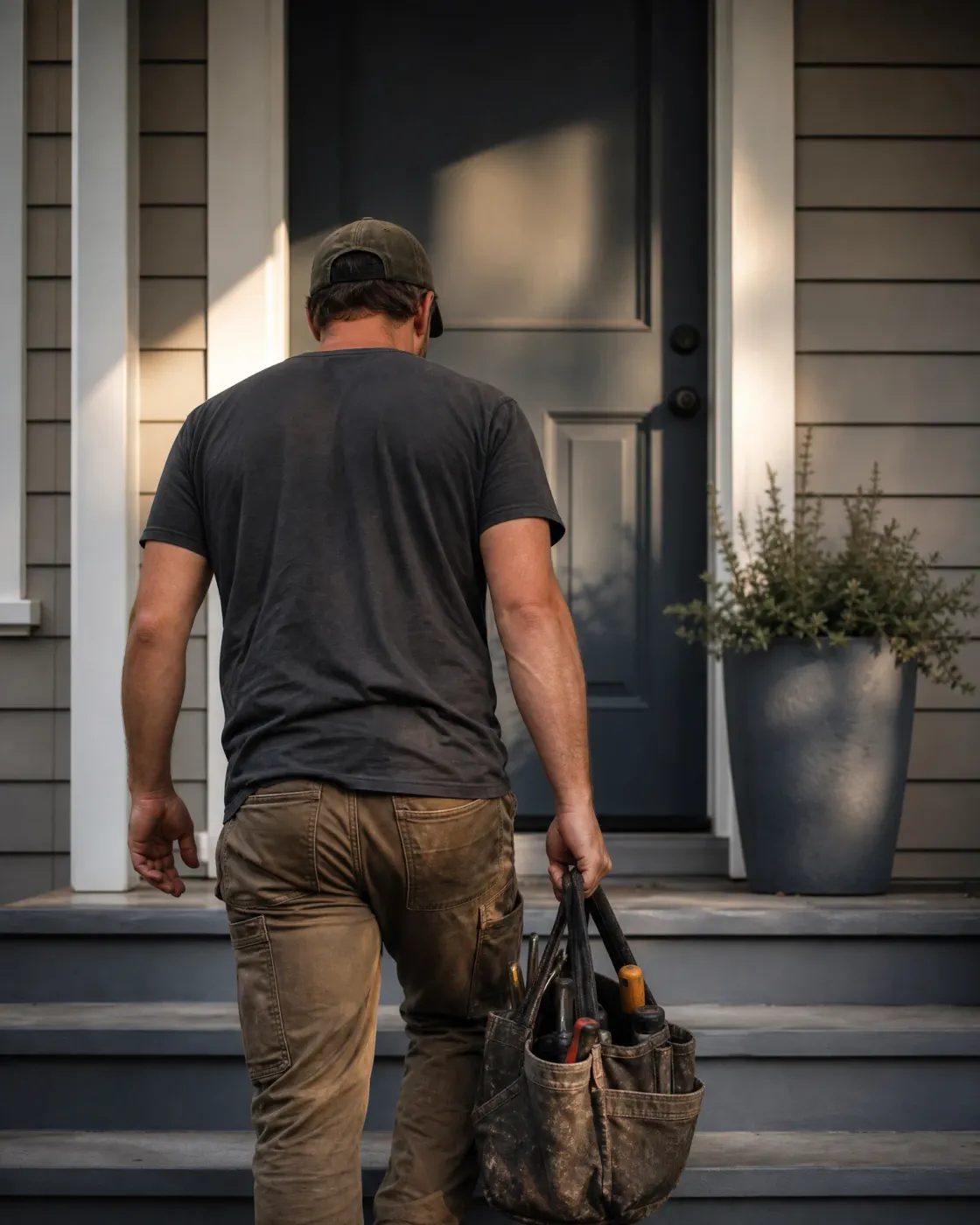
A man in a cap, dark t-shirt and worn tan work pants walks up steps toward a dark front door, carrying a canvas tool bag filled with tools, beside a potted shrub.
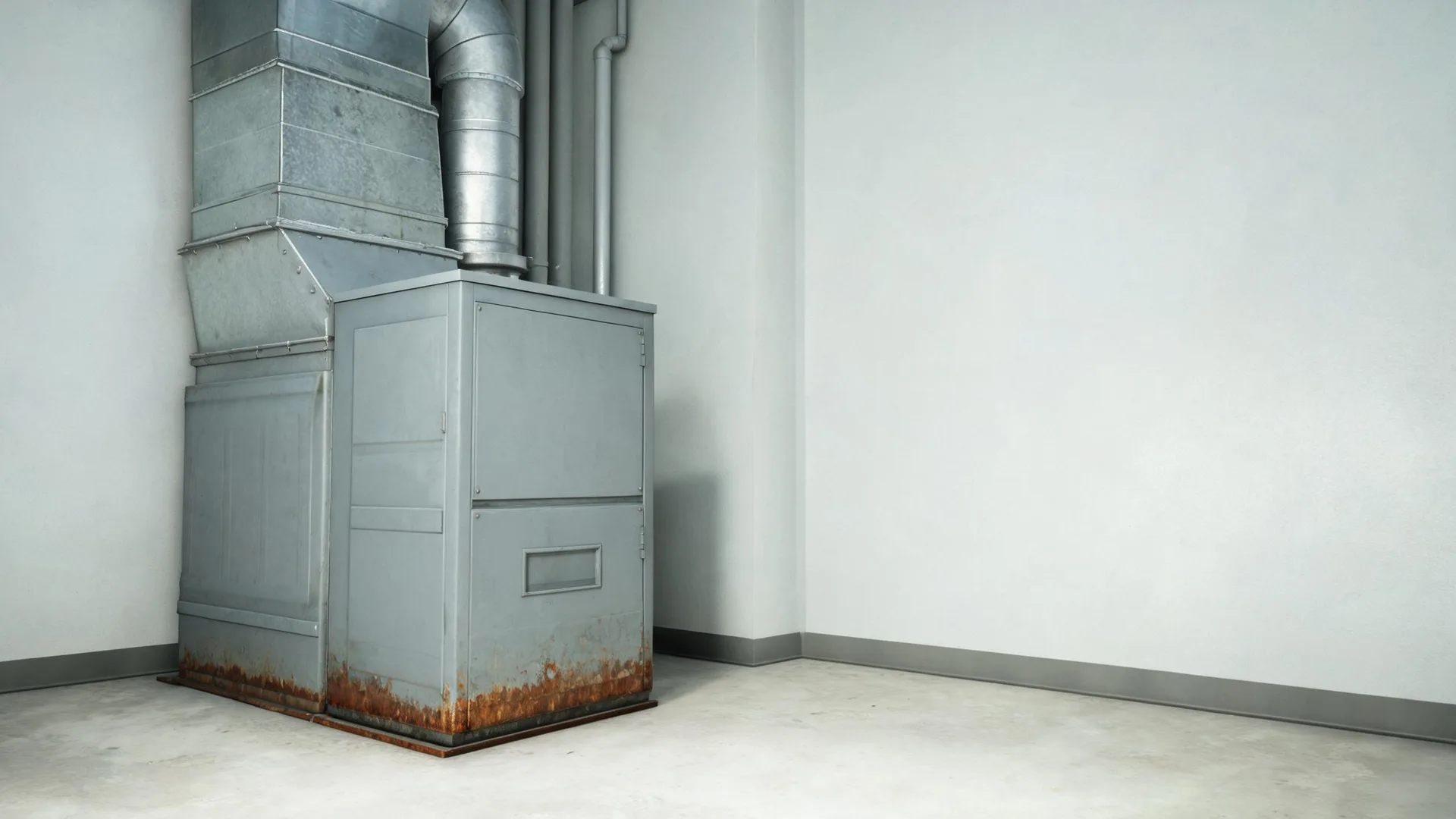
A gas furnace with attached ductwork, gas piping, and condensate lines installed in a concrete-block basement.

What to check before anyone comes out

Before anyone comes out, check the thermostat first. Make sure it's set to heat, not cool, and that the set point is actually above room temperature. Dead batteries in the thermostat stop the whole sequence before it starts, and that looks exactly like a dead furnace from across the room. Next, check the power switch on the furnace itself, the one that looks like a light switch on the side of the unit, and check the breaker. Then look at the air filter. A filter packed with dust chokes airflow, and a furnace that can't move enough air will overheat and shut itself off on a safety switch, which looks like a furnace that won't stay running. If the filter's clogged, swap it. Last, check that supply vents around the house are open and not blocked by furniture or rugs. None of this touches gas lines, wiring, or anything behind a panel, and it shouldn't. If the furnace still won't fire after that, the problem is inside it, and that's where the checking stops and the call starts.

The tech watches the furnace run before touching anything

A technician starts by letting the furnace go through a full cycle, start to shutoff. The flame tells most of the story. It should burn steady and blue. A flame that's yellow or lifting off the burner points to a combustion problem, and that gets checked first because it touches on carbon monoxide, not just whether the furnace runs.

From there it's elimination, not guesswork

A furnace fires in the same order every time. Thermostat calls for heat, igniter lights, gas valve opens, flame sensor confirms the flame, blower kicks on. The tech tests each step with a meter and finds where the sequence breaks down. Wherever it stops is the failed part. Most visits end with one part named, not a handful of maybes.

Most calls start with the furnace not heating at all, or not keeping up. Sometimes the thermostat calls for heat and nothing happens, not even an attempt to light. That points upstream, to the thermostat itself or a power or safety switch feeding the furnace. Other times it tries and fails, clicking or sparking without catching. That usually means a weak igniter or a flame sensor too coated to do its job. A furnace that short cycles, running briefly and shutting off before the house warms up, is often overheating and tripping a safety switch, sometimes because airflow is blocked somewhere between the blower and the vents. A bang at startup means gas is building before it lights. A grinding or squealing blower points to the motor or its bearings. None of these mean the same fix, but all of them mean the furnace is telling you something before it quits for good.

A repair decision usually comes down to what failed, not how old the furnace is. A cracked heat exchanger is the one thing that ends the conversation. That part isn't sold on its own, and swapping it costs close to what a new furnace would. Almost everything else on a furnace gets replaced as a single part. An igniter, a flame sensor, a pressure switch, a control board, each one stands on its own. None of those failing says anything about the rest of the furnace. A tech who finds a bad igniter isn't looking at a furnace in decline. That's a furnace with one worn part. The harder calls are the ones where a part fails a second or third time in a few years. That pattern usually means something else is making that part work harder than it should, and it's worth asking what, rather than replacing the same part again.