




Night view of illuminated white Southern-style houses with wraparound porches beneath Spanish moss-draped oak trees.

Furnace Repair in Napoleonville, LA

Tell us about the job

Takes about a minute. No obligation.

RepairFurnace or heatingAssumption Parish, LA
Step 1 of 2

What ZIP code is the job in?

October is worth paying attention to here. Furnaces in Assumption Parish sit idle most of the year and come back on in November, and the first cold night is when a weak igniter or a clogged flame sensor finally gives out. The part did not fail from the cold. It failed because it was already going, and the furnace is finally asking something of it. A furnace that ran fine last March can still have a problem that sat quiet all summer. Getting it looked at before November means finding that out on your schedule, not on the first cold night of the season.

5 months
November through March, your furnace is on duty
45°F
the average winter night it heats against
1 winter storms
in ten years, the nights a failure hurts most
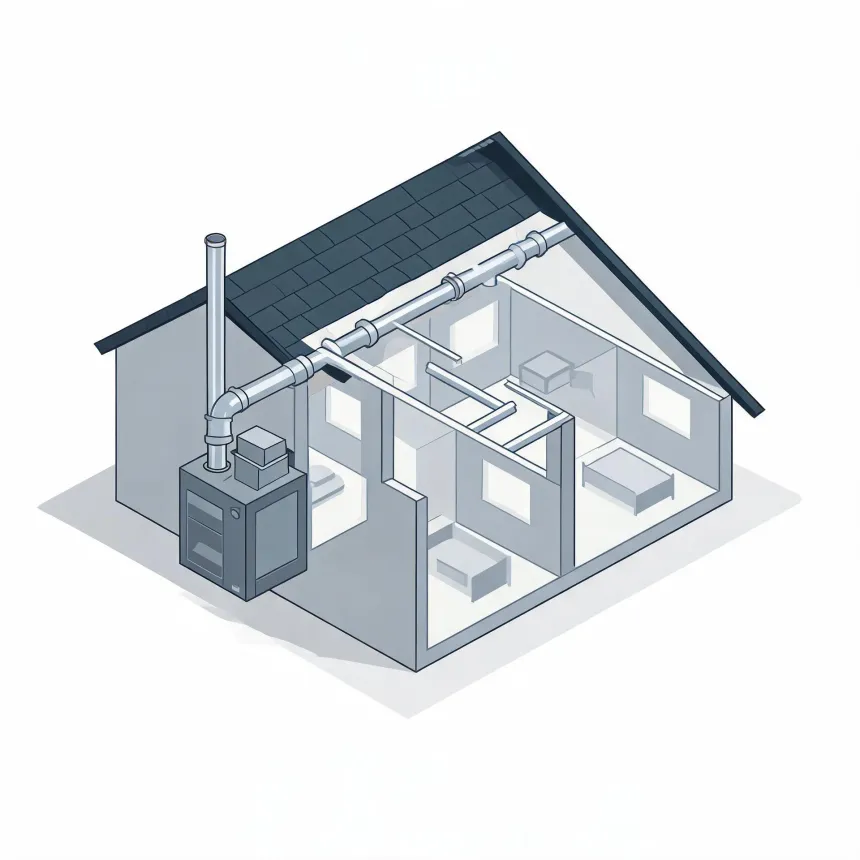
Isometric cutaway illustration of a small house showing interior rooms, ductwork running through the attic, and a furnace unit with a vertical flue pipe on the exterior wall.
Your furnace works hardest from December through February.

NOAA nClimDiv, 1991–2020 normals

Furnaces here only run about five months a year, November through March.

A furnace that isn't asked to work much tends to hold up, so a repair is usually worth making.

A furnace problem here is almost always a simple one

Half the homes here were built by 1983
Climate zone 2A
Heat runs November through March

Assumption Parish has seen 22 severe weather events over ten years, counting wind, hail, tornadoes and tropical storms. None of that is aimed at your furnace. Wind and hail go after the roof and the siding, not the furnace sitting in a closet or attic. The one thing worth knowing is the power. When storms knock it out, your furnace can't run even if every part inside it is fine, and it should come back on by itself once power is restored. That's a different problem than a broken furnace, and it's worth telling apart before you call anyone.

A furnace with this easy a life is usually worth repairing

A furnace that only runs five months a year doesn't rack up the wear one running most of the year does. If yours is acting up, the cause is more likely a worn part than a system beyond saving. Worth getting it looked at before you decide to replace anything.

Find a contractor
A man in a dark long-sleeved shirt and brown pants walks up concrete steps toward a dark blue front door, carrying a canvas tool bag with tools in it, beside a potted shrub.
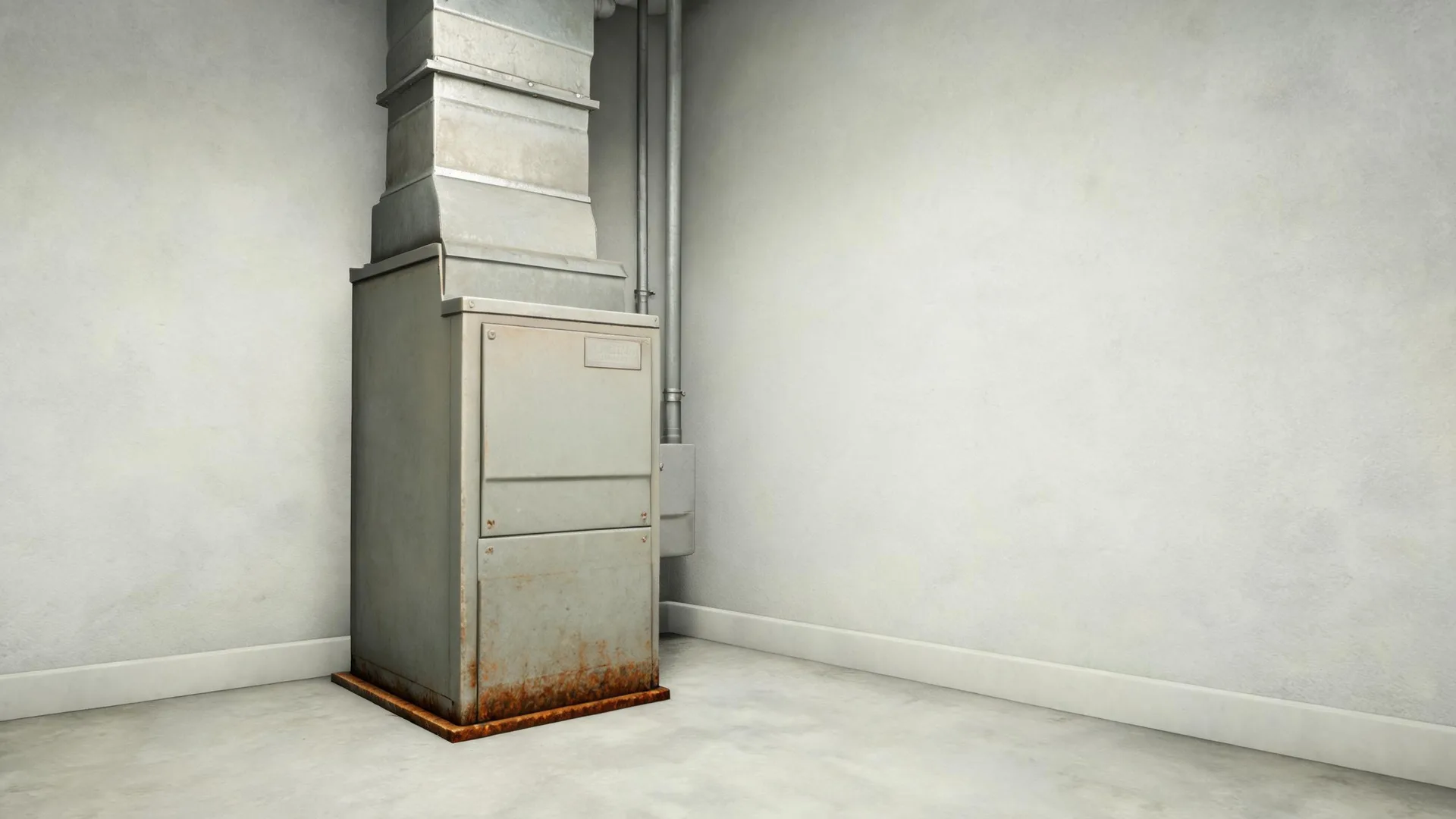
A gray residential gas furnace installed in an unfinished basement, surrounded by ductwork, a metal flue pipe, and a gas supply line.

What you can rule out yourself

Start with the thermostat. Make sure it is set to heat and set a few degrees above room temperature. Check the filter next. If it is gray and packed with dust, swap it. A blocked filter starves the burners of air and can shut the whole system down on its own. Look at the switch on the side of the furnace, the one that looks like a light switch, and make sure it hasn't been bumped off. If the furnace sits in a closet or utility room, check that the door is latched. Some models have a safety switch that won't let the furnace run with the door open. Go to the breaker panel and look for anything tripped. If your furnace has a glass window, look for a steady blue or orange flame. No flame at all, or one that won't stay lit, is worth telling the tech before they get there.

What you'll notice first

The furnace runs but the air coming out is cool or barely warm. Or it tries to start and won't, clicking a few times before it gives up. Some furnaces short cycle, turning on and off every few minutes instead of running a full heating cycle. Others get loud in a way they weren't before, a rattle from the blower or a screech on startup. Any of these is the furnace telling you something specific is wrong, not a reason to wait and see.
What's worth a same-day call

A burner flame that's flickering yellow instead of steady blue, or a smell like something burning that doesn't fade after the first few minutes of a cycle. Both point to a combustion problem, and a furnace that isn't burning gas cleanly shouldn't keep running until someone looks at it. Everything else on this list can usually wait for a normal appointment.

Most furnace failures trace back to a handful of parts that do the same job over and over until they don't. The igniter is the one that goes most often. It's a thin strip that heats up and glows to light the burners, and that heating and cooling, cycle after cycle, is what eventually cracks it. A flame sensor fails a quieter way. It's there to confirm the burners actually lit, and over time it builds up a coating that keeps it from sensing anything, so the furnace shuts itself off as a safety step. A blower motor usually goes from the bearings out, a little more noise each season before it finally seizes. Gas valves and control boards fail less often, but when they do it's usually age rather than any one bad cycle. None of these are wear you can see coming from the outside. They show up as the furnace not lighting, not staying lit, or not pushing air, and the part behind it is almost always one of these.

A diagnostic starts before any panel comes off. A tech runs the furnace through a full cycle, listening for where it hesitates, how long it takes to light, whether the blower comes on smooth or labors into it. Then the covers come off and it's a gas pressure check, a look at the flame through the viewing window, and a check of the flue for proper draft. The igniter gets tested for resistance, not just looked at, because one can glow and still be too weak to light the burners reliably. Wiring connections get checked at the control board, since a loose connector can look exactly like a failed part until someone wiggles it. By the end the tech isn't guessing what's wrong, they're showing you the reading or the part that proves it.