



Single-story brick and cream-sided houses with covered porches behind a trimmed hedge and lawn, shaded by large oak trees draped with Spanish moss under an overcast sky.

Furnace Repair in Monroe, LA

Tell us about the job

Takes about a minute. No obligation.

RepairFurnace or heatingOuachita Parish, LA
Step 1 of 2

What ZIP code is the job in?

A furnace that's struggling will tell you before it quits for good, and running it through those warnings is how a small problem turns into a bigger one. A cracked heat exchanger gets worse under repeated heat and cooling, and the longer it runs, the more chance exhaust leaks where it shouldn't. A failing igniter or flame sensor will keep trying to light the burner and keep failing, and each attempt stresses parts that are already wearing out. A clogged filter forces the blower motor to push harder to move air, and a motor worked that hard long enough burns out instead of just needing a cleaning. If the furnace is short cycling, shutting off before it finishes a heating cycle, that usually means it's protecting itself from overheating, and letting it continue just adds wear to the same component that's already failing.

5 months
November through March, your furnace is on duty
37°F
the average winter night it heats against
5 winter storms
in ten years, the nights a failure hurts most
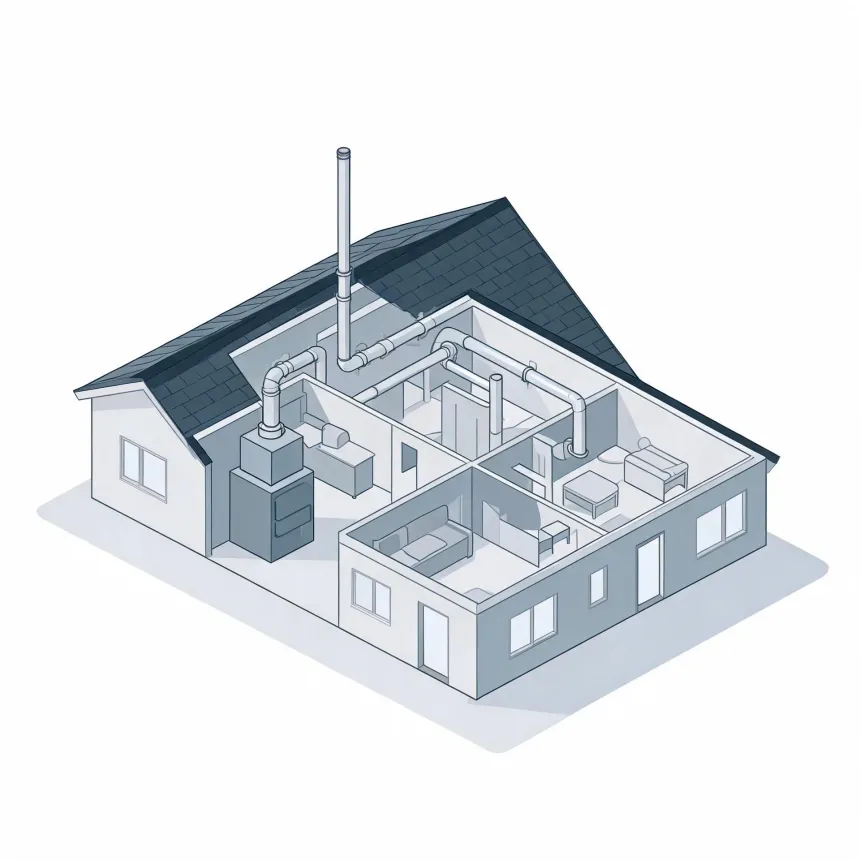
Isometric cutaway illustration of a single-story house showing interior rooms with furniture, a furnace unit connected to ductwork and a tall flue pipe extending through the roof.
Your furnace works hardest from November through February.

NOAA nClimDiv, 1991–2020 normals

Furnaces in Ouachita Parish only run about five months a year, November through March.

A furnace that only has to work five months a year usually has less wear built up, so a repair here is often worth doing.

Five months of work a year means most furnaces here are worth fixing, not replacing

Heat runs November through March
Winter nights average 37°F
5 winter storms from 2015 to 2024

October is worth paying attention to here. Heat starts running in November, and whatever was already weak in the furnace tends to show up in those first cold weeks, not in the middle of winter. A part that was close to failing in March had all summer to sit, and the first real call for heat is what finds it. Getting a furnace looked at before November, rather than after it's already struggling, means catching a worn igniter or a weak flame sensor before it leaves you without heat on a cold night.

It's usually worth repairing

It has an easier job here than in most places, so your furnace is often in decent shape. Repair is usually worth it.

Find a contractor
A man in a dark shirt and brown pants carries a worn canvas tool bag up concrete steps toward a gray-blue front door of a house with horizontal siding and a potted shrub.
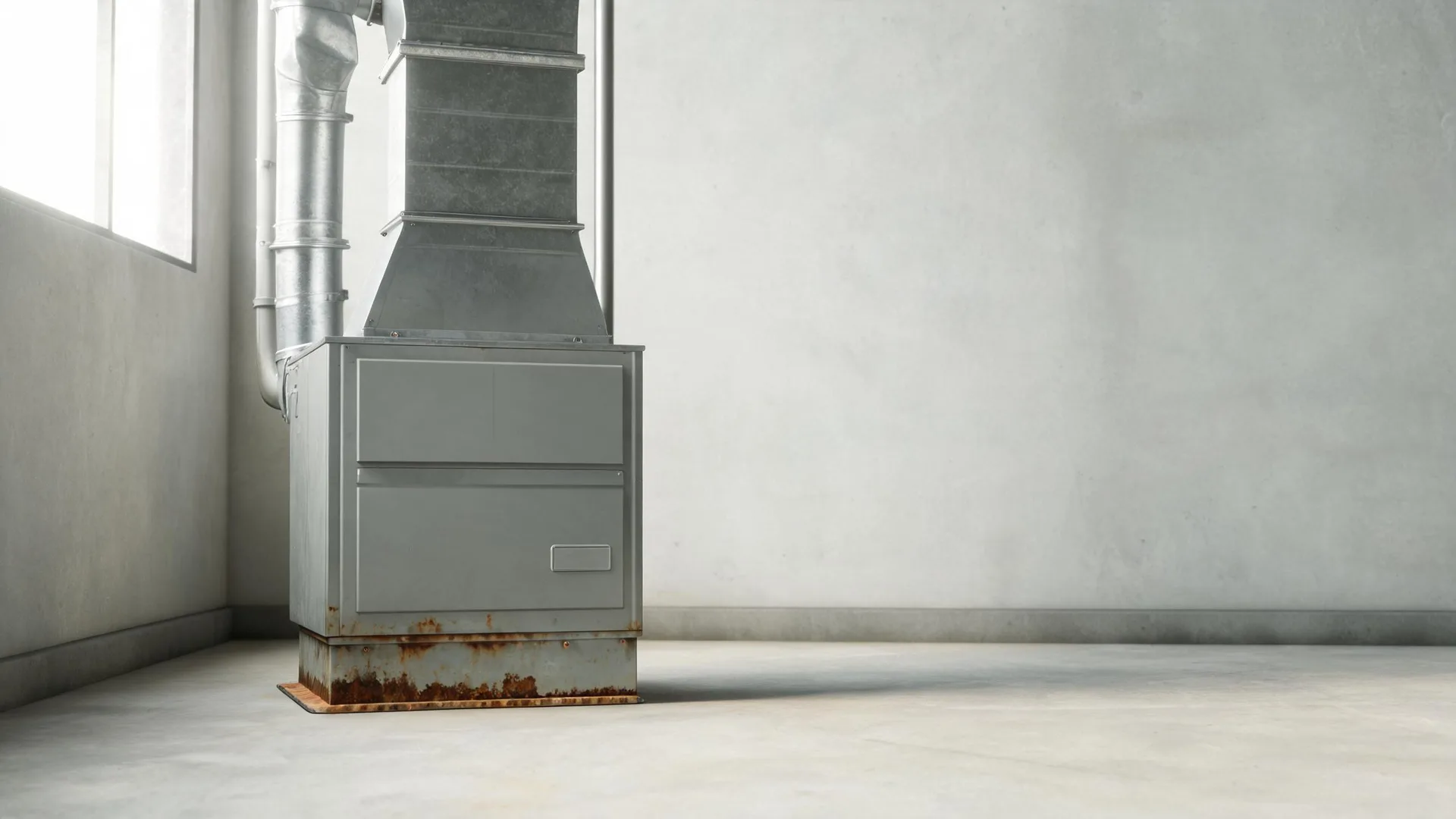
A gas furnace with attached ductwork, gas piping, and condensate lines installed in a concrete-block basement.

A newer furnace is usually a fixable one

Half the homes in Ouachita Parish were built in 1983 or later. If yours is one of them, the furnace inside it is probably newer too, especially if it's the one the house came with. A furnace that age still has most of its working life ahead of it. Something going wrong now is more likely a part worn out or wired loose than the unit itself giving out.

Most failures start with ignition

A furnace that won't light is usually down to a dirty flame sensor or a cracked igniter, not something bigger. The flame sensor tells the control board a flame is actually burning, and once it's coated with residue it can't do that job, so the furnace shuts the gas back off as a safety measure. An igniter just wears out with age and use, the way any heating element does, until it stops glowing hot enough to catch the gas.
Airflow problems cause the rest

A lot of what looks like a failing furnace is really a furnace being choked. A blocked filter or a blower wheel caked with dust makes the motor strain to move the same amount of air, and that heat has nowhere to go but back into the furnace itself. Left alone, that's what pushes a limit switch to trip or a blower motor to burn out well before it should have.

Check the thermostat first. Make sure it's set to heat, not just fan, and that the temperature is set above room temperature. Check the breaker for the furnace and the switch that looks like a light switch near the unit, sometimes mounted on the side where it's easy to bump off. If you have a gas furnace, make sure the gas valve is open and that any other gas appliance in the house is working. Pull the filter and hold it up to a light. If you can't see light through it, that's enough to choke the airflow and worth swapping before anything else. If the furnace is trying to light and shutting back off, that's not something to keep testing on your own. Repeated ignition attempts put stress on parts already struggling, and that's where a call is worth making instead of waiting.

A diagnostic call starts at the thermostat, not inside the furnace. The tech checks that the call for heat is actually reaching the control board before touching anything mechanical. A bad thermostat wire can look exactly like a dead furnace if you skip that step. From there the tech watches the sequence of operation. Does the inducer motor start. Does the igniter glow. Does the flame sensor pick up a flame once the burner lights. Wherever that sequence stops is where the problem lives. A multimeter checks voltage and resistance at that part instead of guessing from how the furnace sounds or acts. Once the bad part is found, the tech can tell you if it failed on its own or if something upstream is wearing it out early.