A illuminated white antebellum-style house with a wraparound porch, white columns, and Spanish-moss-draped oak trees, photographed at dusk.

Furnace Repair in Marksville, LA

Tell us about the job

Takes about a minute. No obligation.

RepairFurnace or heatingAvoyelles Parish, LA
Step 1 of 2

What ZIP code is the job in?

Check the thermostat and the switch first

Make sure the thermostat is set to heat and the temperature is actually above room temperature. Check the furnace switch, the one that looks like a light switch near the unit, and make sure nothing bumped it off. Look at the breaker too. These sound too simple to matter, but a tripped breaker or a flipped switch looks exactly like a dead furnace.

A dirty filter explains a lot of symptoms

Pull the filter and hold it up to a light. If you can't see light through it, it's choking the airflow, and that can make a furnace blow cool air, shut off early, or run constantly without warming the house. A clogged filter is something you can fix yourself. If the filter is clean and the problem is still there, the issue is further in and it's time to call someone.

5 months
November through March, your furnace is on duty
41°F
the average winter night it heats against
3 winter storms
in ten years, the nights a failure hurts most
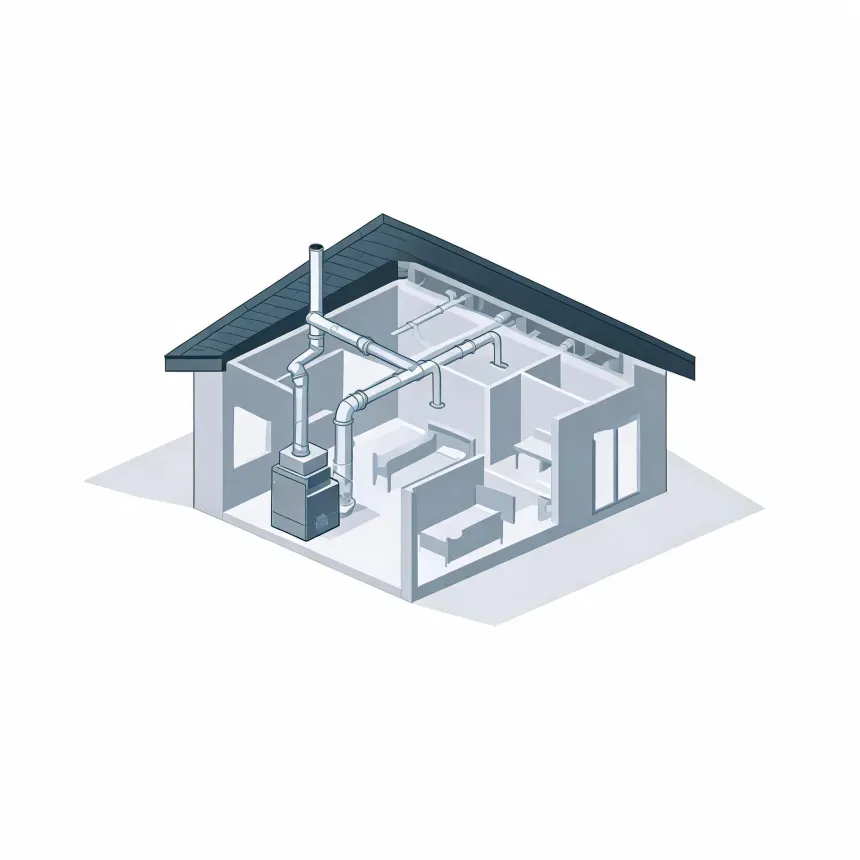
Isometric cutaway illustration of a small single-story house showing interior rooms, a furnace unit with a flue, and connected ductwork running below the dark gabled roof.
Your furnace works hardest from December through February.

NOAA nClimDiv, 1991–2020 normals

Furnaces in Marksville only run about five months a year, November through March.

A furnace that gets months of rest every year is usually a good candidate for repair instead of replacement.

Half these homes were built by 1980. Age isn't why your furnace quit.

Half the homes here were built by 1980
Heat runs November through March
Winter nights average 41°F

Most furnace problems announce themselves through what you hear and feel, not what you see. A banging or popping from the ducts when the furnace starts usually means the metal is expanding too fast, often because airflow is restricted somewhere. A furnace that starts, runs for a minute, and shuts off, then tries again a few minutes later, is short cycling, and that points to a flame sensor or a limit switch rather than anything random. If the air coming out feels lukewarm instead of hot, the burners may be lighting but not staying lit long enough to do their job. A rotten egg smell is gas, and that one means out of the house and call from outside, not a wait and see. Rattling that wasn't there before is usually a panel working loose or a motor mount wearing out, and either way it gets worse until someone tightens or replaces it.

It's usually worth repairing

It has an easier job here than in most places, so your furnace is often in decent shape. Repair is usually worth it.

Find a contractor
A gray high-efficiency gas furnace installed in an unfinished basement, surrounded by gas lines, a condensate drain, and sheet-metal ductwork.

Idle most of the year

The day-into-night clip shows one stretch of a five month season. Outside the rest of the year, this furnace sits idle, and a 41 degree average night in winter here is not a hard pull for it to heat against. So when a part fails, it's usually that one part, worn out on its own schedule, not the furnace breaking down from overwork. That's worth knowing before you decide whether to fix it or replace it.

A small problem can turn into a bigger repair

A furnace that short cycles or makes a new noise is telling you something is already failing. Keep running it and the part under strain, a blower motor, an igniter, a cracked heat exchanger, works harder to do the same job. Heat exchangers especially do not heal. A hairline crack that is survivable today spreads with every heat cycle until it fails outright or starts leaking exhaust into the air the blower moves through the house.

Shutting it off until the tech arrives is the right call

If the furnace is making a burning smell, tripping its switch repeatedly, or the flame looks yellow instead of blue, turn it off at the switch and wait for a technician instead of running it one more night. A furnace that is cycling properly but just not warming the house all the way can usually keep running while you wait. The difference is whether the symptom is a comfort problem or a safety one.

Most furnace failures start with something small that fails to do its job quietly. The igniter is a common one. It glows to light the gas and it wears out from heating and cooling every cycle, until one day it doesn't get hot enough and the furnace tries, fails, and tries again. A flame sensor does something similar. It tells the control board a flame is actually burning, and when it gets coated with residue it can't sense the flame anymore, so the furnace shuts itself off as a safety measure. Blower motors fail differently, usually from age or from a bearing that finally gives out, and you'll hear it before it quits, a grinding or squealing that gets worse over weeks. The capacitor that helps start that motor can also just wear out on its own, no warning noise at all. None of these mean the furnace is done. Each one is a single part doing a single job, and when that job stops getting done, the furnace tells you in its own way.

A diagnostic visit starts before any panel comes off. A tech asks what the furnace was doing, when it started, and whether it's constant or comes and goes. Then the cover comes off and they watch it run through a full cycle, because some problems only show up at ignition and others only show up once the furnace has been running a while. They'll check the flame, look for the right color and shape, and pull the flame sensor to check it for buildup. They'll test the igniter for resistance rather than just looking at it, since a cracked igniter can still glow and still fail. A meter comes out for the capacitor and the blower motor's amp draw. None of this takes long once the furnace is apart. The time is in finding which single part stopped doing its job, not in replacing it.