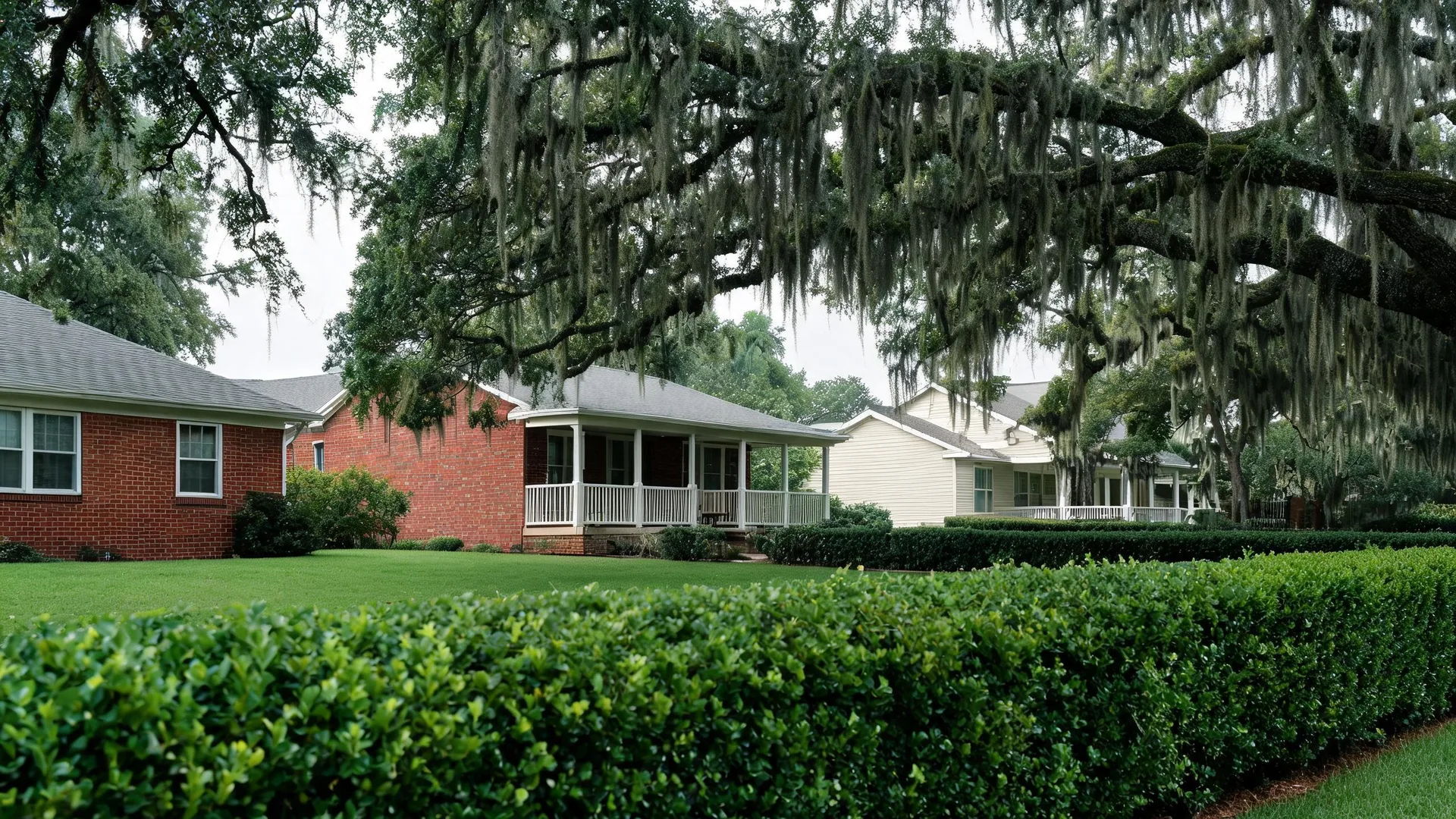




A row of single-story houses, one of red brick and others with light siding and a covered porch, behind a mown lawn and a trimmed hedge, under large moss-draped tree branches and an overcast sky.

Furnace Repair in Mansfield, LA

Tell us about the job

Takes about a minute. No obligation.

RepairFurnace or heatingDe Soto Parish, LA
Step 1 of 2

What ZIP code is the job in?

Most furnace trouble traces back to a handful of usual suspects. The igniter wears out from repeated heating and cooling cycles and either glows weak or stops lighting the burners at all. The flame sensor coats over with a thin film and tells the control board no flame is present when there really is one, so the furnace shuts itself down as a safety measure. A dirty filter chokes airflow, and that makes the heat exchanger run hotter than it should, which can trip a limit switch or shorten the exchanger's life. Inducer motors and blower motors wear out like any motor does, bearings first, then the windings. Loose or corroded wiring at the control board causes intermittent faults that look random but usually trace back to one bad connection.

5 months
November through March, your furnace is on duty
38°F
the average winter night it heats against
4 winter storms
in ten years, the nights a failure hurts most
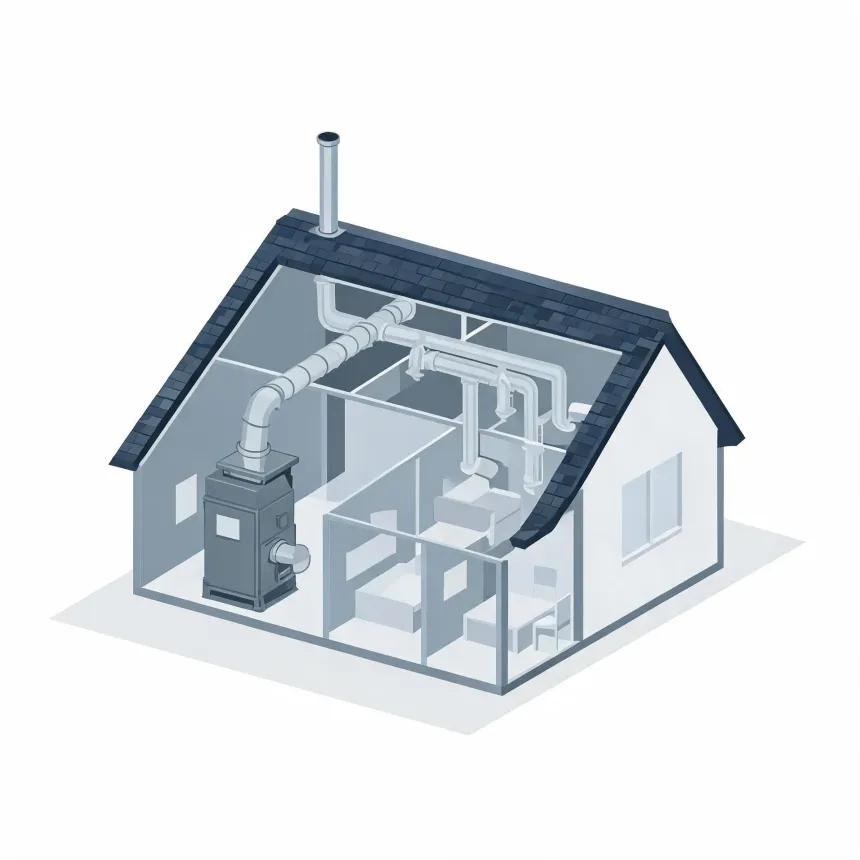
Isometric cutaway illustration of a small house showing a gray furnace unit with a flue pipe through the roof and branching ductwork running to rooms with simple furniture.
Your furnace works hardest from November through February.

NOAA nClimDiv, 1991–2020 normals

Furnaces in De Soto Parish only run about five months a year, November through March.

A furnace that rests most of the year usually has less wrong with it than its age suggests.

Mansfield furnaces don't work hard enough to earn unusual problems

Half the homes here were built by 1990
Heat runs November through March
Winter nights average 38°F

October is worth a look before the furnace starts up in November. A system that sat idle since March doesn't fail gently. It fails the first time it has to run hard, and that first cold snap is exactly when it gets asked to. An igniter that was already weak won't announce itself until it's called on to light the burners at two in the morning. A flame sensor with a film on it works fine right up until the furnace needs it to prove the flame is there. Having someone check it in October means the weak part gets found on a mild day, not a cold one.

Get the usual fix

Nothing about this area is especially hard on it. It's most likely the usual problem with the usual fix.

Find a contractor
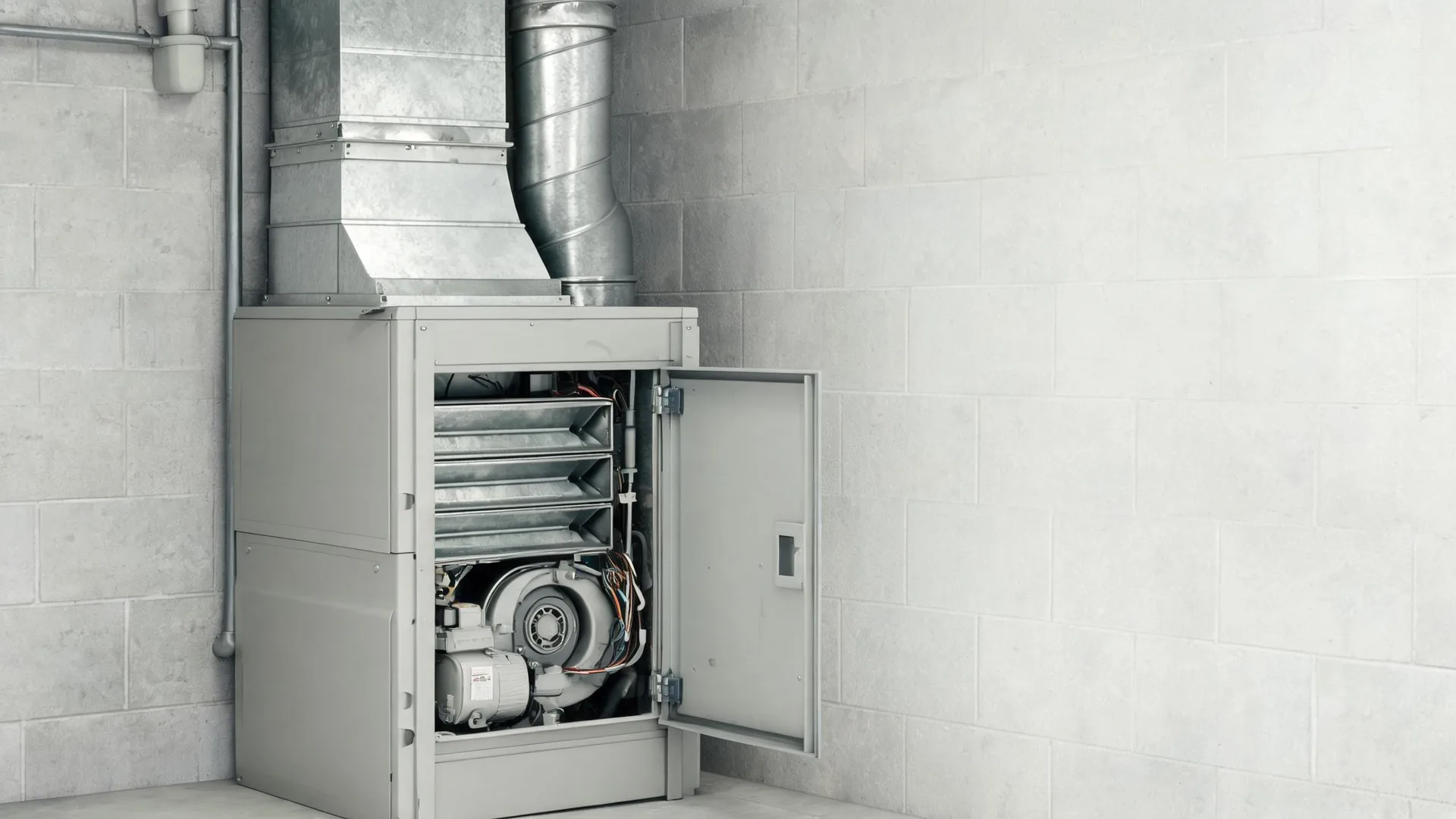
A gray residential gas furnace installed in an unfinished basement, connected to sheet-metal ductwork and PVC pipes.

Five months of work a year means there's usually a furnace left worth fixing

A furnace that only gets called on for five months doesn't build up the kind of wear that makes a repair pointless. Most of what goes wrong with age, a weak igniter, a fouled flame sensor, a tired motor, is a part worth replacing rather than a reason to write off the whole furnace. If yours is acting up, the smart move is finding out what broke, not assuming it's done.

Short cycling means something is cutting the burners off early

A furnace that fires up, runs a couple minutes, and shuts off before the house warms up is usually tripping a limit switch or losing its flame signal partway through. Something is telling the control board to stop even though you didn't touch the thermostat. That's worth a look before you just turn it back on and hope.
A cold room down the hall can start at the furnace, not the vent

When one room never gets warm, people check the vent first, and that's fair, but a weak blower motor or a clogged filter can starve airflow to the whole duct system, and the far room always shows it first because it's getting the least air to begin with. Fixing the furnace end sometimes clears up a problem that looked like a duct problem.

Before you call anyone, there are a few things worth checking yourself. Go look at the filter. If it's gray and matted instead of white or light gray, swap it, because a clogged filter can cause a lot of the symptoms that get mistaken for bigger problems. Check the thermostat batteries if it has a screen that looks dim or blank. Go to the furnace itself and check that the switch on or near it, the one that looks like a light switch, is flipped on, since that gets bumped during storage or cleaning more than people expect. Check the breaker it's on. A tripped breaker will look like a dead furnace and has nothing wrong with the furnace at all. None of this fixes an igniter or a flame sensor, but it rules out the simple stuff first, and sometimes the simple stuff is all it is.

A diagnostic visit starts before any panel comes off. A tech asks what the furnace was doing. Did it run at all, make a sound, blow cold air, or shut off partway through a cycle. The answer narrows things down before a single tool gets used. Next comes a look at the simple stuff, the filter, the switch, the breaker, the thermostat settings, things that mimic a real failure but aren't one. Then the panels come off and the tech watches the furnace actually try to run. That means checking for spark or glow at the igniter, watching the flame shape and color at the burners, and seeing whether the flame sensor is reading what it should. A multimeter gets used on the control board and motors to catch a part that's failing but hasn't quit yet. The goal is finding the one thing that's actually wrong, not replacing parts until something works.