A red brick single-story house with a covered porch and a nearby cream-colored house with a wraparound porch, seen across a lawn behind a trimmed hedge, framed by large moss-draped oak branches.

Furnace Repair in Laplace, LA

Tell us about the job

Takes about a minute. No obligation.

RepairFurnace or heatingSt. John the Baptist Parish, LA
Step 1 of 2

What ZIP code is the job in?

A cracked heat exchanger gets worse with every cycle

The metal flexes every time the burner fires and the furnace cools back down. A small crack opens wider with each cycle, and once it's letting exhaust mix into the air your blower moves, shutting the furnace off and calling someone is the right move, not a discussion.

A failing igniter or flame sensor won't fix itself by running

When a furnace fires, fails, and tries again, that's the control board working around a part that's already going bad. Each short cycle puts more wear on the blower motor and the heat exchanger for no heat in return, so the part should get replaced before it quits for good.

5 months
November through March, your furnace is on duty
44°F
the average winter night it heats against
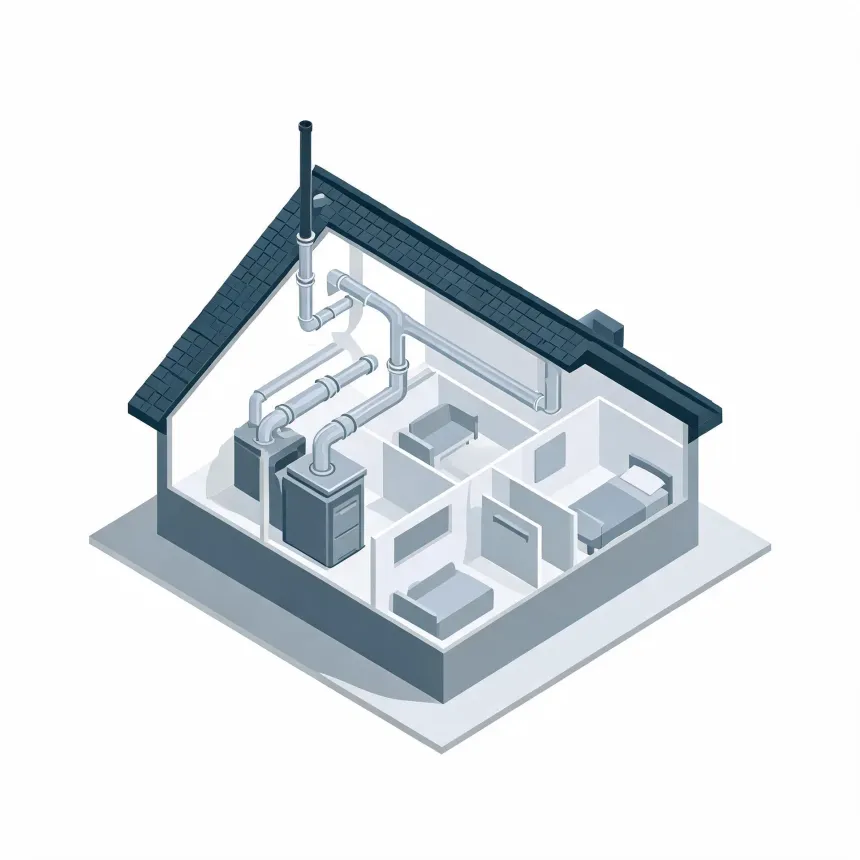
Isometric illustration of a cutaway house showing a furnace unit with ductwork and a flue pipe running through the interior rooms, which contain simple furniture.
Your furnace works hardest from December through February.

NOAA nClimDiv, 1991–2020 normals

Furnace here only has to work about five months a year, November through March.

A furnace with that light a load is usually worth fixing, not replacing, when something goes wrong.

November is when a weak part gets found

Heat runs November through March
Climate zone 2A
Winter nights average 44°F
Nothing out here is hard on your furnaceWind has hit this parish 10 times in ten years, hail just once. Neither one is a furnace problem.

So when a repair call comes up, age alone isn't much of a reason to say no. A furnace running against a 44°F overnight low in December, January and February isn't working hard to keep a house warm. That kind of mild load means less strain on the burner, the igniter, the blower motor, all of it. If one of those parts is acting up, that's usually just a part problem, not a sign the whole unit is worn out. Worth asking the contractor to fix what's wrong before anyone brings up replacement.

Half the homes here were built in 1984 or later

If your furnace came with the house, there's a decent chance the house itself isn't old. Half the homes in St. John the Baptist Parish were built in 1984 or later. A system that age still has working life in it, which is one more reason a repair call makes more sense than a replacement conversation.

Find a contractor
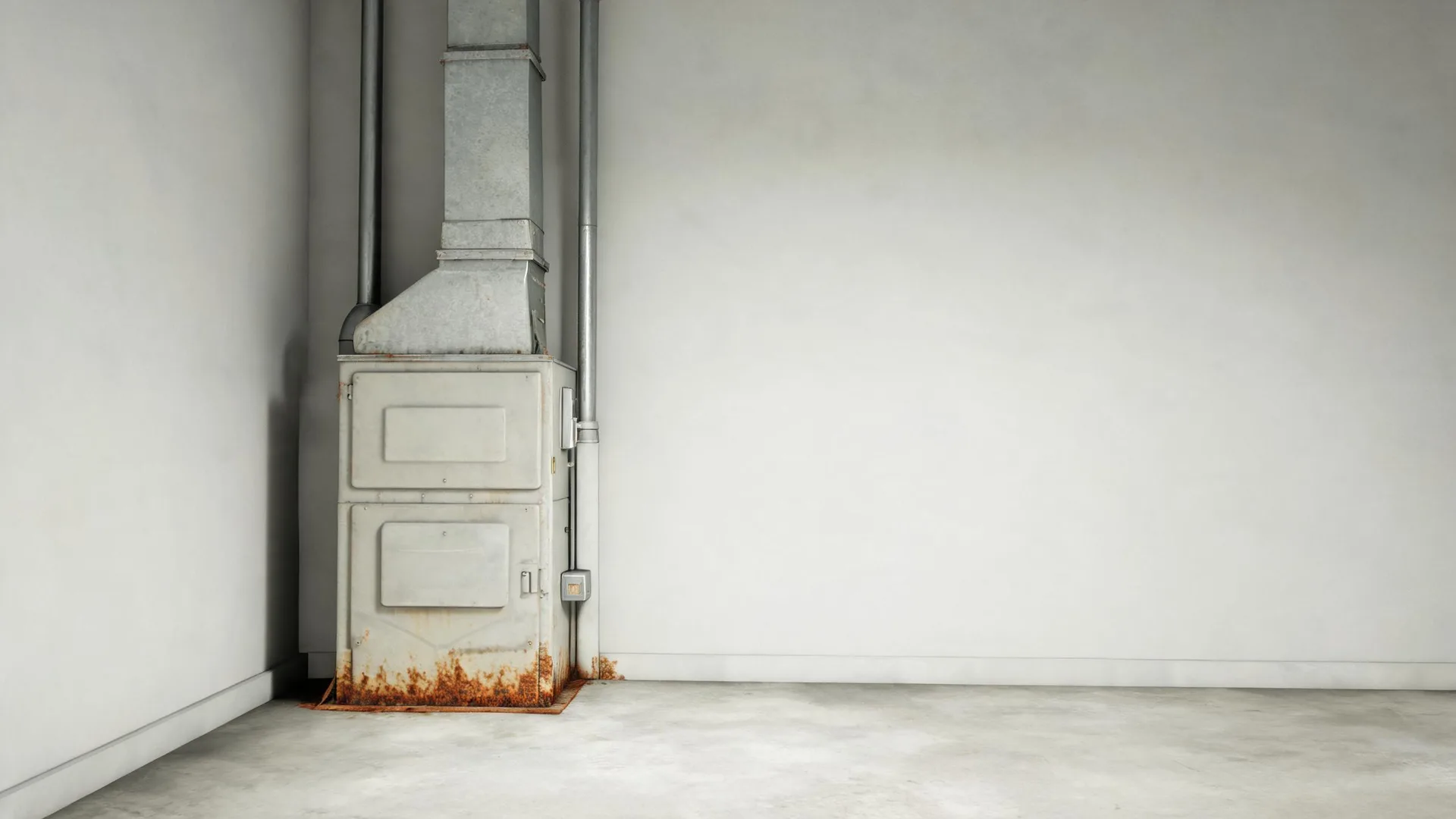
A gray residential gas furnace installed in an unfinished basement, surrounded by ductwork, a metal flue pipe, and a gas supply line.

What to check before the call

Before anyone comes out, check the thermostat first. Make sure it's set to heat, not cool, and that the set number is actually above room temperature. A dead thermostat screen usually just means the batteries are gone. Next, go to the breaker panel and look for one that's tripped, since a furnace that won't start at all is sometimes nothing more than that. Check the switch on the furnace itself too, the one that looks like a light switch, people bump those or forget they turned it off. Pull the filter and hold it up to a light. If you can't see light through it, that's choking off airflow, and the furnace may shut itself down rather than run with no air moving across the heat exchanger. Last, walk the house and check that vents aren't blocked by furniture or rugs. None of this fixes a cracked heat exchanger or a failing igniter, but it clears out the simple stuff before anyone has to come take a look.

Dirty flame sensors are the most common no-heat call

A flame sensor is a thin rod that proves to the control board the burner actually lit. A film of soot or oxidation builds up on it over time, and once it can't read the flame, the board shuts the gas valve off a few seconds after ignition. Cleaning the rod usually solves it. If the furnace keeps doing it after a cleaning, the sensor itself is worn out and needs swapping.

A clogged filter stresses everything downstream

When airflow drops, the blower motor works harder to push air through and the heat exchanger runs hotter than it's built for. Left long enough, that heat can warp the exchanger or burn out the blower motor itself. Checking the filter regularly is the easiest way to keep a small problem from turning into a bigger one.

Most no-heat calls start with something the homeowner noticed days before they called. The furnace short cycles, running for a short stretch and shutting off before the house warms up. Or it runs long and never quite gets there, which points to a flame that's weaker than it should be rather than a control problem. A burner that's yellow instead of blue is worth a call on its own, since that's a combustion issue, not a maintenance one. Rattling that starts when the blower kicks on usually means something's loose, not something that's failing yet, but it won't tighten itself back up. A furnace that smells hot or faintly like exhaust when it runs should get looked at before the next cycle, not after.

A furnace is a simple machine at heart, and most of what goes wrong is one part failing, not the whole system wearing out. A cracked heat exchanger or a blower motor that's seized is a different conversation, since those are expensive to replace on their own and the labor to get at them adds up. But an igniter, a flame sensor, a capacitor, a control board, those are parts a furnace needs one of, and swapping the bad one is usually straightforward. The question worth asking isn't how old the furnace is, it's what actually failed. A furnace that's given a decade of trouble-free runs and just had its first part quit is not a furnace that's done. One that's needed a string of repairs, each one a different part, is telling you something else.