

A red brick wall with a row of low shrubs and mulch bed on the left, a mown lawn in the center, and a single-story light-colored house with a gabled roof beyond, backed by pine trees under an overcast sky.

Furnace Repair in Kenner, LA

Tell us about the job

Takes about a minute. No obligation.

RepairFurnace or heatingJefferson Parish, LA
Step 1 of 2

What ZIP code is the job in?

A furnace rarely fails all at once. It gives you warnings first. A longer delay before the burners light. A blower that runs louder than it used to. A smell of dust burning off that doesn't fade after a few minutes. Whether to fix the problem or start thinking about a new unit comes down to what's actually broken. A failed igniter, a bad flame sensor, a blower motor that's seized up, these are normal wear parts and replacing them is usually worth it. A cracked heat exchanger is a different matter. That's the part that keeps combustion gases out of the air you breathe, and it isn't something to patch. Age matters too. Not because a number on the furnace means anything by itself, but because an old unit tends to need its next part, and the part after that, sooner than a newer one would. If a technician tells you what failed and why, that's worth more than any guess about how old the thing looks.

4 months
November through February, your furnace is on duty
47°F
the average winter night it heats against
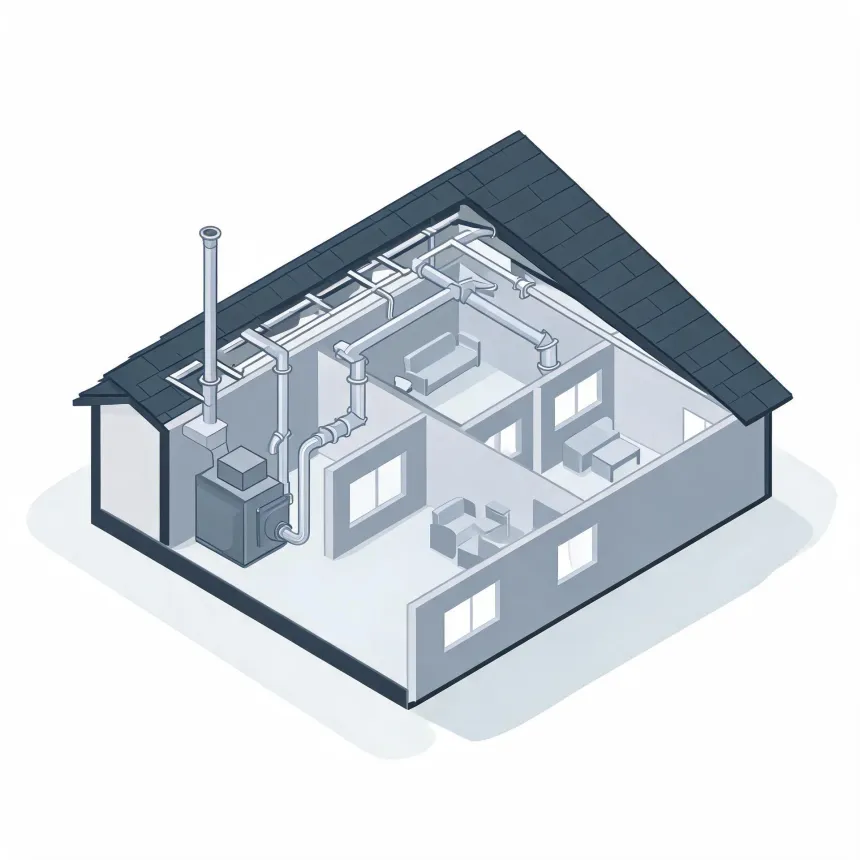
Isometric cutaway illustration of a single-story house showing interior rooms, a furnace unit with flue pipe, and branching ductwork running through the ceiling space under a dark shingled roof.
Your furnace works hardest from December through February.

NOAA nClimDiv, 1991–2020 normals

Your furnace only has to run about four months a year here, November through February.

Winter nights average 47°F, so the burners aren't working hard to keep up, and a worn part is usually the whole story.

Half the homes here were built by 1975. That doesn't make your furnace problem unusual.

Half the homes here were built by 1975
Heat runs November through February
Winter nights average 47°F

October is worth paying attention to. That's the month before the furnace starts up here, and it's a good time to find out if last year's problem ever got fixed right. A furnace that struggled in February usually struggles again in November, often right at the first cold snap when a weak igniter or a tired blower motor finally gives out under the load. Getting it looked at before November means a repair happens on your schedule instead of on a cold morning when the heat doesn't come on.

It's usually worth repairing

It has an easier job here than in most places, so your furnace is often in decent shape. Repair is usually worth it.

Find a contractor
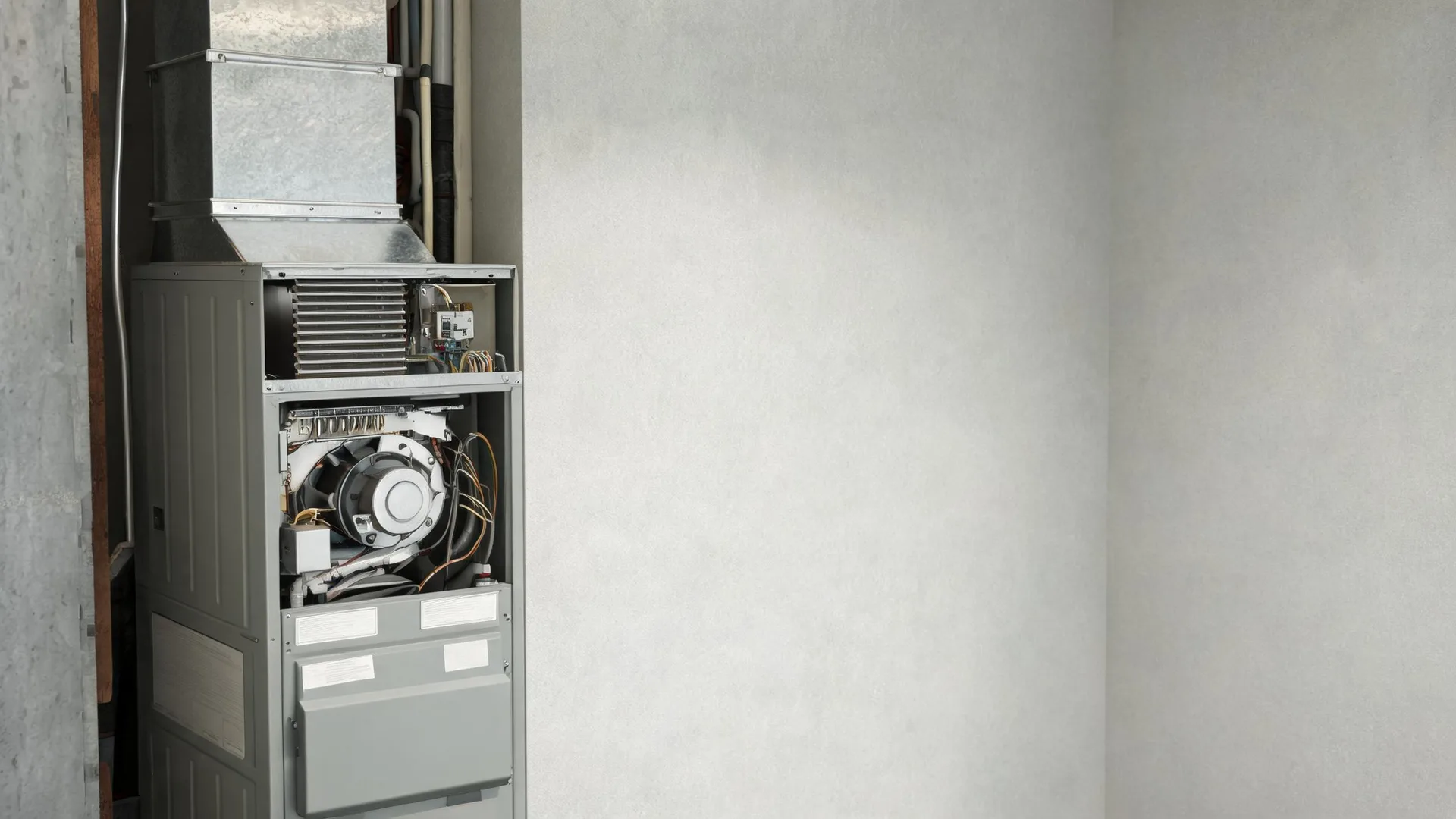
A gray residential gas furnace installed in an unfinished basement, connected to sheet-metal ductwork and PVC pipes.

Light duty, so repairs tend to hold

Four months of light work a year is easy on a part. If something's failed, a repair usually brings the furnace back to where it was, not a patch on a machine that's already worn thin. That's worth knowing before you decide whether to fix it or replace it.

What you can check safely

Make sure the thermostat is set to heat and the setting is actually above room temperature. Check the furnace switch, it looks like a light switch on or near the unit, and make sure it's on. Look at the breaker for the furnace in your panel. If you have a gas furnace, check whether the gas valve is open. Replace the air filter if it's dirty, a clogged filter can cause enough airflow trouble to shut the system down on its own safety switches.
When to stop and call someone

If the filter is clean, the thermostat is set right, and the breaker hasn't tripped, the problem is inside the unit and needs a technician. Don't keep resetting a breaker that trips again, that usually means a short or a motor pulling too much current. And if you ever smell gas or see soot around the furnace, don't keep troubleshooting at all, that's a job for a professional right away.

The igniter usually goes first. It heats up every time the furnace starts a cycle, and that repeated heating and cooling wears it out the same way a light bulb filament gives out eventually. After that it's often the flame sensor, a thin metal rod that tells the control board a flame is actually there. When it gets coated with residue, the furnace lights and then shuts right back off, because the board thinks nothing's burning. Blower motors fail differently. The bearings wear down over years of running, and you'll usually hear it before it quits, a grinding or rattling that gets worse over weeks. A capacitor that helps start that motor can also just weaken with age and stop giving it enough of a kick to turn over. Fewer hours of runtime each winter means all of this happens slower, since there's less cycling to wear the part down in the first place.

A diagnostic visit starts before any panel comes off. A technician asks what the furnace was doing, when it started, and whether anything changed right before, a thermostat replaced, a filter swapped, a breaker that tripped. Then they watch it try to run, from a cold start, the same way it failed for you. That's often where the answer shows up. A furnace that won't light points to the igniter or the gas valve. One that lights and quits points to the flame sensor. One that never starts points further back, to the thermostat signal or the control board itself. Once the likely part is narrowed down, they test it directly rather than guessing, checking for the right voltage or resistance, because different problems can look identical from the living room.