




A gas furnace and sheet-metal air handler unit installed in an unfinished concrete basement.

Furnace Repair in Jennings, LA

Tell us about the job

Takes about a minute. No obligation.

RepairFurnace or heatingJefferson Davis Parish, LA
Step 1 of 2

What ZIP code is the job in?

Furnaces here sit unused for months before November, when homes in Jefferson Davis Parish start running heat for the season. October is the month to get yours looked at, before that first cold stretch. A weak igniter or a cracked heat exchanger usually doesn't show itself while the furnace is off. It shows up the first night it has to run for hours straight. Checking it in October means whatever's wrong gets found before the furnace has to prove itself.

5 months
November through March, your furnace is on duty
44°F
the average winter night it heats against
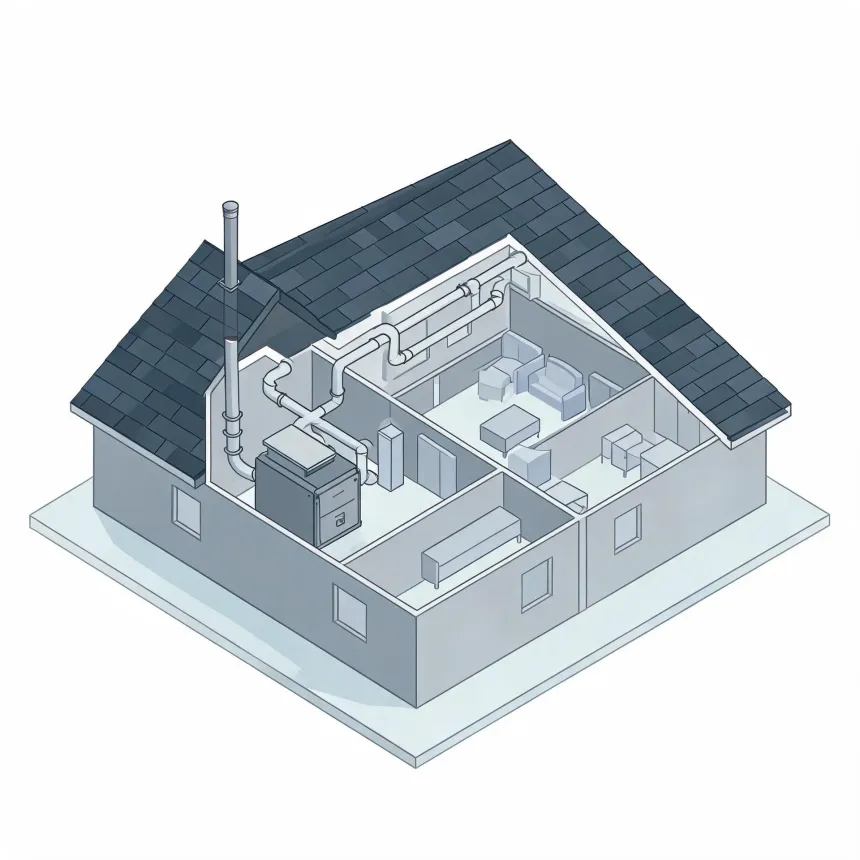
Isometric cutaway illustration of a single-story house with a dark shingled roof, showing interior rooms with furniture, ductwork, a flue pipe, and a furnace unit.
Your furnace works hardest from December through February.

NOAA nClimDiv, 1991–2020 normals

A furnace that won't light, keeps tripping out, or blows cold air is telling you which part failed, not that it's done.

Catching it now means a part swap instead of a cracked heat exchanger found the hard way.

Half these homes were built by 1980, but age isn't why your furnace is acting up

Half the homes here were built by 1980
Heat runs November through March
Winter nights average 44°F

Get it looked at early

Problems tend to show up in the first weeks of the season, when the load hits a part that was already weak.

Find a contractor
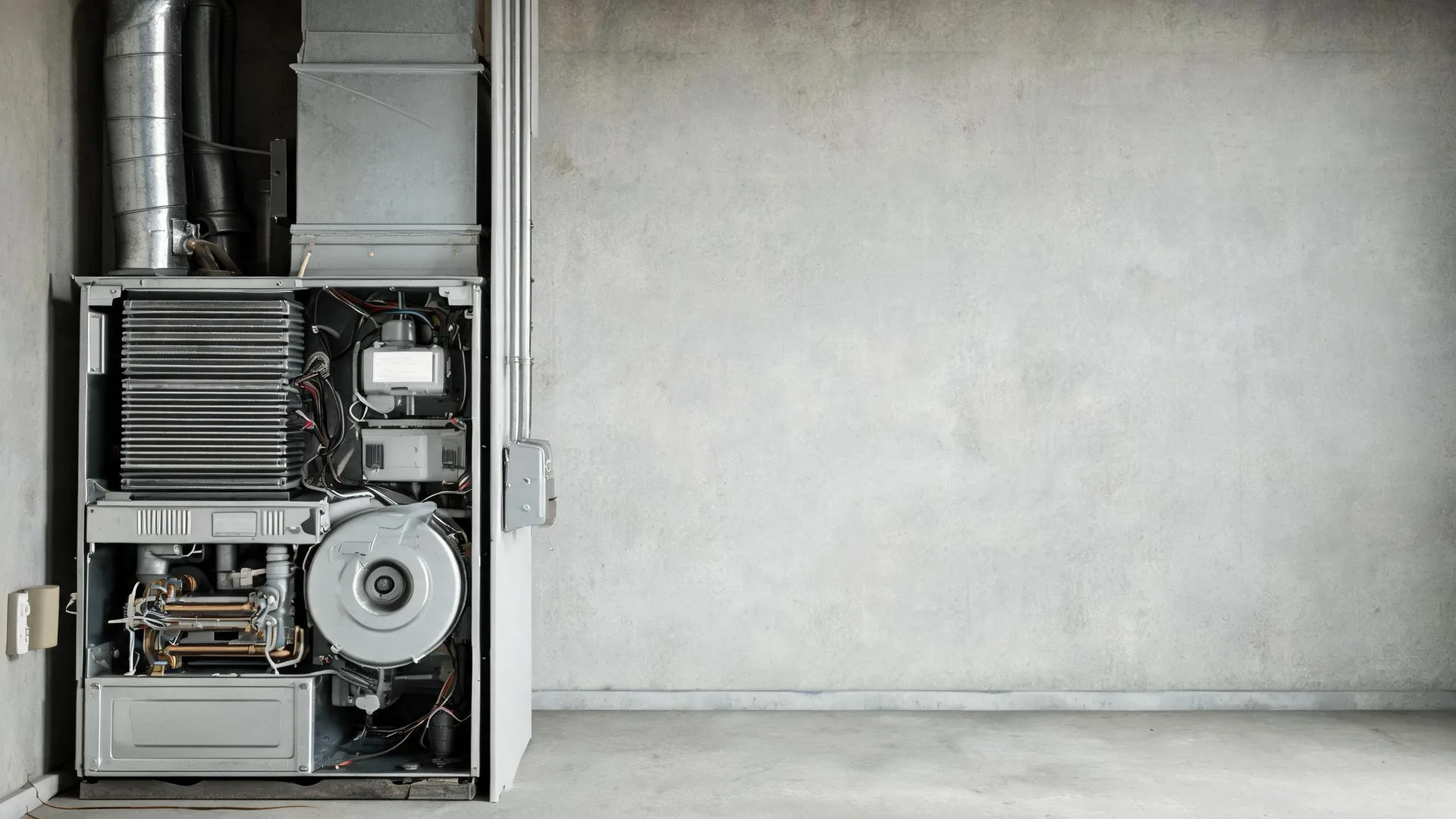
A gray gas furnace with attached ductwork and piping installed in an unfinished concrete basement.

What wears out, and why it's about cycles, not years

Most failures start with the igniter or the flame sensor, and both wear from cycling on and off, not from years on the wall. A hot surface igniter takes a small shock of heat every time it fires, and eventually it cracks. A spark igniter wears at the electrode until it can't throw a reliable spark. The flame sensor sits right in the flame path and slowly collects a coating that keeps it from sensing fire at all, so the control board assumes the burners never lit and shuts the gas valve. Fewer cycles over a season means less wear on both of these, which is part of why a furnace that only runs part of the year tends to hold up well. A blower motor fails on its own schedule, usually the bearings drying out and grinding before they seize. The one that matters most is a cracked heat exchanger. It doesn't show up as a sound or a smell most of the time, and it can put combustion gas into the air the blower sends through the house.

A furnace that's short-cycling will keep doing it until something fails

A furnace that shuts off mid-cycle just tries again a few minutes later, and it hits the same fault again. Each restart puts another load on the igniter and another jolt through the blower motor. The part that's already failing takes the hit every time, with no chance to recover between tries.
Soot and a bad burn get worse the longer they go on

A burner that isn't getting enough air lays down soot inside the heat exchanger instead of burning clean. That soot builds up on the same surfaces every time the furnace runs, and it insulates the metal instead of letting it transfer heat the way it should. The exchanger runs hotter than it's built for, and metal that overheats again and again is what eventually cracks.

Before you call anyone, check the thermostat batteries and make sure it's set to heat, not just fan. Then go look at the air filter. A filter clogged with dust chokes off airflow, and a furnace starved for air will overheat and shut itself down as a safety measure, which can look like a bigger problem than it is. Check that the vents in each room are open and not blocked by furniture or rugs. If you have a furnace with a standing pilot light, see if it's lit. There's usually a reset button or a lighting instruction plate right on the unit. Look at the breaker box too. A tripped breaker will cut power to the blower even though the thermostat calls for heat. None of this fixes a cracked heat exchanger or a failing igniter, but it rules out the simple stuff first.

A diagnostic call starts before any panel comes off. The tech runs the furnace through a cycle and watches what it does. How long it takes to light, whether the flame holds steady or trips the sensor, what the blower sounds like coming up to speed. Then the covers come off. The igniter gets checked for a crack or a weak glow. The flame sensor gets pulled and looked at, since a coated one is often the whole problem and takes a minute to clean or swap. The burners get a look for soot, which says something isn't burning clean even if nothing has failed yet. If the furnace has been short-cycling or tripping out, the heat exchanger gets inspected closely, because that's the one part on the list that isn't just an inconvenience. Most problems show themselves by watching the furnace try to do its job and fail the same way again.