





A illuminated white antebellum-style house with a wraparound porch, white columns, and Spanish-moss-draped oak trees, photographed at dusk.

Furnace Repair in Hammond, LA

Tell us about the job

Takes about a minute. No obligation.

RepairFurnace or heatingTangipahoa Parish, LA
Step 1 of 2

What ZIP code is the job in?

Furnaces in Hammond get about five months of real work a year, November through March. Overnight lows average 42 degrees in the dead of winter, which is a mild ask compared to what furnaces further north deal with. A furnace that only has to take the edge off a cool night doesn't wear the way one does in a place with hard freezes. So when one here is acting up, the cause is more often age or a part that's failed than a system that's been run into the ground. That's worth knowing before you decide whether a repair makes sense.

5 months
November through March, your furnace is on duty
42°F
the average winter night it heats against
2 winter storms
in ten years, the nights a failure hurts most
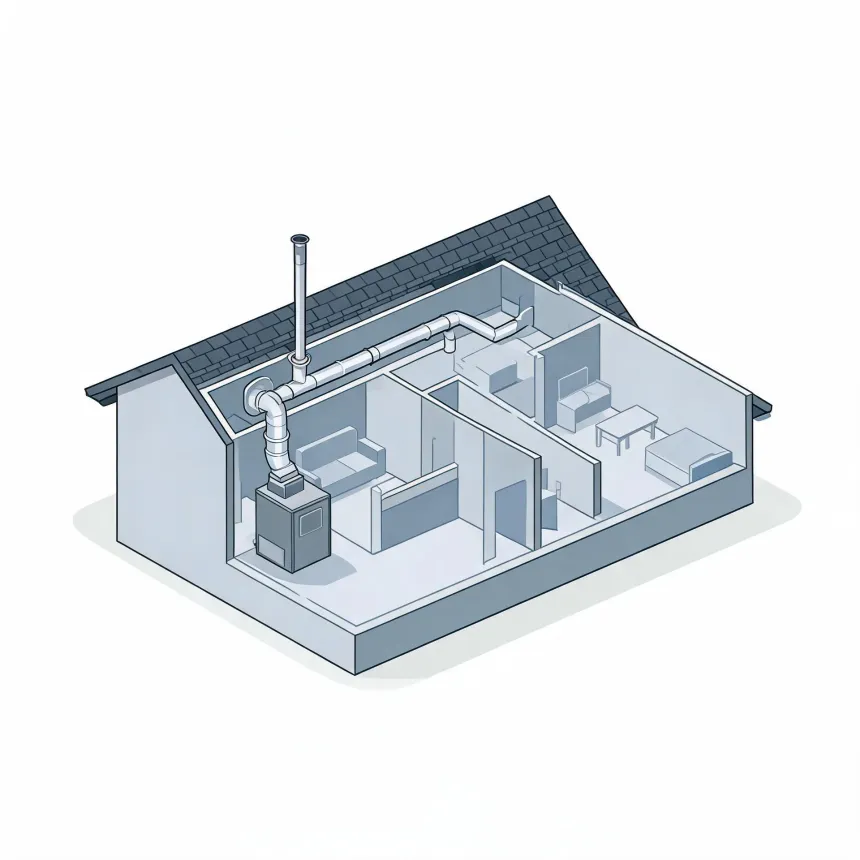
Isometric cutaway illustration of a single-story house showing interior rooms with furniture and a furnace connected to ductwork and a vertical flue pipe extending through the roof.
Your furnace works hardest from December through February.

NOAA nClimDiv, 1991–2020 normals

Half the homes in Tangipahoa Parish were built in 1993 or later.

A furnace that came with a newer house still has years in it, and that's usually worth fixing.

Furnace trouble in Hammond tends to start in November

Heat runs November through March
Winter nights average 42°F
Climate zone 2A
Hammond sees its share of severe weather48 damaging wind events hit Tangipahoa Parish between 2015 and 2024

If your furnace came with the house and the house is newer, get a repair quote before you let anyone talk you into replacing it. A cracked heat exchanger or a compressor failure is a different conversation, but most furnace trouble is a failed igniter, a dirty flame sensor, or a blower motor on its way out, and those are worth fixing on a system that still has years ahead of it. One in five homes in the parish is a mobile home, and those often run a different furnace setup than a standard house, so if that's your situation say so when you call and ask that the tech have the right parts for it.

A furnace with an easy winter is usually worth fixing

A furnace that only has to take the edge off a mild winter usually has some life left in it when something goes wrong. Get a quote on the repair before anyone steers you toward a new system.

Find a contractor
A man in a dark shirt and khaki pants, seen from behind, carries a worn leather bag as he climbs wooden porch steps toward a dark front door, with a potted shrub beside the entry.
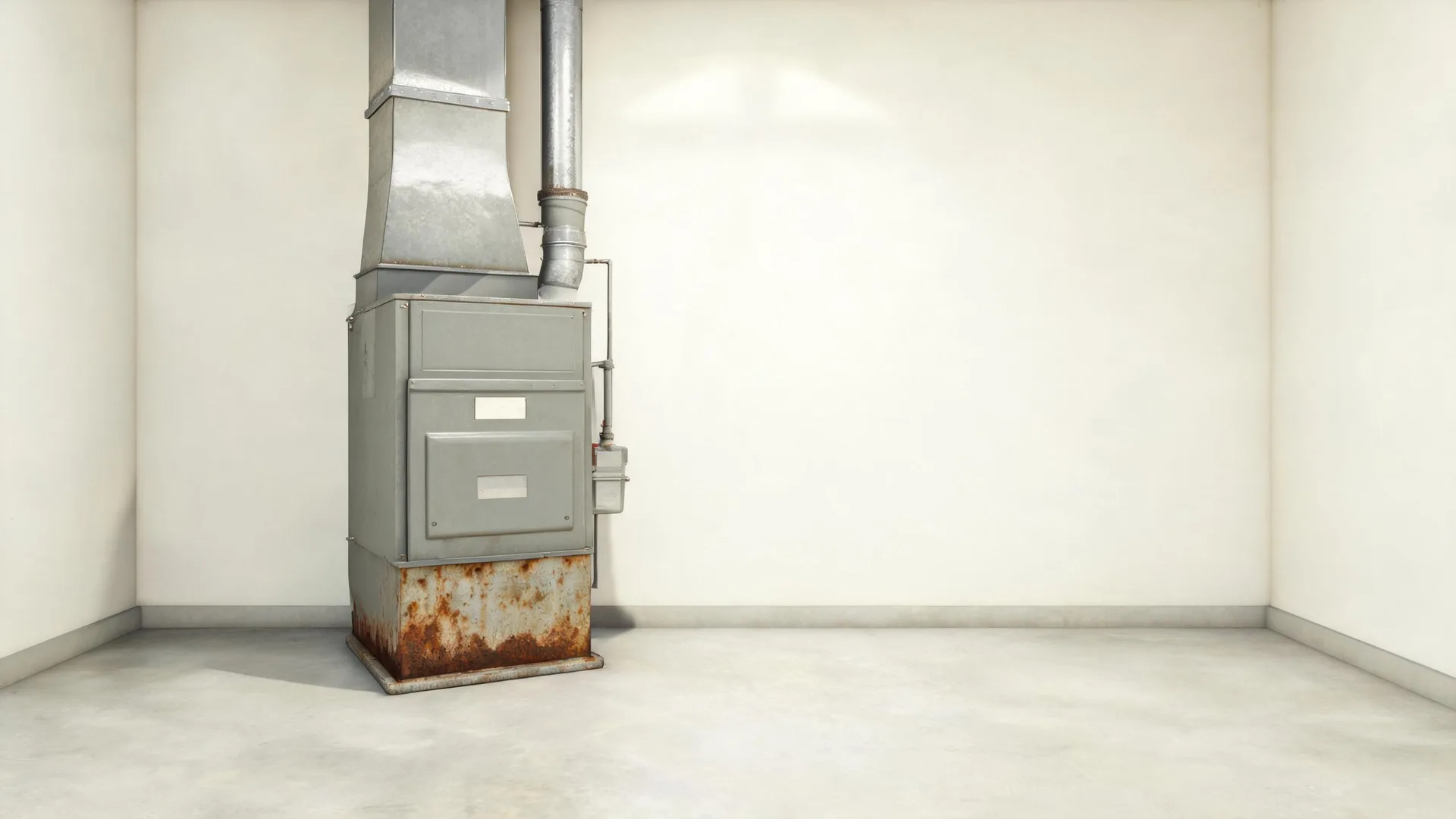
A gray gas furnace with attached ductwork and piping installed in an unfinished concrete basement.

Running it through a problem rarely fixes the problem

A furnace that's struggling doesn't fail all at once. It gives off signs first. A burner that won't light on the first try. A flame that looks weak or yellow instead of steady blue. A blower that keeps running after the thermostat's satisfied. Keep running it through those signs and a small problem turns into a bigger one. A flame sensor coated in residue makes the igniter work harder to prove there's a flame, and that shortens the igniter's life. A blower motor that's straining pulls more current than it should, and that heat has to go somewhere. Left alone, these failures tend to take the next part down with them.

Check the thermostat and the switch first

Make sure the thermostat is set to heat and the setpoint is actually above room temperature. Check that the furnace switch, the one that looks like a light switch near the unit, is flipped on. Check the breaker too. People call about a dead furnace and the fix is a breaker that tripped for an unrelated reason.
Look at the filter and the flame

Pull the filter and hold it up to a light. If you can't see through it, replace it. A clogged filter starves the system of airflow and can cause it to shut itself off as a safety measure. If the furnace is running, look at the flame through the viewing window. It should be a steady blue. Yellow, flickering, or no flame at all means it's time to call someone.

Age does most of the damage on its own, even on a furnace that's never been pushed hard. An igniter goes through the same heat and cool cycle every time it fires, and after enough years that cycle makes it brittle until it cracks. A flame sensor sits right in the flame, and over time it picks up a coating that keeps it from reading the flame correctly, so the furnace shuts itself down even though nothing's really wrong. A blower motor has bearings, and bearings wear down just from turning over season after season. One that's starting to go will often run hot or seize rather than quit clean. A pressure switch or draft inducer can fail the same way, from years of use, or because a vent is partly blocked and making the furnace work against itself. None of that takes a hard winter. It just takes time.

A repair is worth making when the furnace is doing its job apart from the one thing that's failed. Swap a cracked igniter or a worn blower motor and everything else in the system still has its years ahead of it. Replacement starts to make sense when the part that failed is the heat exchanger. That's the part that separates the flame from the air moving through your house, and it isn't swapped on its own. A cracked one means a new furnace, not a new part. Age matters too, but in a quieter way. A furnace near the end of its working life will start failing in different places, not just one. If you've replaced one part and now another's gone, that pattern tells you more than either failure does on its own.