





White plantation-style houses with wraparound porches lit at night, surrounded by Spanish moss-draped live oak trees.

Furnace Repair in Farmerville, LA

Tell us about the job

Takes about a minute. No obligation.

RepairFurnace or heatingUnion Parish, LA
Step 1 of 2

What ZIP code is the job in?

Union Parish saw 174 severe weather events between 2015 and 2024, including damaging wind, hail, and tornadoes. Most of that is wind and hail, and both reach whatever sits outside, including the vent for a furnace. Hail can dent a cabinet or bend a vent without stopping the furnace from running. A unit that still fires after a storm can still have damage behind that dent. Power matters too. A furnace needs electricity to run even when the fuel is gas, and outages here are common enough to plan around.

5 months
November through March, your furnace is on duty
37°F
the average winter night it heats against
7 winter storms
in ten years, the nights a failure hurts most
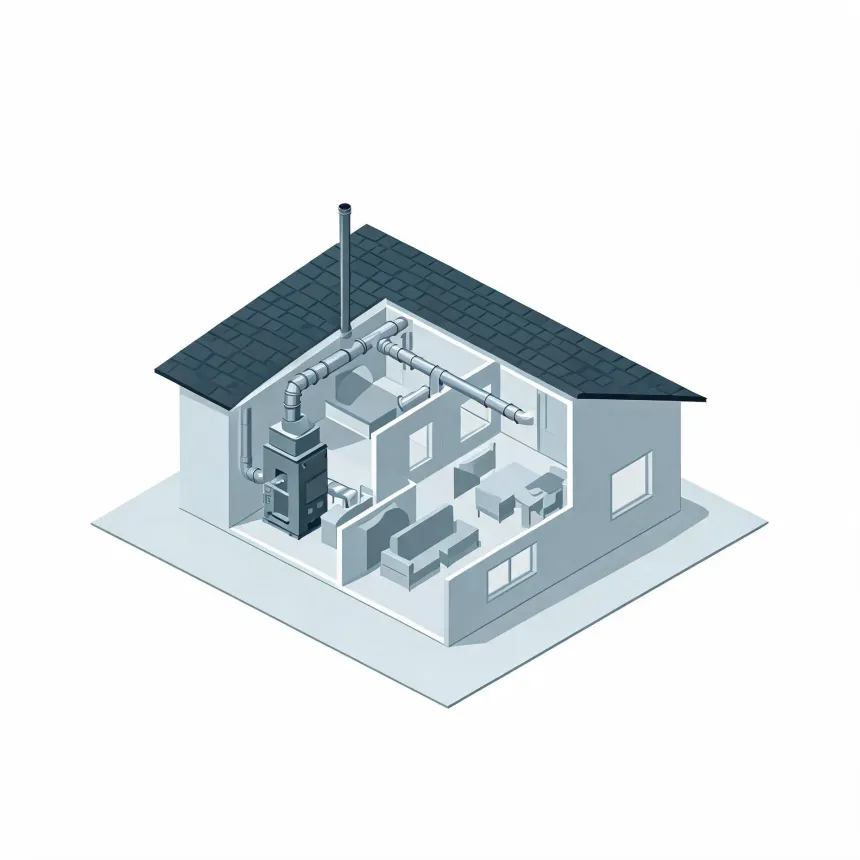
Isometric cutaway illustration of a single-story house with a dark shingled roof, showing a furnace with a flue pipe and branching ductwork running through interior rooms furnished with a sofa, table and chairs.
Your furnace works hardest from November through February.

NOAA nClimDiv, 1991–2020 normals

More than a third of the homes in Union Parish are mobile homes, and furnaces in them often sit in a closet or small utility space with its own access panel.

A furnace in a mobile home closet is diagnosed the same way as any other, starting with that access panel.

Five months of mild cold is not much to ask of a furnace

Heat runs November through March
Winter nights average 37°F
7 winter storms from 2015 to 2024
Farmerville furnace repairFurnaces here start running in November, and October is worth a look first.

After wind or hail comes through, have the furnace's outside vent looked at before trusting it on the next cold morning. A bent vent cap or a cracked seam can let exhaust back up instead of clearing it, and the furnace gives no warning when that happens. If the power went out during the storm, check that the furnace actually restarts on its own once it's back. Most do, but it's worth confirming rather than finding out on the coldest night of the year.

Five mild months is an easier job than most furnaces get

A furnace here only has to cover November through March, with overnight lows averaging 37°F. That is not a heavy load to carry. If yours is acting up, the problem is more likely age or something it sat through, like a storm, than wear from the work itself. That usually makes a repair worth doing.

Find a contractor
A man in a dark long-sleeve shirt and tan work pants carries a waxed canvas tool bag up concrete steps toward a blue front door of a gray-sided house, with potted shrubs nearby.
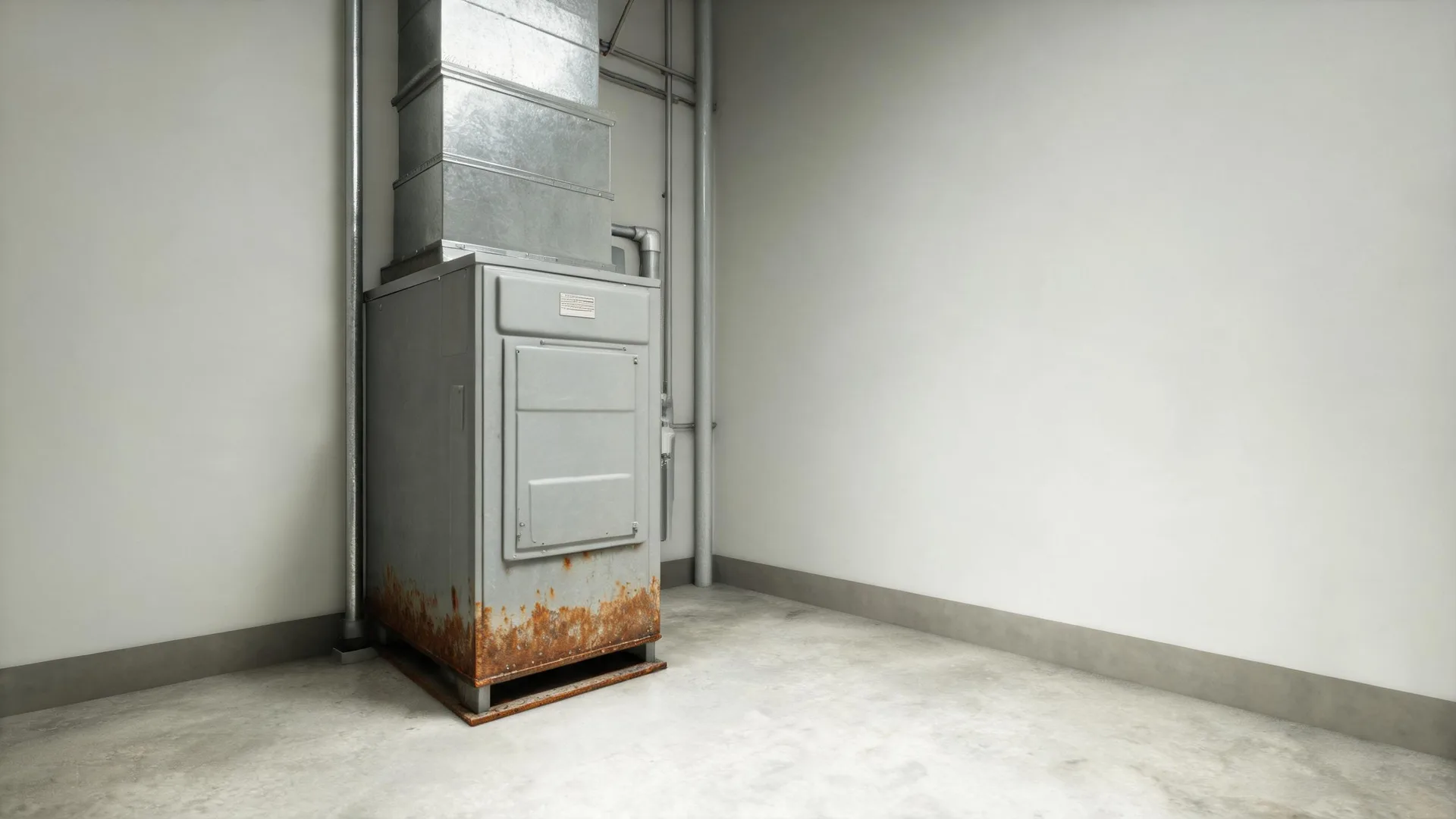
A gray high-efficiency gas furnace installed in an unfinished basement, surrounded by gas lines, a condensate drain, and sheet-metal ductwork.

What the furnace is telling you before it quits for good

A furnace that short cycles, running a few minutes and shutting off before the house warms up, is usually struggling to breathe or struggling to light. A dirty filter, a cracked heat exchanger, or a flame sensor coated with residue can all cause it. Short cycling wears the igniter and the blower motor faster than steady runs would, since both are stopping and starting instead of holding one stretch. A burner that won't stay lit, or lights with a pop instead of a steady whoosh, points to a clogged orifice or a gas pressure problem. Cold air from the vents right before shutoff usually means the limit switch is cutting power early, often because poor airflow is letting the heat exchanger run hot. A rattle or a metallic scrape when the blower starts means the wheel is loose or catching its housing, and it gets louder the longer that goes unchecked. None of these clear up on their own.

Most failures come down to a few parts

The igniter wears out from repeated heating and cooling cycles and is one of the most common reasons a furnace won't start at all. The flame sensor collects a thin film of residue over time and starts telling the control board no flame is present even when there is one. Flame sensors can be cleaned and often don't need replacing. Igniters usually just fail outright once they go.
What age does to the rest of it

A heat exchanger can crack after years of heating and cooling with every cycle, and that's a safety issue, not just a performance one, since it's what keeps exhaust separated from the air going into the house. Blower motors wear out from years of daily starts and stops, and bearings going bad usually show up as noise before the motor quits. Neither failure happens on a predictable schedule, which is why a furnace can run fine for years and then need several things looked at the same winter.

Before anyone comes out, a few things are worth checking. Start with the filter. Pull it and hold it up to a light. If you can't see through it, that's enough to choke airflow and cause trouble all through the system, from short cycling to a limit switch cutting things off early. Check the thermostat has fresh batteries if it takes them, and that it's set to heat, not just on. Look for a power switch on the furnace itself, and another that looks like a light switch nearby. Either one being off will stop it cold. If the furnace has a standing pilot, check whether that pilot is lit. None of this fixes a cracked heat exchanger or a failing igniter, but it rules out the simple stuff first.

A diagnostic starts outside at the vent and the switches, then moves inside to watch the furnace run through a full cycle if it still fires. A tech will pull the filter and check airflow before touching anything electrical, since starved airflow can mimic several other problems. Reading the flame through the sight glass tells them whether it's burning clean or struggling, and a meter across the flame sensor confirms whether it's actually sensing or just corroded enough to fail. If the furnace won't start at all, the igniter gets tested first since it's the most common point of failure, then the control board gets checked for the fault codes it stores. Any sign the heat exchanger might be cracked stops the diagnostic there, because that part gets confirmed before the furnace runs again, not after.