






Two illuminated white colonial-style houses with wrap-around porches, flanked by oak trees draped in Spanish moss, photographed at night.

Furnace Repair in Denham Springs, LA

Tell us about the job

Takes about a minute. No obligation.

RepairFurnace or heatingLivingston Parish, LA
Step 1 of 2

What ZIP code is the job in?

Half the homes in Livingston Parish were built in 2002 or later. If yours is one of them, the furnace inside it has had an easier run than most, short winters, not much strain, and probably hasn't needed much from anyone. A furnace that age with a bad igniter or a dead flame sensor is almost always worth repairing. The cabinet, the blower, the heat exchanger, none of that wears out just from sitting through a mild Louisiana winter. Check when your system went in if you're not sure, builders usually leave that date on the unit itself.

5 months
November through March, your furnace is on duty
42°F
the average winter night it heats against
Isometric cutaway illustration of a single-story house in gray tones, showing interior rooms with furniture, ceiling ductwork, and an exterior furnace unit with a tall flue pipe.
Your furnace works hardest from December through February.

NOAA nClimDiv, 1991–2020 normals

Furnaces in Livingston Parish run about five months a year, and overnight lows only average 42°F through the winter.

A furnace with that light a workload is usually dealing with one bad part, not years of strain catching up with it.

Get it looked at in November, before the first cold night finds the weak part

Heat runs November through March
Winter nights average 42°F
Climate zone 2A
89 storms in 10 yearsHail and wind have hit Livingston Parish hard. If your outdoor unit took a hit, get it checked even if it still runs.

Call a repair contractor rather than pricing a new furnace. If the unit is original to a newer build, a cracked heat exchanger or worn-out blower just isn't likely yet, so there's no reason to replace the whole system over one failed part. Have the tech confirm the install date while they're there, then let them fix the igniter or sensor and move on.

Get the one part fixed

One bad part doesn't need a new furnace behind it. Get the failed part diagnosed and fixed.

Find a contractor
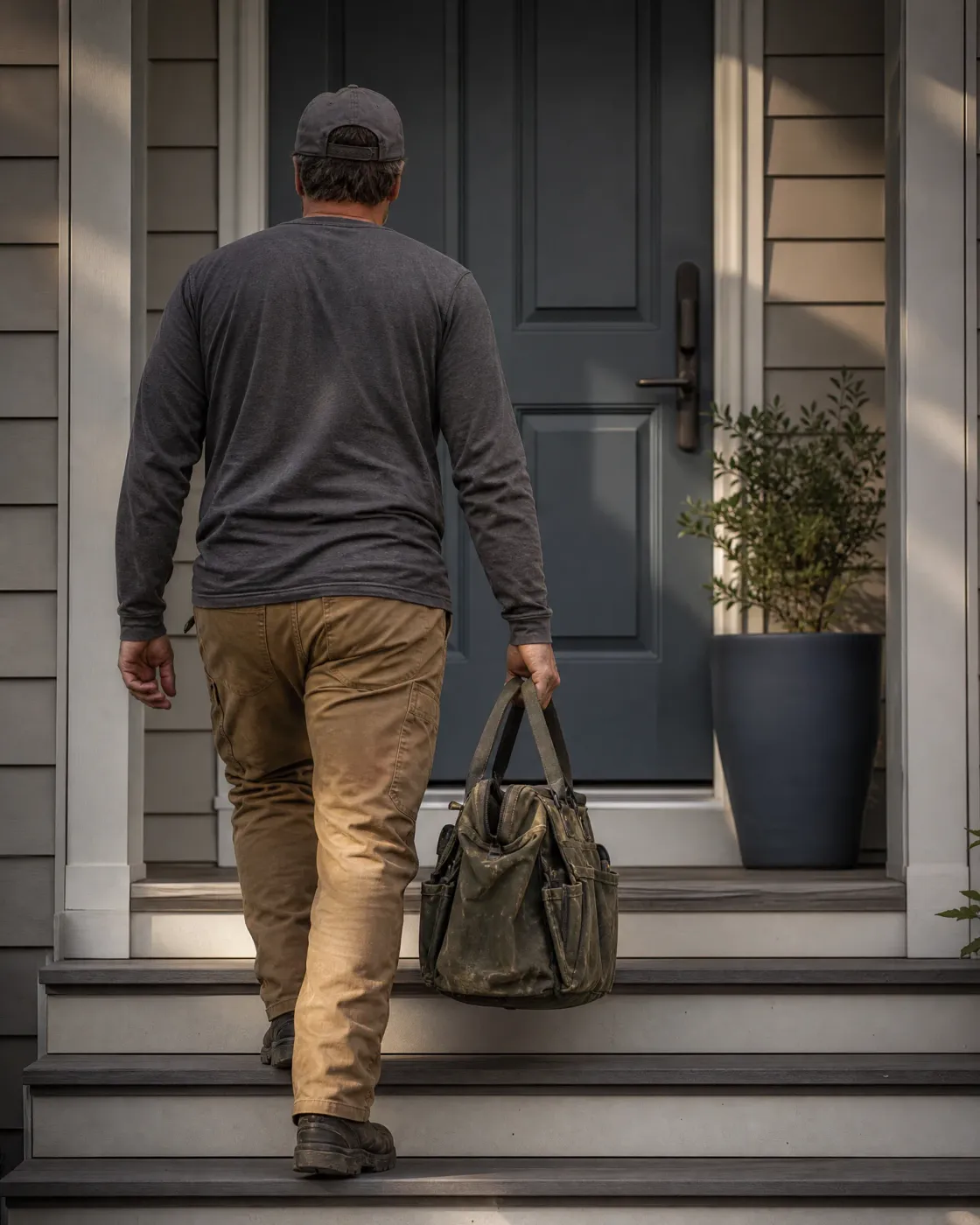
A man in a cap, gray long-sleeve shirt and tan work pants carries a worn canvas tool bag up porch steps toward a dark gray front door beside a potted shrub.
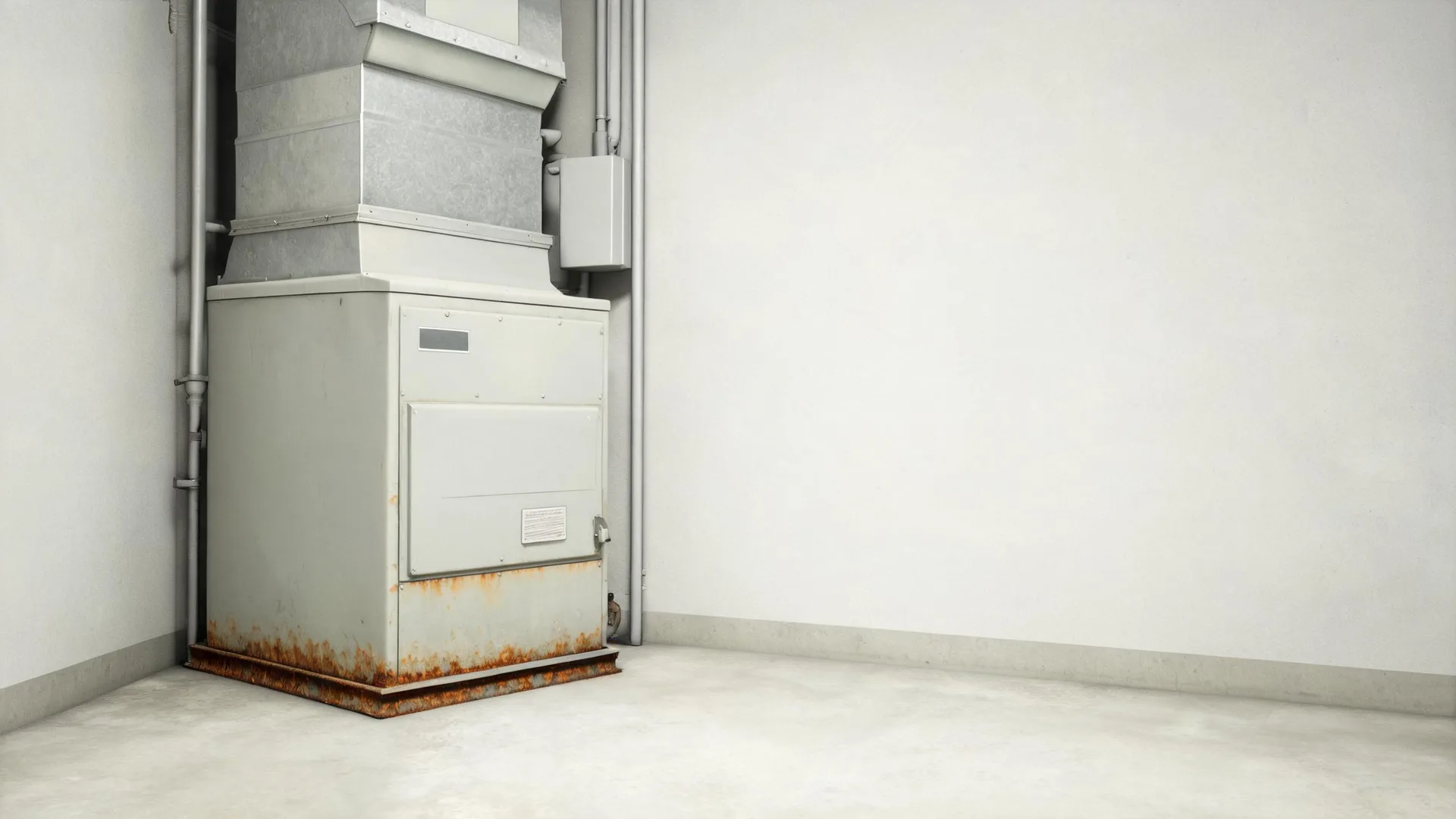
A gray high-efficiency gas furnace installed in an unfinished basement, surrounded by gas lines, a condensate drain, and sheet-metal ductwork.

A bad part doesn't get better by staying on

A furnace that's limping doesn't rest when you ignore it, it keeps firing the same way until something stops it. A cracked heat exchanger gets another cycle of heating and cooling stress added to it every time the burners light. A failing igniter either gives up for good or keeps drawing hard on a hot surface element that was never built for extra strikes. Weak flame sensors mean the burner shuts off early more and more often, so the blower runs while the heat doesn't keep up, and that mismatch is hard on the motor over time. None of this fixes itself by running longer. The part that's struggling keeps struggling until someone pulls it and puts in a new one.

Most failures are a handful of usual suspects

An igniter cracks or wears thin and stops glowing hot enough to catch the gas. A flame sensor coats with residue until it can't tell the burner is lit, so the system shuts itself down as a safety check. A pressure switch sticks, a draft inducer motor wears out, a control board trips on a bad signal. These are the parts that fail on a furnace, winter after winter, regardless of how old the unit is.
The fix matches the part, not the whole system

A dirty flame sensor gets cleaned or swapped in minutes. A failed igniter gets replaced outright, they're not something you repair. A stuck pressure switch or worn inducer motor takes a bit more time but it's still one part, pulled and replaced. None of these jobs call for touching the heat exchanger or the blower assembly, so the repair stays small and specific to whatever actually broke.

Most of the time the furnace tells you something is wrong before it quits outright. Short cycling is one of the clearest signs, the burners light and then shut off again before the house actually warms up. A burner flame that's flickering yellow instead of steady blue points at a combustion problem worth having looked at. A clicking sound at startup that repeats before the burners finally catch usually means the igniter is struggling. Cold air coming out of the vents while the blower runs often means the burners aren't lighting at all. Any of these is worth a call. None of them get better on their own, and most trace back to one part, not the whole system.

So when does a furnace actually need to be replaced instead of repaired. It usually comes down to the heat exchanger. That's the part that separates the flame from the air blowing through your house, and once it cracks, there's no patching it, the whole unit gets replaced. Everything else on a furnace, the igniter, the pressure switch, the inducer motor, the control board, gets swapped out on its own without touching the rest of the system. A tech checking a furnace that won't light is ruling parts out one at a time, not deciding whether the unit as a whole is worth keeping. Age matters less than what's actually failed. A furnace that's given someone no trouble for years and then trips on a pressure switch isn't a furnace that's done, it's a furnace with a bad pressure switch.