An unfinished basement interior showing a gray furnace unit beneath a bare incandescent bulb, surrounded by exposed joists, concrete walls, cardboard boxes, and utility pipes.

Furnace Repair in Bossier City, LA

Tell us about the job

Takes about a minute. No obligation.

RepairFurnace or heatingBossier Parish, LA
Step 1 of 2

What ZIP code is the job in?

A cracked heat exchanger gets worse with every cycle

Heat exchangers crack from repeated expansion and contraction as the furnace heats up and cools down. Once a crack starts, each cycle flexes the metal around it a little more. Keep running the furnace and the crack grows, and it can start pushing exhaust into the air the blower moves through the house.

A failing limit switch stops protecting the furnace

The limit switch shuts the furnace off if it gets too hot inside the cabinet. If that switch is going bad, the furnace loses the one part that catches overheating before it damages the heat exchanger or the blower motor. Running it in that state lets heat build up with nothing there to stop it.

5 months
November through March, your furnace is on duty
38°F
the average winter night it heats against
7 winter storms
in ten years, the nights a failure hurts most
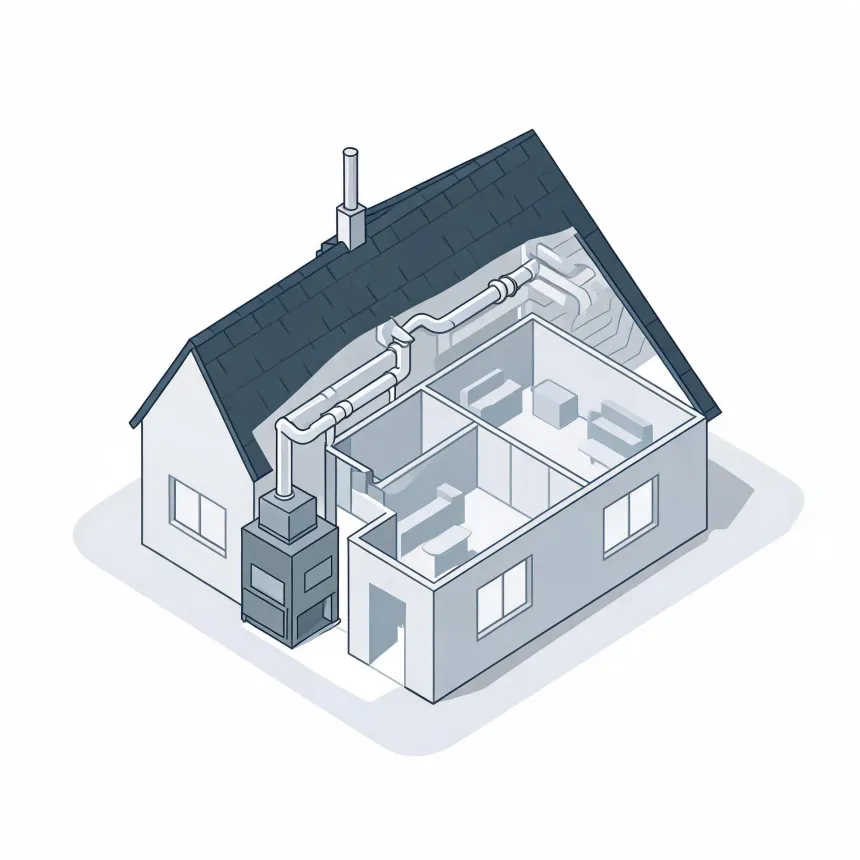
Isometric line illustration of a cutaway single-story house with a dark shingled roof, showing interior rooms and ductwork connected to a gray furnace unit with a flue pipe.
Your furnace works hardest from November through February.

NOAA nClimDiv, 1991–2020 normals

Furnaces in Bossier City start their first cold run in November.

October is the month to get a weak igniter or switch looked at, before the first cold night finds it.

Five months of work a yearFurnaces here run November through March, with lows near 38°F. That's not much strain.

A furnace that's starting to fail usually tells you before it quits outright. It might take a few tries to light, or light and then shut back off a minute later. The blower can start sounding different, a rattle or a hum that wasn't there before. It can also run and never push out air that feels properly warm. Short cycling is another sign. The furnace fires, runs for a short burst, shuts off, then starts again soon after instead of running a full cycle. A burner flame that looks yellow or flickers instead of burning steady blue is worth paying attention to as well. Any one of these is worth a call. More than one at a time means don't wait.

A furnace with an easy job is usually worth fixing

Five months of real work a year leaves most furnaces here in decent shape going into a repair call. That means problems tend to come from one worn part, not a system worn out all over. Get it looked at and fixed rather than written off.

Find a contractor
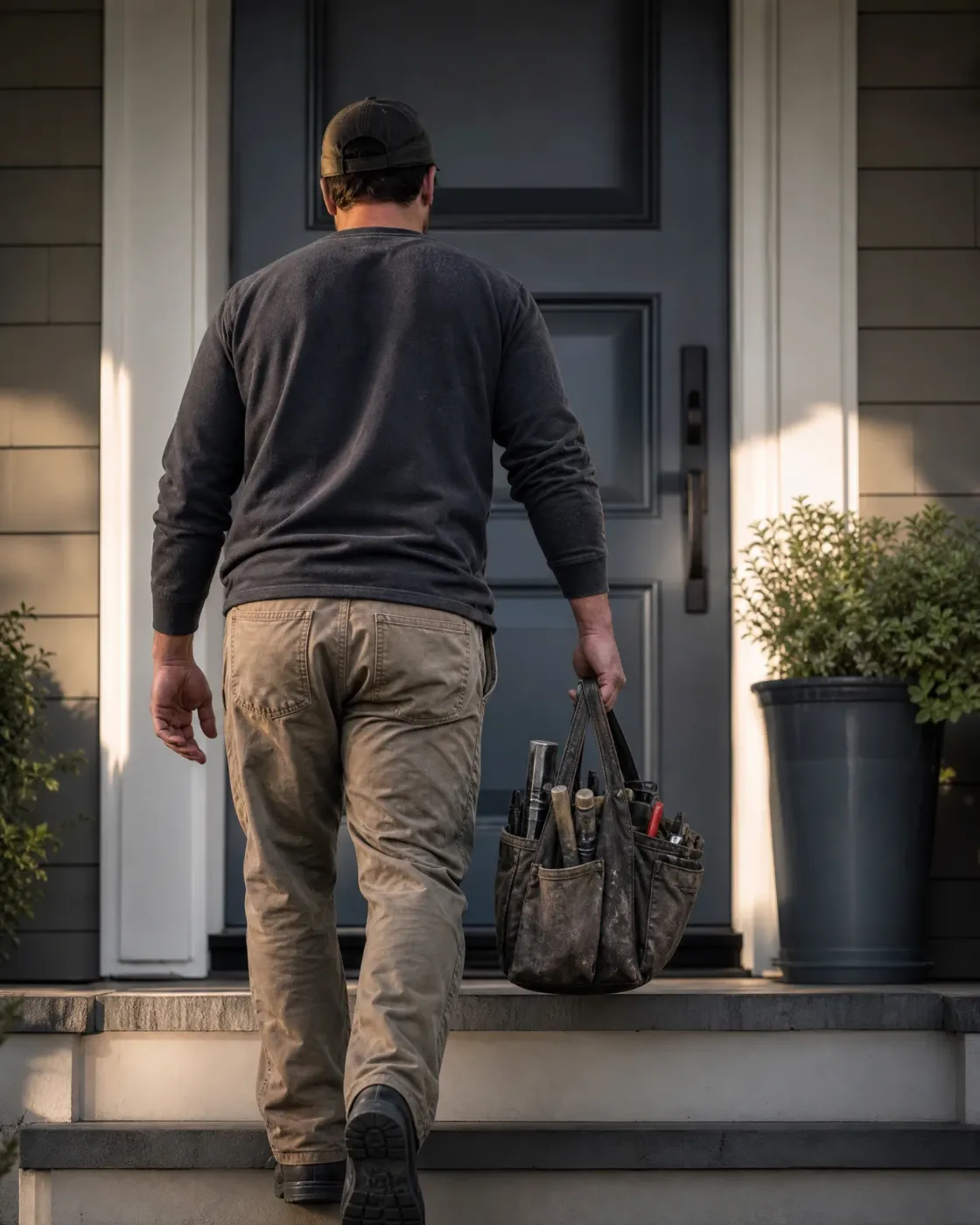
A man in a cap, dark long-sleeved shirt and tan work pants, seen from behind, carries a canvas tool bag up concrete steps toward a dark blue front door flanked by white columns and a potted shrub.
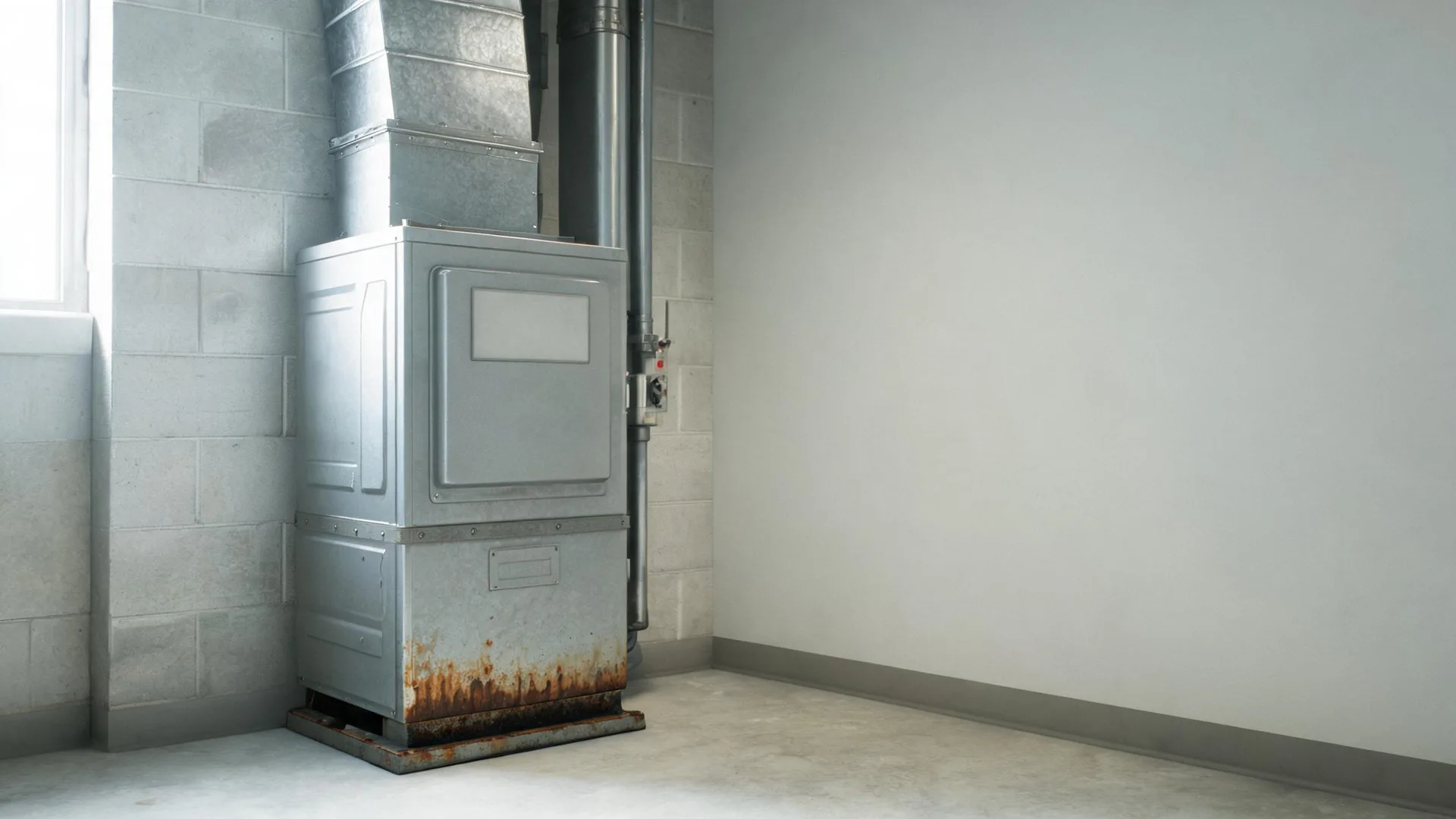
A gray gas furnace with attached ductwork and piping installed in an unfinished concrete basement.

A newer house usually means a newer furnace

Half the houses in Bossier Parish were built in 1991 or later. If yours is one of them, the furnace likely hasn't been running long enough to wear out on its own. A system like that failing is usually one part giving out, not the whole unit reaching the end of its life. Worth fixing, not replacing.

A dirty flame sensor reads as a dead furnace

The flame sensor tells the control board a flame is actually burning. Dust and carbon build up on it over time until it can't sense the flame anymore, so the board shuts the gas off a few seconds after ignition. The furnace looks broken, but the part is usually just dirty, not failed.

Most failures start in the parts that move or spark

The igniter, the draft inducer motor and the blower motor all wear from doing their job over and over, cycle after cycle. They heat up, spin, or spark every single run. A furnace that sits fine between repairs is often just waiting on whichever of these parts wears out first.

Before calling anyone, check the thermostat first. Make sure it's set to heat, not cool, and that the set temperature is actually above room temperature. Check the furnace switch too, the one that looks like a light switch on or near the unit, and make sure it hasn't been bumped off. Look at the air filter. A filter clogged with dust chokes off airflow, and some furnaces will shut themselves down rather than run with the blower starved for air. If the furnace has a standing pilot, see if the pilot light is still burning. If it's gone out, there's usually a relight procedure printed right on the panel. Last, check the breaker. A furnace that won't do anything at all, no lights, no sound, no response, is worth checking there before assuming the worst.

The question is usually about one part, not the whole furnace. Most repairs replace something that wears from doing its job over and over. An igniter, a flame sensor, a blower motor. None of that means the rest of the furnace is going bad too. A cracked heat exchanger is the one exception worth taking seriously. That's the chamber that keeps exhaust separate from the air headed into the house, and it can't be patched. If a tech tells you the exchanger is cracked, that's a furnace to replace. If it's anything else, fixing the part is almost always the right call, and the furnace runs like normal once it's done.