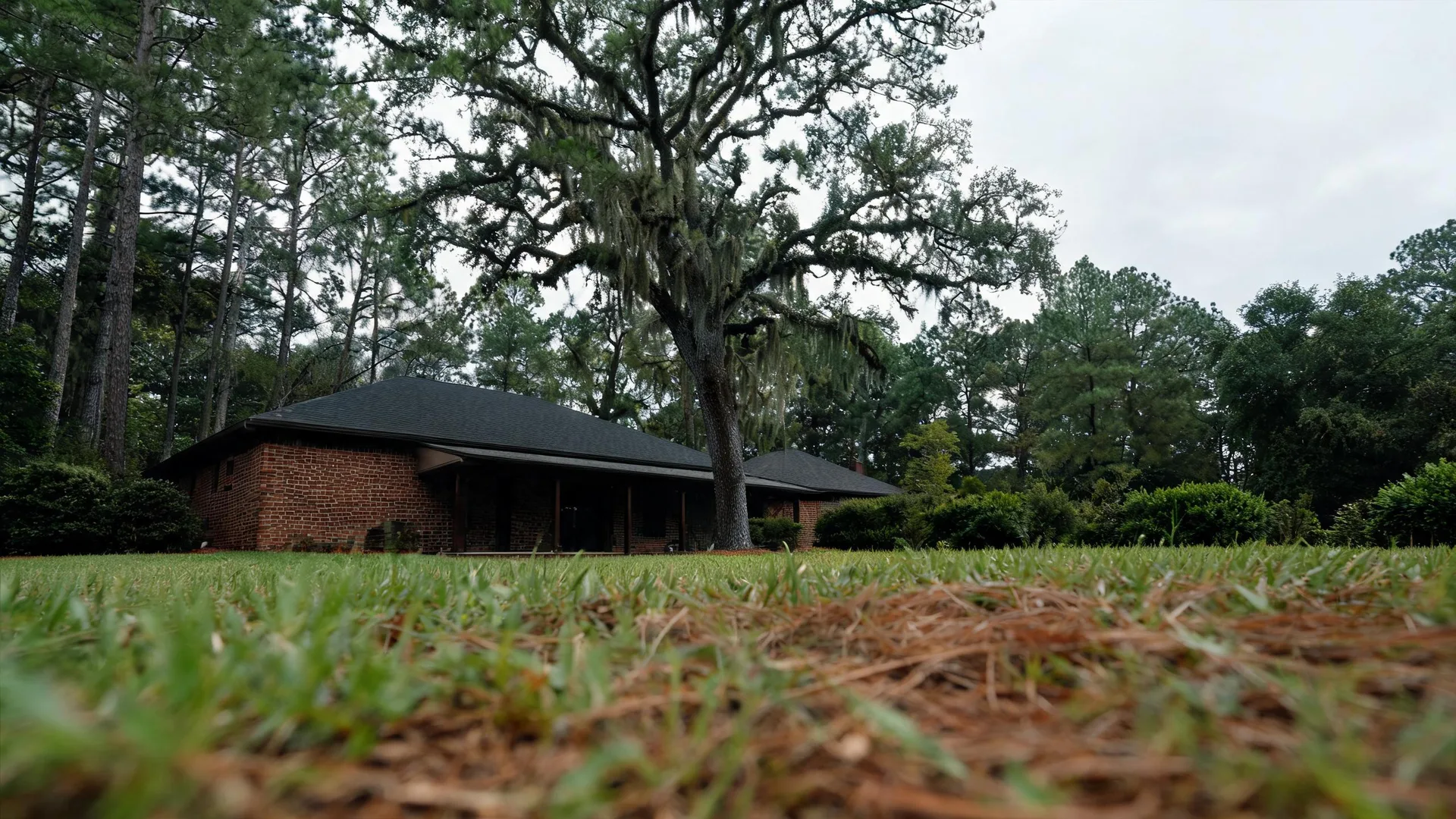




Low ground-level view across a lawn toward a single-story brick house with a dark shingled roof, framed by a large moss-draped oak and tall pine trees under an overcast sky.

Furnace Repair in Bogalusa, LA

Tell us about the job

Takes about a minute. No obligation.

RepairFurnace or heatingWashington Parish, LA
Step 1 of 2

What ZIP code is the job in?

Furnaces in Washington Parish sit idle all spring and summer, then start up again in November. That first startup is when a weak igniter or a tired blower motor tends to give out, because it is the first time all year that part has had to work. If your furnace is acting up in October, before it even needs to run, get it looked at then. A problem caught in October gets fixed on your schedule. The same problem in November means waiting on a repair in a cold house.

5 months
November through March, your furnace is on duty
41°F
the average winter night it heats against
2 winter storms
in ten years, the nights a failure hurts most
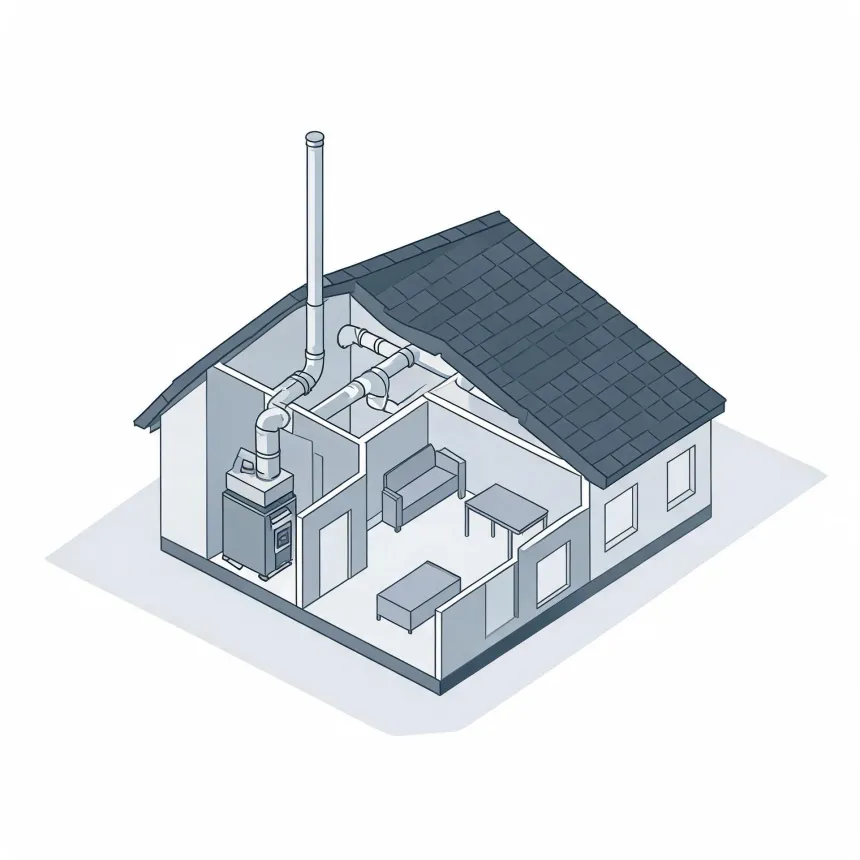
Isometric line illustration of a cutaway single-story house with a shingled roof, showing an interior furnace connected to ductwork and a tall vertical flue pipe, plus simple furniture in the adjacent room.
Your furnace works hardest from November through February.

NOAA nClimDiv, 1991–2020 normals

A furnace in Washington Parish only runs five months a year, November through March.

A furnace with a light workload like that is usually still in decent shape, so a repair is worth doing.

Half these homes are older, but that's not what's breaking your furnace

Half the homes here were built by 1982
Heat runs November through March
Winter nights average 41°F

A cracked heat exchanger is the clearest case. Keep running a furnace with a crack like that and it can push exhaust into the air moving through the house instead of venting it outside. A blower motor on its way out is another one. It'll run hotter and hotter trying to push air through, and that heat damages the windings until it seizes for good. Even something as simple as a clogged filter adds up. Airflow drops, the heat exchanger runs hotter than it should, and parts that were fine start to wear faster than they would have otherwise. None of these get better with time. They get worse, and they take other parts down with them.

A light workload means repair is usually worth it

A furnace that only works five months a year, in mild cold, usually has more life left in it than the symptoms suggest. That makes it worth having someone find the actual cause instead of planning for a replacement.

Find a contractor
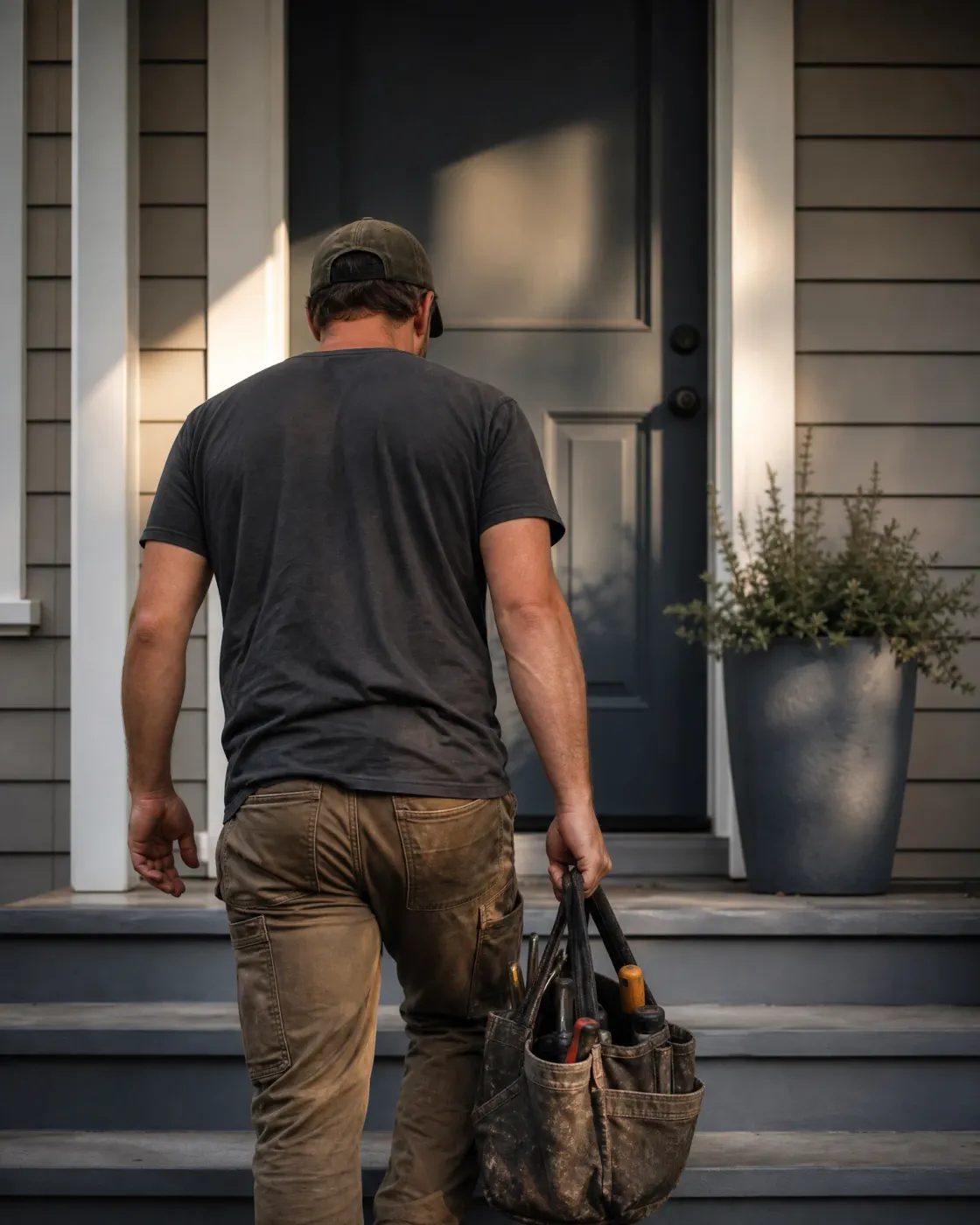
A man in a cap, dark t-shirt and worn tan work pants walks up steps toward a dark front door, carrying a canvas tool bag filled with tools, beside a potted shrub.
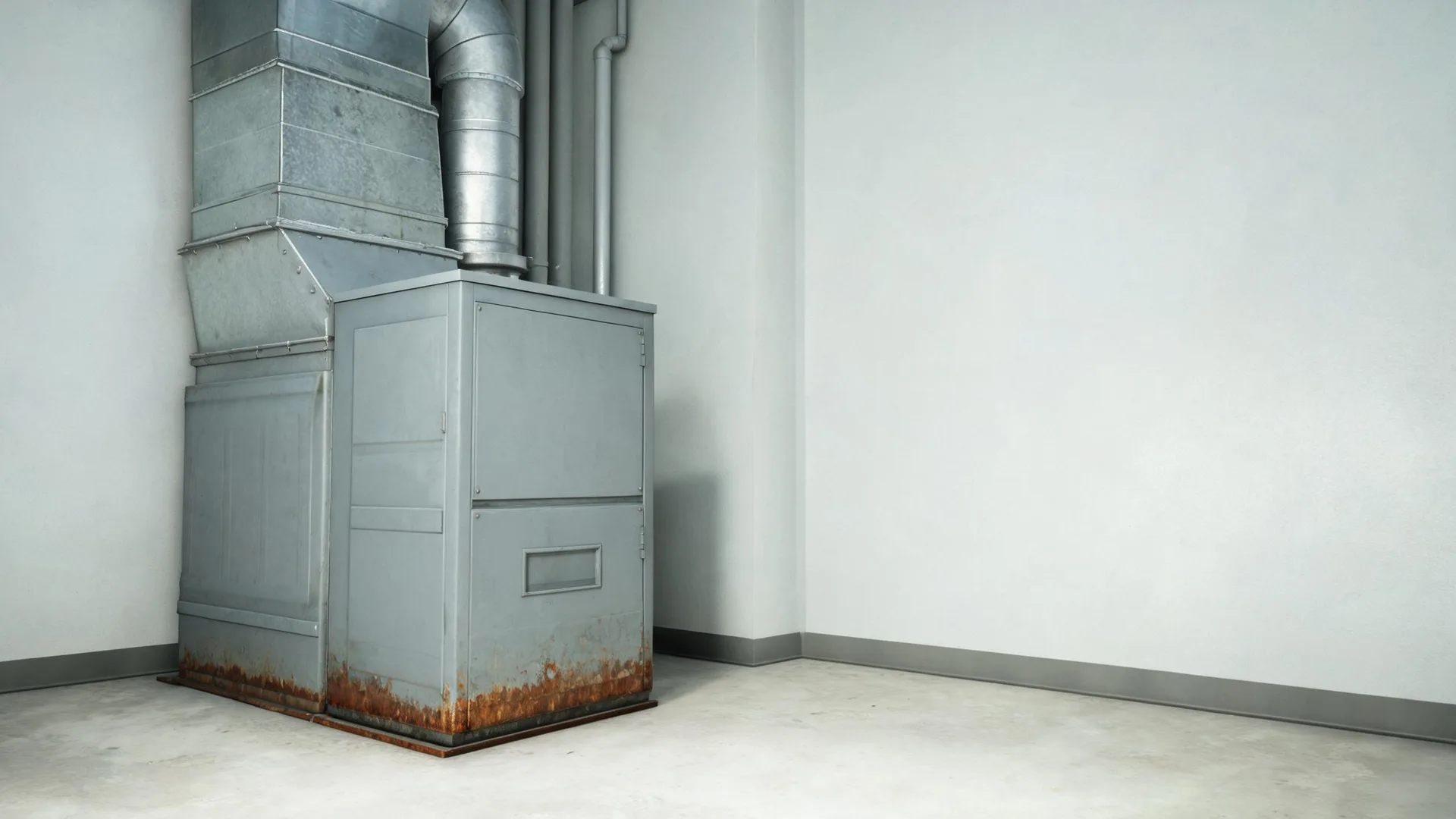
A gas furnace with attached ductwork, gas piping, and condensate lines installed in a concrete-block basement.

What you can check before anyone shows up

Before anyone comes out, check the thermostat first. Make sure it's set to heat, not cool, and set the temperature above room temperature so it actually calls for heat. Next, look at the furnace itself. If it has a window, check whether the flame is steady and blue. A flickering or yellow flame means something's off, and that's not something to handle yourself. Pull the filter and hold it up to a light. If no light comes through, that's your airflow problem right there, or at least part of it. Check the breaker box too. A furnace that won't start at all sometimes just needs a reset switch flipped back on. If you smell gas at any point, stop checking anything. Get out of the house and call it in from somewhere else. Last thing worth a look is the vents themselves. Make sure none are closed off or blocked by furniture. A furnace fighting blocked airflow will run without ever warming the house.

The tech checks the whole system, not just the complaint

A diagnostic visit starts with what the furnace is doing wrong, but it doesn't stop there. The tech checks static pressure, looks at the flame, tests the flue draft, and pulls the cover to look at wiring and connections. A part can fail because it's bad, or it can fail because something else is forcing it to work harder than it should. Finding out which one happened is most of the job.
You get a part name, not a guess

At the end of it, the answer should be specific. Not 'the furnace is having issues' but 'the flame sensor isn't reading' or 'the blower motor windings are shot.' That specific answer is what tells you whether this is a quick repair or something bigger, and it's what the next technician needs if the part has to be ordered.

A furnace usually tells you something is wrong before it quits for good. Short cycling, where it fires up and shuts off again before the house warms, often means a cracked heat exchanger or a flame sensor that's lost its read. A burner that burns yellow instead of steady blue isn't getting the air it needs to burn clean. Banging or popping from the ductwork when it starts up is metal expanding against something it shouldn't, sometimes a clogged burner, sometimes a duct that's too restricted. A furnace that runs constantly without ever bringing the house up to temperature is losing the fight against something, a dirty filter, a weak blower, a thermostat reading the room wrong. Any of these is worth a call before the part finishes failing on its own schedule instead of yours.

Age by itself doesn't settle whether to fix a furnace or replace it. What matters is which part failed and what else it's starting to pull down with it. A cracked heat exchanger ends the conversation, because that's not a part you patch, it's a part you replace, and depending on the unit that can mean replacing the whole furnace. A failed igniter or a bad flame sensor is a different story. Those are small, isolated repairs that don't say anything about the rest of the furnace. The real question to ask is whether this is the first thing to go wrong or the third one this year. One repair is just a repair. A furnace that keeps sending you the same technician for different parts is telling you it's running out of good parts left to fail.