A row of single-story houses, one brick and others with light siding and covered porches, set behind a trimmed green hedge and lawn, under large oak branches draped with Spanish moss.

Furnace Repair in Bastrop, LA

Tell us about the job

Takes about a minute. No obligation.

RepairFurnace or heatingMorehouse Parish, LA
Step 1 of 2

What ZIP code is the job in?

Check the thermostat and the switch first

Make sure the thermostat is set to heat and the temperature is set above room temperature. Check that the furnace switch, which looks like a light switch near the unit, hasn't been bumped off. Look at the breaker too. These sound obvious, but they get missed more than people think.

Know what to tell the tech when they arrive

Notice if the furnace is making a sound it didn't used to, if the air coming out feels cooler than normal, or if it's running longer than it used to. If the pilot light or igniter window is visible, check whether there's a flame. Telling the tech what you noticed and when it started helps them get to the problem faster.

5 months
November through March, your furnace is on duty
37°F
the average winter night it heats against
6 winter storms
in ten years, the nights a failure hurts most
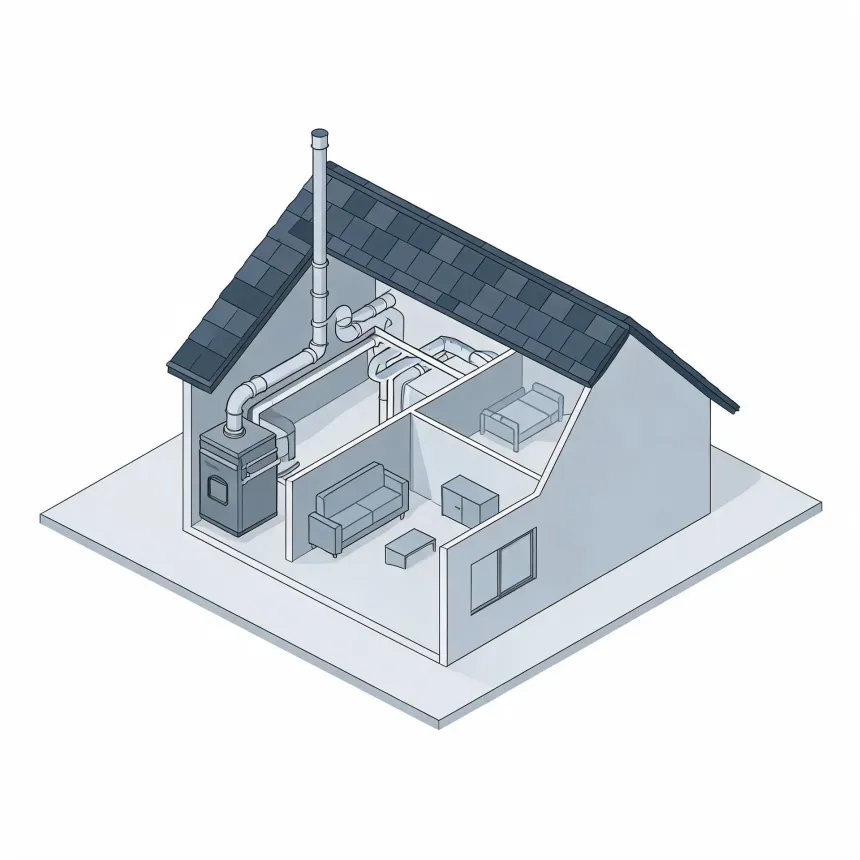
Isometric cutaway illustration of a small gabled house showing a furnace with flue pipe and ductwork connecting to interior rooms containing a sofa, bed, and cabinets.
Your furnace works hardest from November through February.

NOAA nClimDiv, 1991–2020 normals

Furnaces in Morehouse Parish only run about five months a year, November through March.

A furnace that short winters are easy on is usually a furnace worth fixing, not replacing.

October is quiet, then the first cold night in November finds whatever was already weak

Heat runs November through March
Winter nights average 37°F
6 winter storms from 2015 to 2024

Half the homes in Morehouse Parish were built in 1977 or earlier, and half in 1977 or later. That split doesn't point to any one kind of furnace trouble here, old parts failing in older houses and new parts failing in newer ones happen for the same reasons everywhere. Mobile homes make up close to a fifth of the housing here, and those usually run on a different furnace setup than a house does, often a smaller gas or electric unit built for the space. If your furnace is in a mobile home, mention that when you call, since it points to a different kind of unit and a different fix. Otherwise there's nothing about a Morehouse Parish home that makes its furnace problem unusual. It's the same igniter, the same flame sensor, the same blower motor that goes bad anywhere else.

It's usually worth repairing

It has an easier job here than in most places, so your furnace is often in decent shape. Repair is usually worth it.

Find a contractor
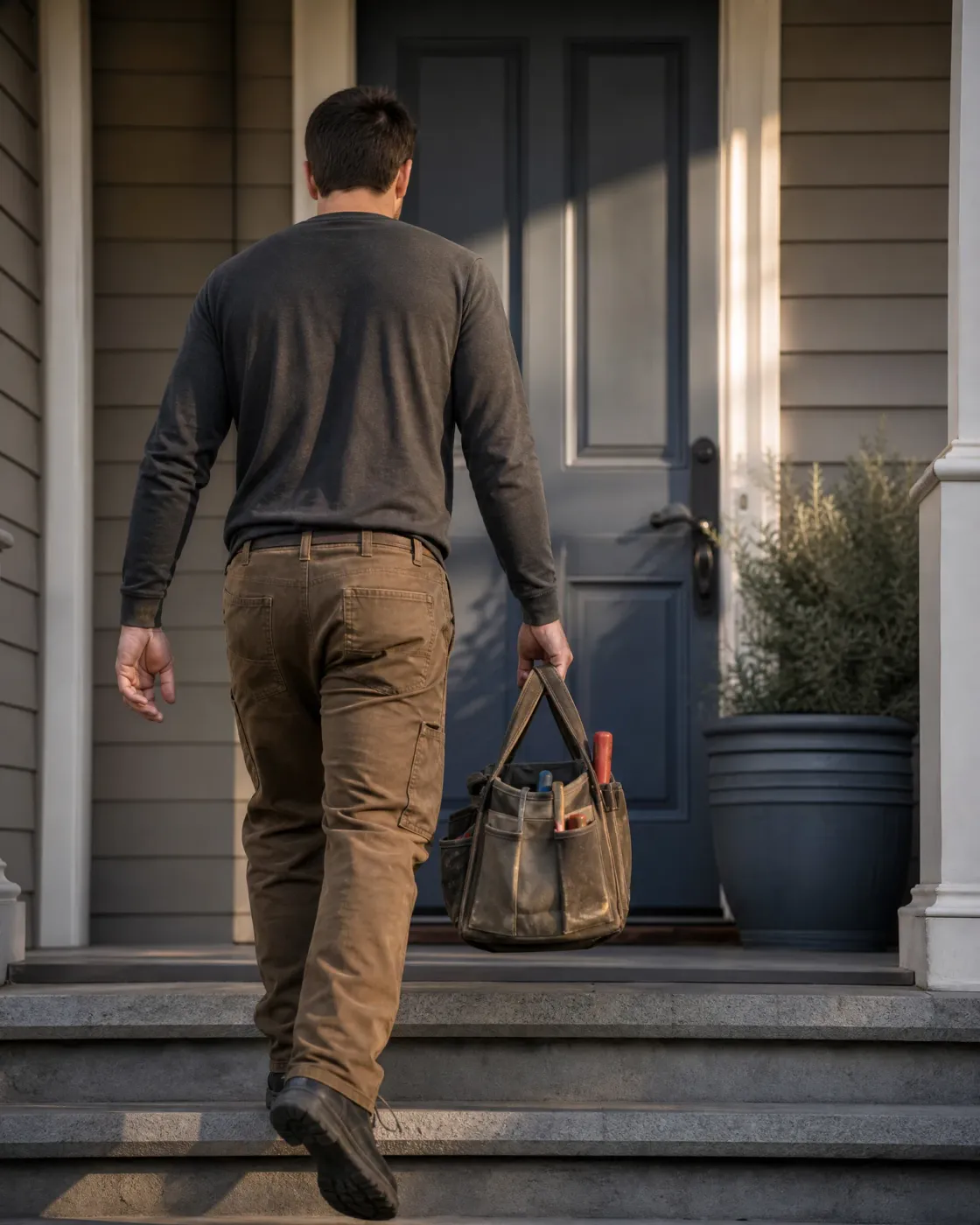
A man in a dark long-sleeved shirt and brown pants walks up concrete steps toward a dark blue front door, carrying a canvas tool bag with tools in it, beside a potted shrub.
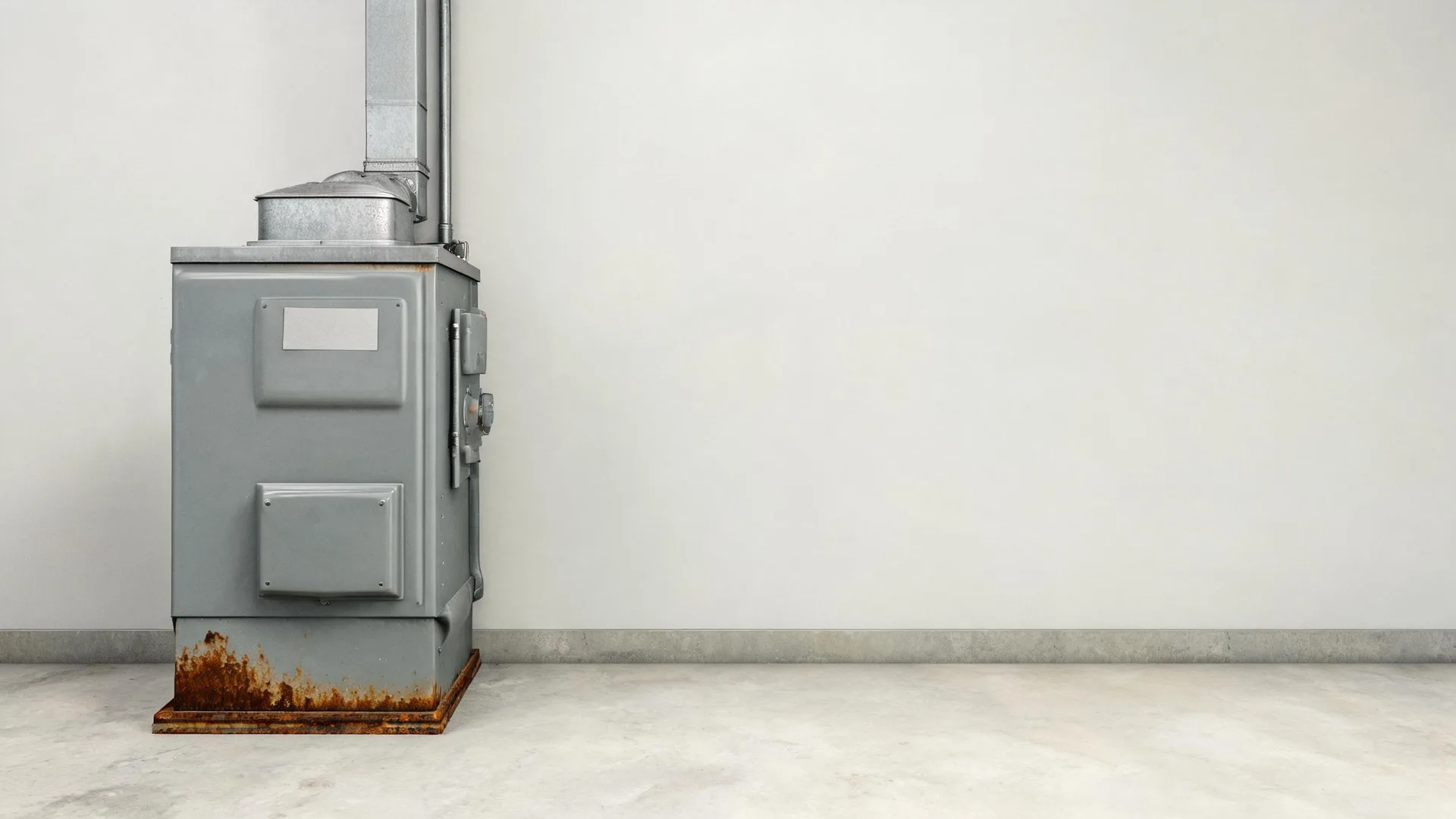
A gray high-efficiency gas furnace installed in an unfinished basement, surrounded by gas lines, a condensate drain, and sheet-metal ductwork.

Five months a year, and most nights it barely has to work

Five months of real work a year, and nights that only average 37°F, isn't much of a load. When ice or a hard freeze does hit, the parts under strain are usually the same ones that cause most calls anyway, the igniter or the blower motor, not the whole unit. That's worth telling the tech, especially if the trouble started on one of the harder nights.

A crack in the heat exchanger gets worse with every cycle

Metal that's already cracked flexes more each time it heats up and cools down. Keep running the furnace and the crack spreads, and that's also how carbon monoxide ends up where it shouldn't. If there's a strange smell or the carbon monoxide alarm goes off, shut the furnace down and leave it off.

A failing limit switch can take the blower motor with it

The limit switch shuts the burners off if the furnace gets hotter than it should. If it's sticking or worn, the burners keep firing past the point they should stop, and the blower ends up pushing air against heat it wasn't built to handle. Letting it run just spreads the damage to a part that started out fine.

Most furnace failures trace back to a handful of parts. The igniter is the one that goes most often, since it heats up and cools down every single cycle and eventually gives out from the wear. The flame sensor is close behind. It's a thin rod that tells the furnace a flame is actually present, and once it's coated with residue it can't do that job, so the furnace shuts off a few seconds after it starts. A blower motor can wear out too, usually after the bearings go, and you'll hear it before you notice the heat loss, a grinding or squealing that wasn't there before. Pressure switches and draft inducers cause trouble when something is blocking the vent or the hose running to the switch gets a crack in it. None of these mean the furnace itself is bad. They're wear parts, and replacing one is a normal repair, not a sign the unit is on its way out.

A diagnostic visit starts before any panel comes off. The tech asks what you noticed and when it started, then checks the thermostat and the switch themselves, same as you did. From there it's a sequence, not a guess. Power and gas supply first, then the ignition sequence, watching whether the igniter glows, whether the flame catches, whether the flame sensor picks it up and lets the burners keep running. If it shuts off a few seconds in, that points one way. If it never tries to ignite at all, that points another. A pressure reading or a look at the flame itself usually tells the rest. Once the tech knows which part failed, they'll explain what it does and what replacing it involves before doing the work.