




A illuminated white antebellum-style house with a wraparound porch, white columns, and Spanish-moss-draped oak trees, photographed at dusk.

Furnace Repair in Abbeville, LA

Tell us about the job

Takes about a minute. No obligation.

RepairFurnace or heatingVermilion Parish, LA
Step 1 of 2

What ZIP code is the job in?

Furnaces here run about five months a year, November through March. Overnight lows average 46°F through the winter, which is mild work for a furnace built to handle real cold. That means a furnace in Abbeville spends most of the year sitting idle, not straining to keep up. When one starts acting up, the cause is rarely that it got worked too hard. It's more likely a part that wore out or something that got missed along the way. That's usually worth fixing rather than replacing.

5 months
November through March, your furnace is on duty
46°F
the average winter night it heats against
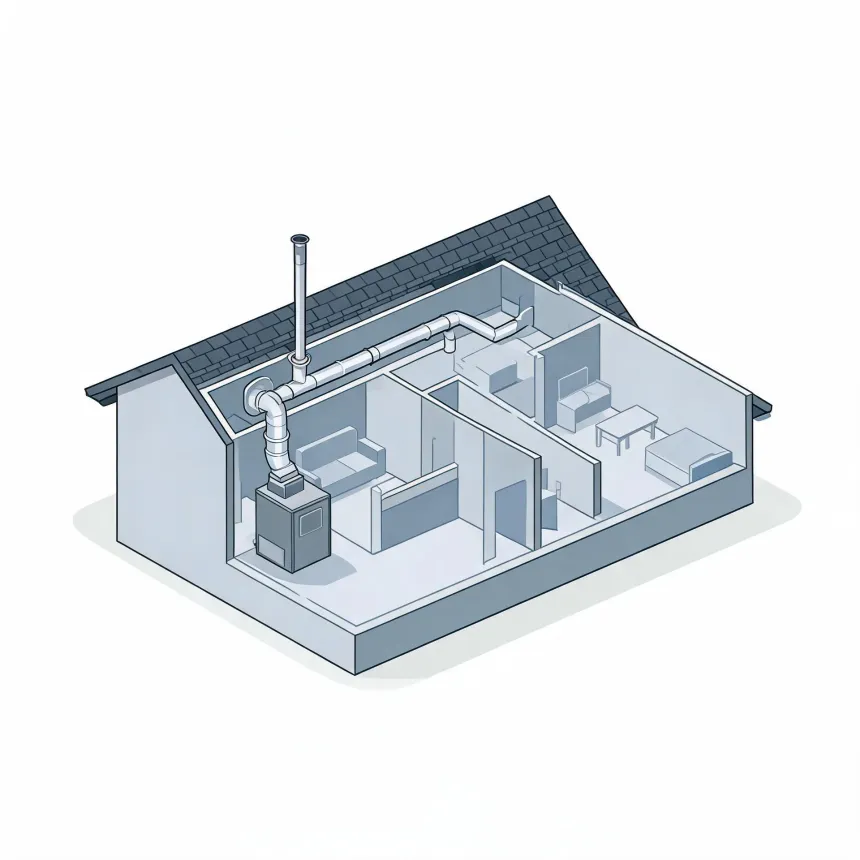
Isometric cutaway illustration of a single-story house showing interior rooms with furniture and a furnace connected to ductwork and a vertical flue pipe extending through the roof.
Your furnace works hardest from December through February.

NOAA nClimDiv, 1991–2020 normals

October is the last quiet month before a furnace in Vermilion Parish switches on for the season.

Whatever part wore out over the summer tends to show itself in that first cold snap, not before.

Weather here isn't the problem. A worn part is.

36 severe weather events from 2015 to 2024
49% of homes statewide lost power a day or more in 2024
22 damaging wind events from 2015 to 2024

Half the homes in Vermilion Parish were built in 1983 or later, half before that, and the age of the house doesn't tell you the age of the furnace inside it. A unit gets swapped out over the years regardless of when the walls went up. If yours came with the house, that's worth checking. Mobile homes make up close to a fifth of the housing here, and a furnace in one works the same as any other, just tied into a smaller duct system. None of that changes what's likely wrong when one quits. A furnace that won't light, won't stay lit, or blows cold air is almost always a specific part failing, not the house around it.

A furnace this is usually worth fixing

A furnace that's only had to work five months a year, through winters that rarely get hard, doesn't wear out from strain. Get the failed part fixed and it should keep going.

Find a contractor
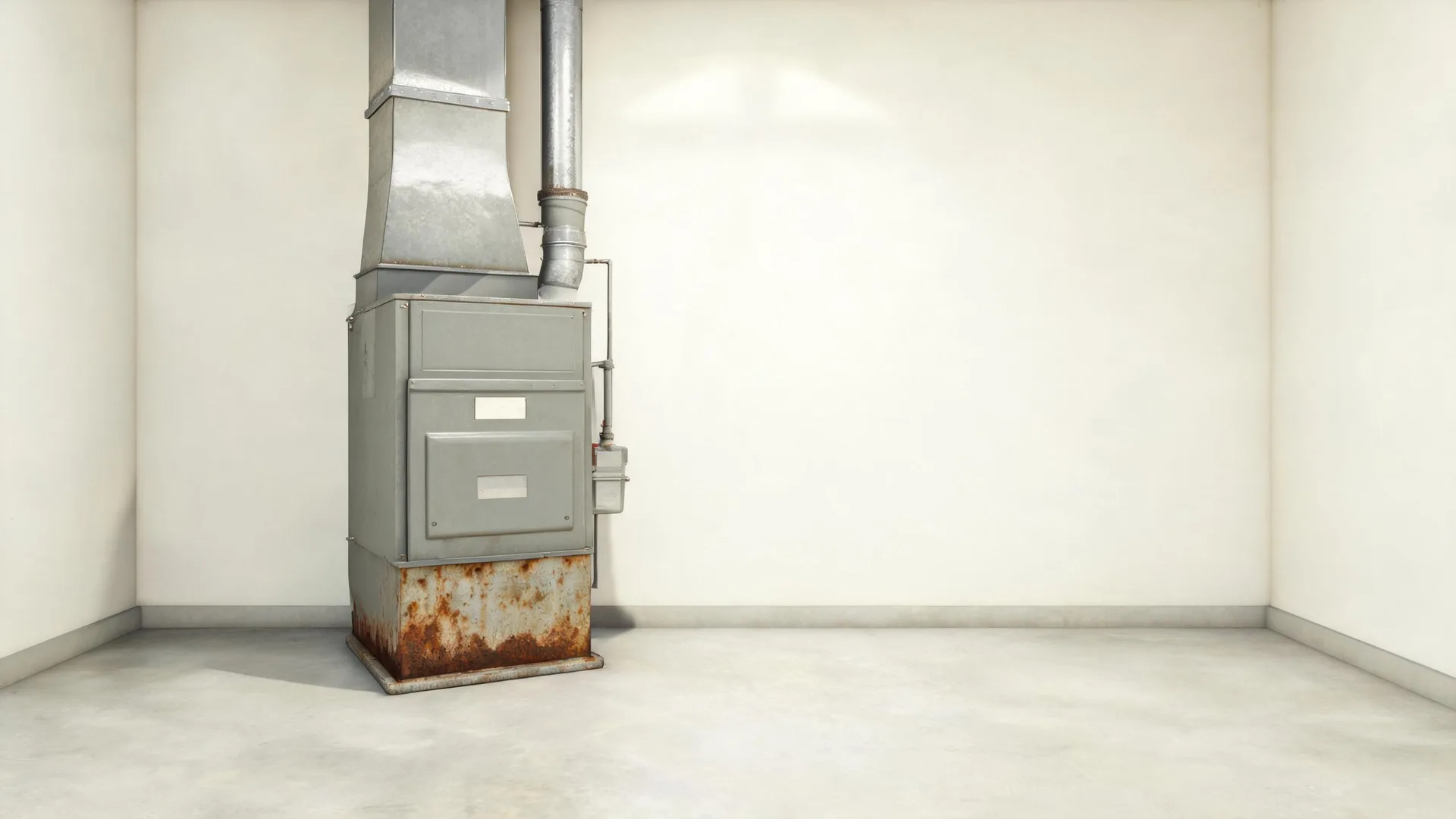
A gray gas furnace with attached ductwork and piping installed in an unfinished concrete basement.

Running it longer doesn't wear it in. It wears it out.

A furnace that won't light should get shut down and looked at, not left to keep trying. Most run on a try and retry cycle. The igniter glows, the gas valve opens, and if the flame sensor doesn't catch a flame fast enough, the gas shuts back off and the whole thing tries again. Do that enough times and the igniter itself starts to wear out, or the flame sensor picks up a coat of soot that makes the problem worse. A blower that's struggling tells a similar story. Pulling air through a clogged filter or a dirty coil makes the motor run hotter, and the bearings wear faster than they would moving clean air. A problem that started in one small part can end up taking the motor with it. A crack in the heat exchanger works the same way. It won't close up by running less, and every extra cycle just flexes it wider.

What you'll actually notice first

A failing furnace rarely just refuses to start. More often it runs but blows air that isn't warm, or it short-cycles, kicking on and shutting off again almost right away. Sometimes it lights fine and then quits partway through a cycle. These are things you can catch without opening a panel, and each one points toward a different part acting up.
Why the smell and the sound matter

A burning dust smell on the first run after sitting idle is normal and clears on its own. A smell that lingers, or one that's sharper, like scorched metal or gas, means shut the furnace down and get it looked at. Noise works the same way. A bang at startup usually means gas is building up before it catches. A screech or grinding from the blower means a bearing or motor is already failing, not about to.

A furnace fails for a handful of reasons, and most of them trace back to one part wearing out on its own schedule. The igniter is the part most likely to go first. It heats up and cools down every single cycle, and that repeated flexing is what eventually cracks it. A flame sensor doesn't break so much as get dirty. A thin layer of soot builds up on the rod over time, and once it's coated enough, it stops reading the flame and shuts the gas off even though the furnace lit fine. Capacitors that start the blower motor weaken gradually, so the motor struggles to spin up before it finally doesn't. A pressure switch can fail on its own, or it can be doing its job correctly and flagging a blocked vent somewhere else. None of these failures have much to do with how hard the furnace has been running. They happen because a part has a limited number of cycles in it, and eventually it uses them up.

One failed part is a repair, not a reason to replace the furnace. A cracked igniter, a dirty flame sensor, a weak capacitor, a bad pressure switch, each of those gets swapped out on its own without touching anything else. A cracked heat exchanger is different. It isn't something you replace by itself, and once it's cracked the furnace is usually done. The way to tell these apart isn't how old the furnace is, it's whether this is a single part acting up or the latest in a string of them. A furnace that's otherwise sound and just stopped lighting is worth fixing every time. One that's had several different parts fail over a short stretch is telling you something, and that pattern matters more than any number on the unit.