A bare concrete basement containing a gray gas furnace with metal ductwork and a vertical flue pipe, lit by a single hanging bulb.

Furnace Installation in Shreveport, LA

Tell us about the job

Takes about a minute. No obligation.

New system or replacementFurnace or heatingCaddo Parish, LA
Step 1 of 2

What ZIP code is the job in?

Caddo Parish sees serious weather

Caddo Parish logged 419 severe weather events between 2015 and 2024, including damaging wind, hail, and tornadoes. A furnace going in here is going in a place where storms show up on a regular basis, not once in a while.


Power doesn't always hold

Nearly half of Louisiana households went at least 24 hours without power in 2024. A furnace needs electricity to run its blower and ignition, so an outage means no heat even with the furnace working fine. Worth asking a contractor what backup options exist for keeping heat on when the power drops.

5 months
November through March, your furnace is on duty
38°F
the average winter night it heats against
80% AFUE
the federal minimum any new unit must meet
Isometric cutaway illustration of a single-story house with a dark shingled roof, showing interior rooms with beds and furniture, overhead ductwork, and a gray furnace with a tall flue pipe at the exterior wall.
Your furnace works hardest from November through February.

NOAA nClimDiv, 1991–2020 normals

Electricity in Louisiana ran $34.38 per million Btu in 2024, cheaper than in most states.

A high-efficiency furnace still costs more up front, and here it takes longer to earn that back.

A standard furnace is the right call here

Half the homes here were built by 1975
Heat runs November through March
Winter nights average 38°F

Given that, put the money where it matters more for this area. A good cabinet, a reliable igniter, a blower motor from a brand with parts on hand locally. A mid-efficiency furnace heats the same house just as well as a high-efficiency one, and it costs less to install. The difference shows up slowly on the power bill here, slowly enough that most homeowners never notice it. Ask the contractor about warranty coverage and how fast parts come in. That matters more day to day than the AFUE number on the spec sheet.

Get it installed before November, while you still have the choice

Furnace season starts in November here and runs through March. October is the month to have the new furnace in, not the month to start calling around. Get it installed before the first cold night and you pick the contractor, the unit, and the schedule, instead of waiting on whoever can come fix the old one when it quits.

Find a contractor
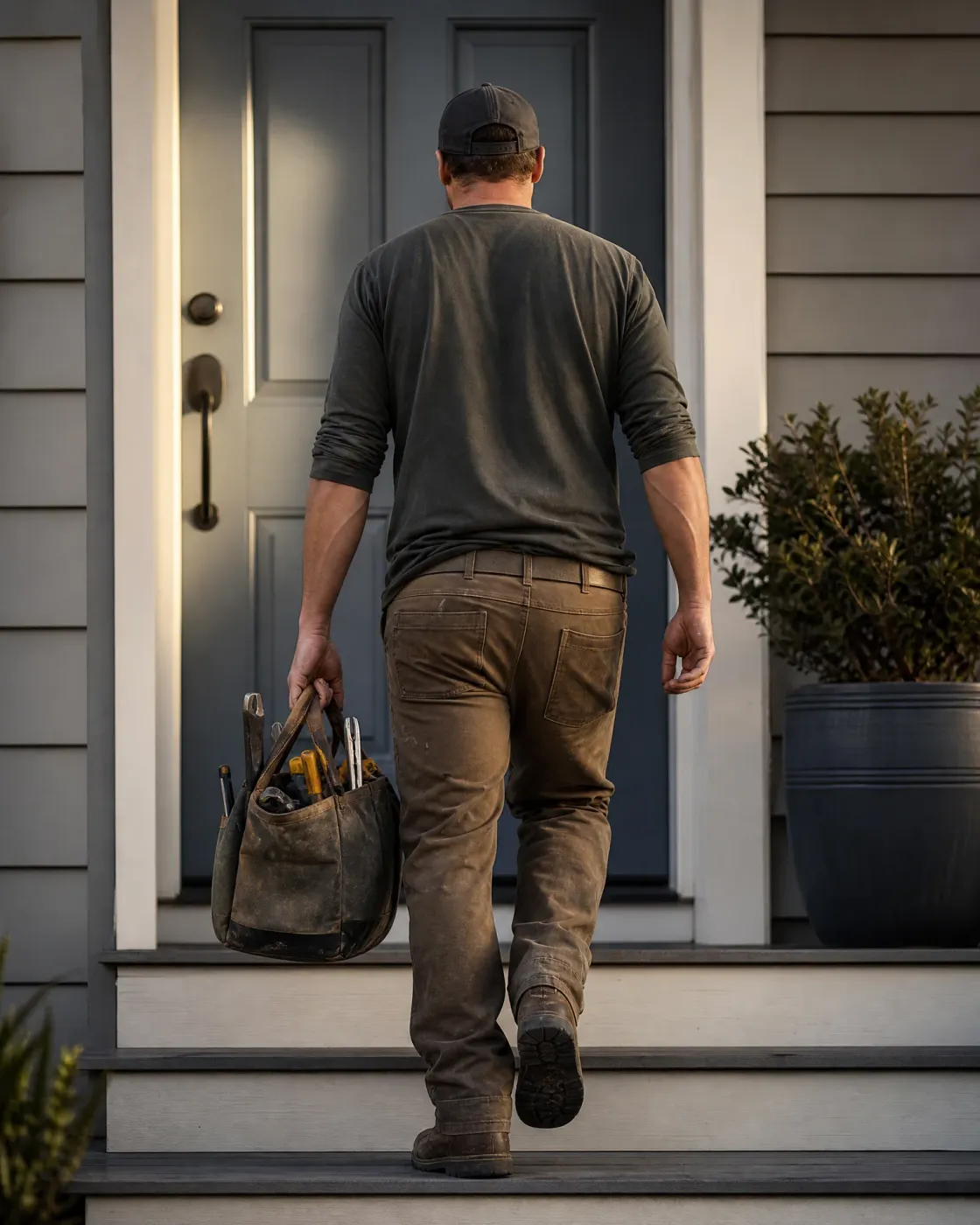
A man in a cap, dark long-sleeved shirt and brown work pants walks up porch steps toward a gray front door, carrying a worn canvas tool bag filled with hand tools.
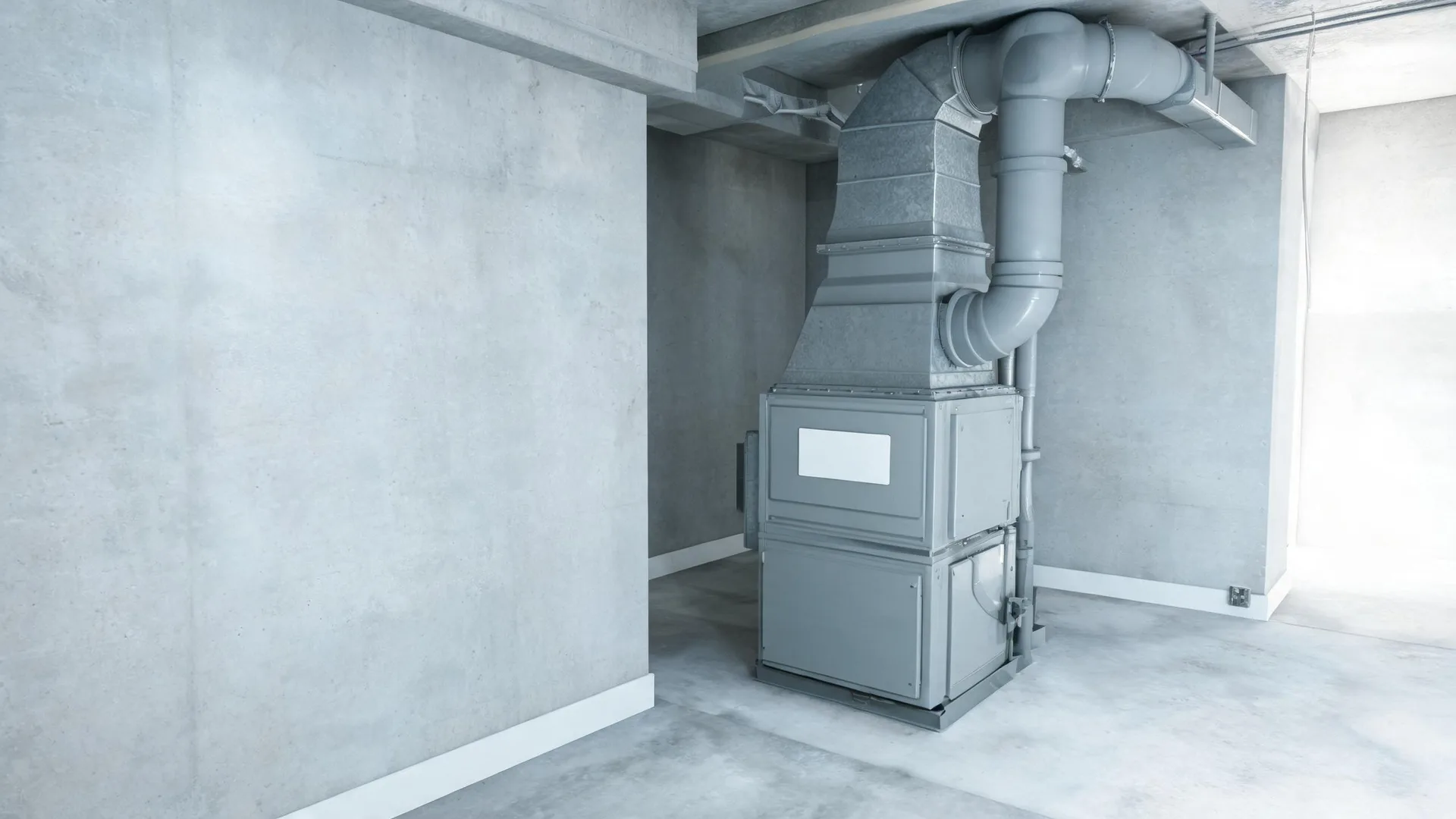
A gray residential gas furnace installed in an unfinished basement, connected to sheet-metal ductwork and PVC pipes.

A short season for this machine

Five months of heat a year here, November through March. The rest of the year this furnace sits idle, and winter nights average 38 degrees, not the single digits a furnace further north has to fight. That's a lighter load over the life of the unit, less time spent cycling, less strain on the heat exchanger and blower. It doesn't mean skip maintenance. A furnace that sits unused most of the year still needs its filter changed and burners checked before the first cold night. Sitting idle is not the same as being cared for.

Get the load calculation, not a guess

The right furnace size comes from a room by room calculation, not a match to whatever is already there. A unit that's too big cycles on and off fast, never running long enough to heat evenly or wear in right. A contractor should walk the house and run the numbers, not quote a size off the driveway.

Ask what happens to the old ductwork

A new furnace moves air through the same ducts the old one used, unless someone checks them first. Leaks, crushed runs, or a duct system sized for a different furnace will hold back even a good unit. Ask whether the ducts get inspected as part of the job, not just the furnace swapped out.

Sizing a furnace is not about matching the old one or rounding up for good measure. A contractor works out how much heat a house actually loses on a cold day, room by room, counting windows, insulation, ceiling height, the works. Too big and the furnace blasts out heat, hits the thermostat, and shuts off again before the house warms evenly, leaving cold corners and a system that short cycles for years. Too small and it runs constantly, struggling to catch up on the coldest nights and wearing out sooner than it should. The right size runs in long, steady stretches, which is both the comfortable way to heat a house and the easy way on the equipment.

Installation day starts with the old furnace coming out. That's when a contractor finds out what's really behind the wall. Disconnecting the gas line, the venting, and the ductwork takes longer than pulling the unit itself. The new furnace gets set, leveled, and connected to the same supply and return trunks, with gas and electrical run to it fresh. Venting often has to be checked or resized to match the new unit, since a mismatched vent can mean a furnace that doesn't draft right. Before anyone calls the job done, it should run through a full cycle. That means checking the temperature rise, checking for gas leaks, and making sure the blower moves the air it's supposed to. Skipping that last part is how a furnace ends up back on a service call within the month.