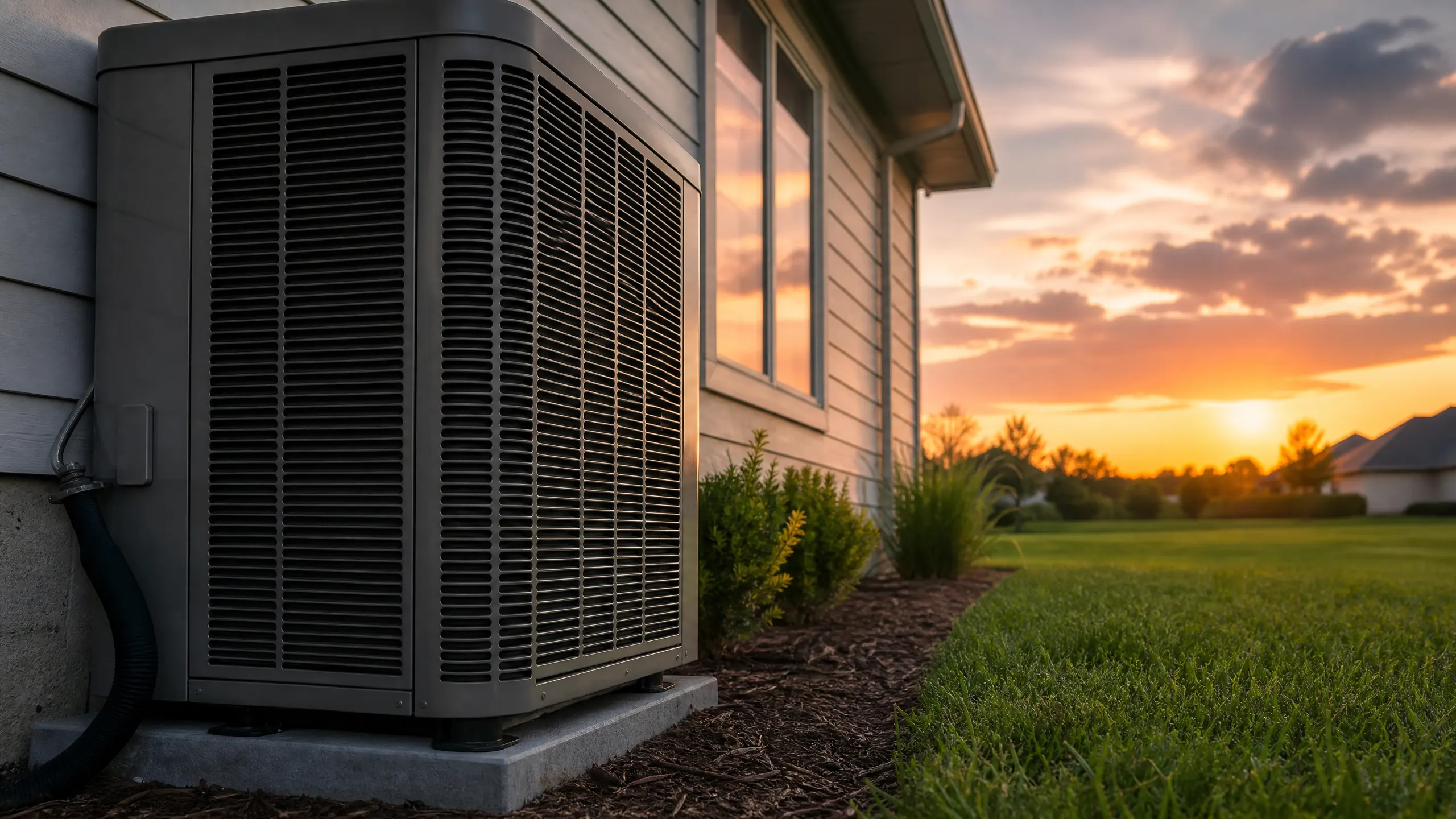
A quick visit usually means someone glances at the outdoor unit, checks the pressure on a gauge, and calls it done. A thorough one means the coils actually get cleaned, not just looked at, since dirt on the coil surface makes the whole system work harder to move heat. The refrigerant charge gets checked against what the manufacturer specifies for that unit, not just topped off by feel. Someone should test the reversing valve, since that's the part that lets a heat pump switch between heating and cooling, and a sticking valve won't show up until the season changes. The condensate drain should get cleared, the electrical connections checked for looseness, and the defrost cycle tested so the outdoor coil doesn't ice over on a cold morning. If the visit takes only a few minutes and nothing gets written down, you're not getting a tune-up. You're getting a look.
Half the homes in Caddo Parish were built in 1975 or earlier, half after.
A heat pump's age and a house's age are two different things. Either way, one visit a year keeps it ready.
Your heat pump works both sides of the year here, which is why April and October both matter
Cooling runs May through OctoberHeat runs November through MarchClimate zone 3A
A heat pump that needs attention usually tells you before it quits outright. Listen for a clatter or grind from the outdoor unit that wasn't there before, or a hiss that suggests refrigerant escaping where it shouldn't. Watch the outdoor coil for a heavy coat of frost that doesn't clear on its own during the defrost cycle. Inside, warm air that feels lukewarm instead of hot, or a system that runs long stretches without shutting off, both point to a system working harder than it should to hit the thermostat setting. Short cycling, where it kicks on and off again within minutes, wears on the compressor every time it happens. A musty smell from the vents often means the condensate drain is clogged and water is sitting where it shouldn't. None of these mean the system is done. They mean it's asking for a look before the part that's struggling takes something else down with it.
The compressor pays for what the coil didn't do
A dirty outdoor coil can't shed heat the way it should, so the compressor runs longer to move the same amount of heat. It can handle a heavy load now and then. It isn't built to carry that load every cycle, season after season, and the compressor is the part a failed system usually can't come back from.
The defrost cycle only works if the sensor does
A heat pump checks its own outdoor coil for ice and clears it automatically, but that depends on a sensor and control board doing their job. Skip enough maintenance and that sensor can drift or fail without any obvious sign. The coil ices over, airflow drops, and the system keeps running anyway, just not doing much heating while it does.
A tune-up turns up things a homeowner has no way to see from the thermostat. Pull the blower access panel and you might find the wheel caked in dust, spinning unbalanced and moving less air than it should, even though the system sounds fine. The contactor that switches the outdoor unit on can be pitted or burnt from months of cycling, still working but close to failing outright. Refrigerant lines get checked for the oily residue that means a slow leak, something you'd never notice until the charge gets low enough to hurt performance. A capacitor can test weak long before it quits, giving the compressor a hard start every single time without anyone hearing a difference. These aren't things you catch by listening to the system run. They show up when someone opens it up and tests each part against what it's supposed to read.
A tune-up also means someone checks the things that don't fail dramatically, they just drift. The thermostat's calibration gets tested against an actual thermometer, since a few degrees off there makes the system run longer than it needs to. Ductwork connections at the plenum get checked for gaps, because air leaking out there never makes it to a single room. The outdoor fan motor gets tested under load, not just spun by hand, since a motor can turn freely and still be too weak to move the air the coil needs. Filters get swapped rather than knocked clean, since a filter that looks fine can still be clogged enough to starve the system of airflow. None of this shows up as a breakdown. It shows up as parts working harder than they were ever meant to, for longer than they should have to.