A red brick single-story house with a covered porch and a nearby cream-colored house with a wraparound porch, seen across a lawn behind a trimmed hedge, framed by large moss-draped oak branches.

Heat Pump Maintenance in Houma, LA

Tell us about the job

Takes about a minute. No obligation.

Tune-up, service, or cleaningHeat PumpTerrebonne Parish, LA
Step 1 of 2

What ZIP code is the job in?

The refrigerant charge gets checked, not just the filter

A quick visit gets you a rinsed filter and a glance at the thermostat. A thorough one includes checking the refrigerant charge against what the system calls for, since a heat pump running low won't heat or cool the way it should in either direction. The tech should also check the reversing valve, since that's the part that lets the system switch between heating and cooling, and a weak one can leave you stuck in one mode.


What that means for your system

A heat pump works year round, not just in summer, so there's no slow season where a skipped step goes unnoticed. If the coils are dirty or the refrigerant is off, the system has to work harder to move heat in both directions, and that shows up as higher runtime long before it shows up as a breakdown. A tune-up that only checks the obvious parts misses the ones that actually cause that kind of strain.

Terrebonne Parish logged 53 severe weather events in the last ten years, 28 of them with damaging wind.

Your outdoor unit sits outside through every one of them, so a check for bent fins and debris belongs in any maintenance visit here.

Half the homes here were built since 1983, and a newer heat pump is worth keeping that way

Half the homes here were built by 1983
Power costs 11.73 cents a kWh statewide
Climate zone 2A
A newer system still needs a yearly lookHalf the homes in Terrebonne Parish were built in 1983 or later.

Hail is part of that same pattern. Terrebonne Parish has had 10 hail events over the past ten years, and a heat pump's outdoor coil and fins sit right in the open for it. A tech doing maintenance can check the coil for dents that block airflow and straighten fins that have closed up, which is easy to miss on your own since the damage doesn't stop the unit from running. It just makes it work harder. Ask that this be part of the visit, not an afterthought to the filter and thermostat check.

Check it before storm season

Storm season beats up outdoor units here. Have it checked for damage and debris before you need it.

Find a contractor
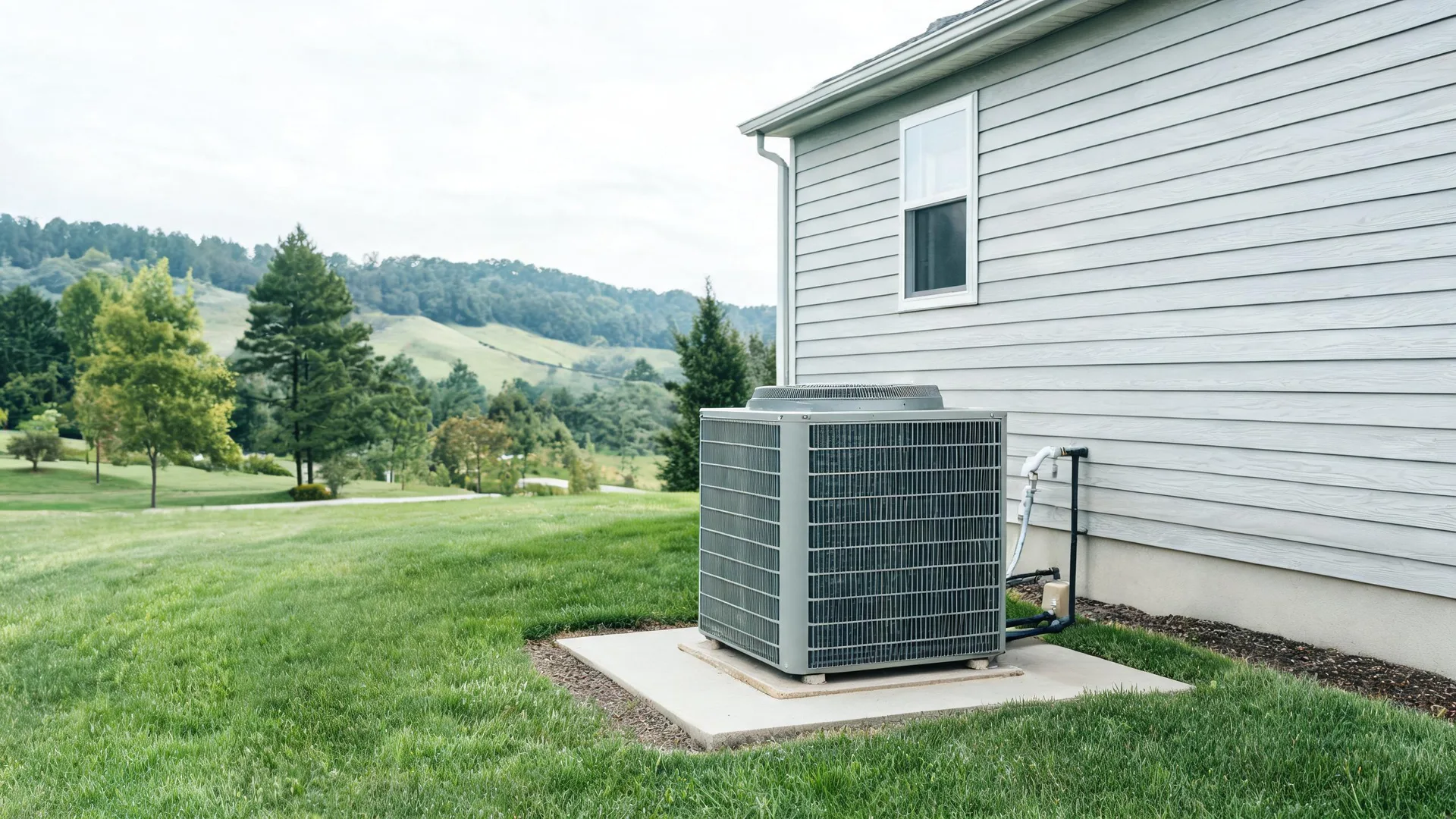
A gray heat pump condenser unit mounted on a concrete pad against the gray lap-siding exterior wall of a house.

The spots that decide how hard it runs

A heat pump moves air across the filter, moves heat across the coils, and drains off what the indoor coil pulls out of the air. All year, not just one season, so none of those spots gets a break. The filter sits in the return path, and once it loads up with dust, the blower has to pull harder to move the same air across the indoor coil. The coils, indoor and outdoor, are where the heat actually transfers, and a film of dirt on either one acts like a blanket, slowing that transfer down even though the fan and compressor keep running the same as always. The drain just carries away what the indoor coil pulls out of the air, but when it clogs, the water backs up into a pan with a float switch, and that switch shuts the whole system down rather than let it overflow. None of these ever cause a dramatic failure on their own. They just make the compressor run longer and hotter to do the same job, and the compressor is the part that was never meant to be cleaned or swapped out on a whim.

The signs are easy to miss on purpose

A heat pump losing its edge doesn't usually stop working. It runs longer to hit the same temperature, cycles more often, or blows air that's warm but not quite warm enough. None of that trips a breaker. A system that used to keep up now struggles on the coldest or hottest days first, since that's when it has the least room for error.

What a check catches before you feel it

A frosted outdoor coil in heating mode, a hiss or bang when the system switches between heating and cooling, short cycling where it shuts off before the room's actually comfortable. Any of these is worth a look even if the system still technically runs, because the part causing it rarely fixes itself.

A tune-up starts with numbers a thermostat can't give you. Static pressure across the coil, temperature split between the air going in and the air coming out, amp draw on the compressor while it's running. Those readings tell a tech whether the system is moving the air and the refrigerant it was designed to move, long before the homeowner notices anything off. A coil can look clean and still be coated in a film thin enough to pass a glance but thick enough to choke airflow. A contactor can be pitted and still close the circuit, just with more resistance and more heat than it should. None of that shows up as a smell or a sound. It shows up as a number that's drifted from where it was last time someone checked, which is the whole reason that last check matters.

A full tune-up checks both the inside and outside unit, since a heat pump depends on both to work in either direction. The outdoor unit gets opened up enough to check the contactor and capacitor, the parts that get the compressor running each cycle, and a weak one shows up as hard starts or a compressor that hums without turning over. Indoors, the tech checks the blower motor and its wheel, since a wheel caked in dust moves less air even when the motor itself runs fine. The condensate drain gets checked too, since a clogged one backs up and can shut the system down through a safety switch before you ever smell standing water. Electrical connections get tightened, since a loose one builds resistance and heat at the exact spot it's hardest to notice until it fails. None of this is optional extra work. It's the difference between a tune-up and a filter change with a invoice attached.