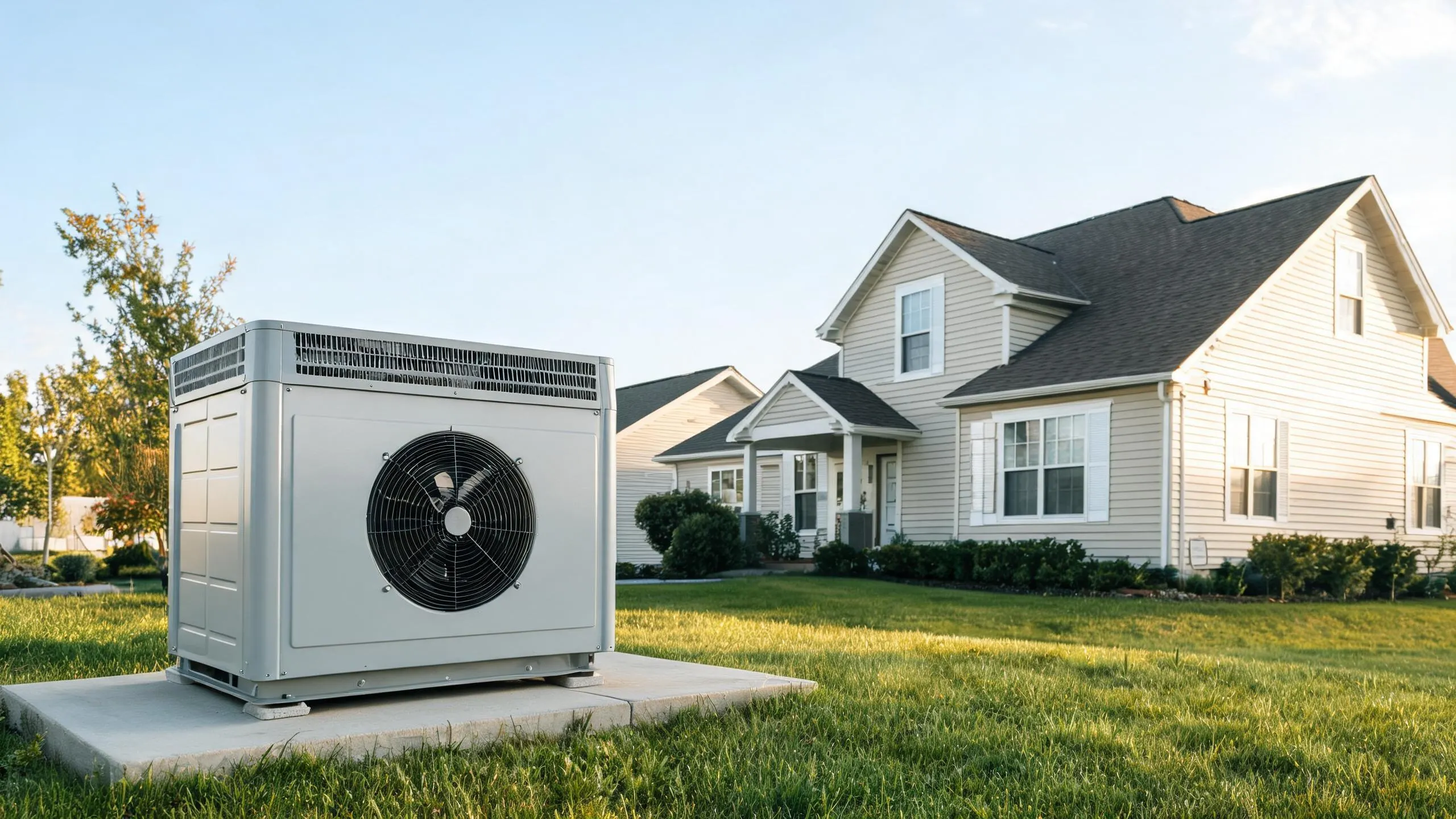
An outdoor heat pump unit mounted on a concrete pad in the front yard of a gray suburban house.

Heat Pump Maintenance in Breaux Bridge, LA

Tell us about the job

Takes about a minute. No obligation.

Tune-up, service, or cleaningHeat PumpSt. Martin Parish, LA
Step 1 of 2

What ZIP code is the job in?

Keep the filter clean

A dirty filter chokes airflow across the indoor coil. The system has to run longer to move the same amount of air, and in the worst case the coil ices over. Check it against the light, and swap or rinse it whenever it looks gray instead of white.


Keep the outdoor unit clear

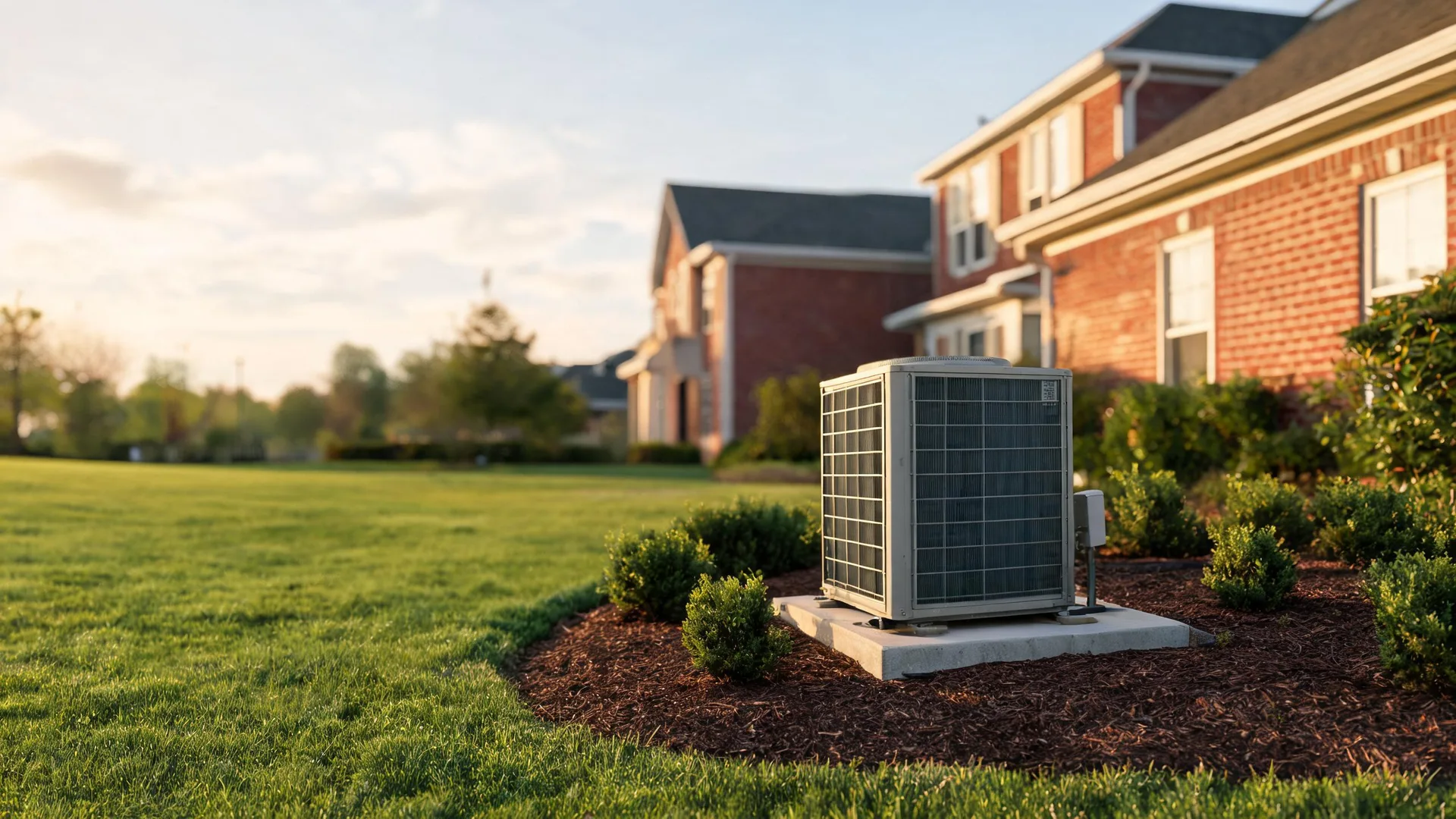
The outdoor unit needs open air on all sides to pull heat in or push it out. Leaves, grass clippings, and anything stacked against the cabinet make it work harder. Walk around it now and then and clear away whatever has piled up, but leave the panels and wiring to a licensed contractor.

A heat pump in Breaux Bridge switches over to heat in November and starts cooling again in April.

October and March are when a contractor should check it, right before each switch asks more of it.

One tune-up a year covers a house this age

Half the homes here were built by 1986
Power costs 11.73 cents a kWh statewide
Climate zone 2A

Breaux Bridge sits in a stretch of Louisiana that gets hit from every direction. St. Martin Parish logged 55 severe weather events over the last ten years, counting damaging wind, hail, tropical storms and a handful of tornadoes. Your outdoor unit sits through all of it with nothing but a thin cabinet for cover. Hail dents the housing and bends the fins that move heat in and out. Wind drives branches and grit into the coil, and what's left behind often packs in low where you won't see it walking by. Power loss adds to it. Close to half of Louisiana households went a full day or more without power last year, and a unit that sat through an outage has to restart under load once it's back. A contractor can check for dents, bent fins and debris that built up where you can't see it.

Book it before the season

It starts running hard in the first month of the season here. Book the check the month before.

Find a contractor
A man in a cap, dark t-shirt and worn tan work pants walks up steps toward a dark front door, carrying a canvas tool bag filled with tools, beside a potted shrub.
A gray air-source heat pump mounted on a concrete pad next to a house with gray vinyl siding, surrounded by gravel and flanked by green shrubs and white hydrangea flowers.

A real tune-up takes time because the parts that fail are the ones you can't see

A quick visit hits the easy parts. Gauges on the lines, a glance at the filter, maybe a wash on the outdoor coil, and the tech is back in the truck. A thorough one takes longer because the coil gets pulled or at least inspected on both sides, not just rinsed from outside where the dirt sits lightest. Amp draw gets checked on every motor against its rating, not just listened to for anything obviously wrong. The reversing valve gets run in both directions and watched, not assumed to be fine because the system happened to heat the shop truck that morning. Electrical connections get tightened at the contactor, because a loose one runs hot and burns itself open eventually. If a tech is in and out in a few minutes with no ladder and no gauges connected, that's a look, not a tune-up.

What a tune-up checks on the inside

A contractor measures the refrigerant charge and checks it against what the system calls for. Too little and the system can't move heat right in either direction. They also check the electrical connections at the contactor and the capacitor's readings, since a weak capacitor makes the compressor or the fan motor struggle to start.

What stays hidden until it fails

The reversing valve is what lets a heat pump switch between heating and cooling, and a homeowner has no way to test it without the right gauges. A contractor can run the system in both modes and confirm the valve is shifting all the way, catching a valve that's starting to stick before it leaves the house stuck in one mode.

A heat pump that needs a look rarely just quits. It gives you something smaller first. Warm air out of the vents when it should be hot, or cool air that isn't quite cold, usually means the system is working harder to hit a temperature it used to hit easily. Short cycles, where it kicks on and off again every few minutes instead of running a full stretch, point to a problem it's trying to compensate for. Ice on the outdoor unit in heat mode past a normal defrost, or a hissing or bubbling sound near the lines, both mean refrigerant is involved somewhere. A smell when the system starts up, or water pooling near the indoor unit, are worth a call on their own. Any one of these is small by itself, but it's the kind of thing a contractor can trace back to its cause before it takes something else down with it.

A tune-up starts with the coils, both indoor and outdoor, checked for dirt and grime that block heat transfer. From there a contractor checks refrigerant charge, since a system low on charge or overcharged can't move heat right in either direction. They'll check amp draw on the compressor and fan motors against what each is rated for, because a motor pulling more current than it should is a motor wearing toward failure. The reversing valve gets run in both directions to confirm it shifts all the way. The drain line gets checked for algae and clogs, since a backed-up drain means water where it shouldn't be. Thermostat calibration gets checked too, so the temperature it's calling for is the temperature it's actually holding. None of this is guesswork. It's the same list, checked the same way, every time.