





A nighttime street scene featuring a row of lit white colonial-style houses with wrap-around porches, flanked by oak trees draped in Spanish moss.

Heat Pump Maintenance in Addis, LA

Tell us about the job

Takes about a minute. No obligation.

Tune-up, service, or cleaningHeat PumpWest Baton Rouge Parish, LA
Step 1 of 2

What ZIP code is the job in?

Half the homes in West Baton Rouge Parish were built in 1993 or later. That's a lot of heat pumps still well within their working life, if your system came with the house. A system that age is worth protecting, not just repaired when it finally quits. Yearly maintenance catches the small wear, a weak capacitor or a coil losing airflow, before it turns into a compressor problem. The newer the equipment, the more a check-up pays back in years of service.

A dirty filter starves the indoor coil of airflow, and the outdoor coil can't shed heat if it's packed with grass clippings and leaves.

A clogged condensate drain backs up water into the pan and sometimes into the house, so check it along with the rest.

A heat pump in West Baton Rouge Parish runs cooling April through October, then heat November through March

Cooling runs April through October
Heat runs November through March
Power costs 11.73 cents a kWh statewide
Addis weather doesn't go easy on a heat pumpWind did the most damage here, 11 times in ten years.

If your heat pump is one of the newer ones in the parish, get it on a yearly schedule from the start rather than waiting for a problem to show up. A technician checking a system early on can write down the refrigerant charge, the electrical readings, the airflow numbers. That first visit becomes something to compare against later, so the next check-up shows whether the system is aging normally or something's wearing faster than it should. Ask whoever services it to keep those notes. Mobile homes make up a fifth of the housing stock here, and ductwork in a mobile home often runs shorter and tighter, so airflow is worth checking every single visit, not just when something feels off.

Keep it in good shape

If your system is fairly new, a yearly check keeps it in good shape for longer.

Find a contractor
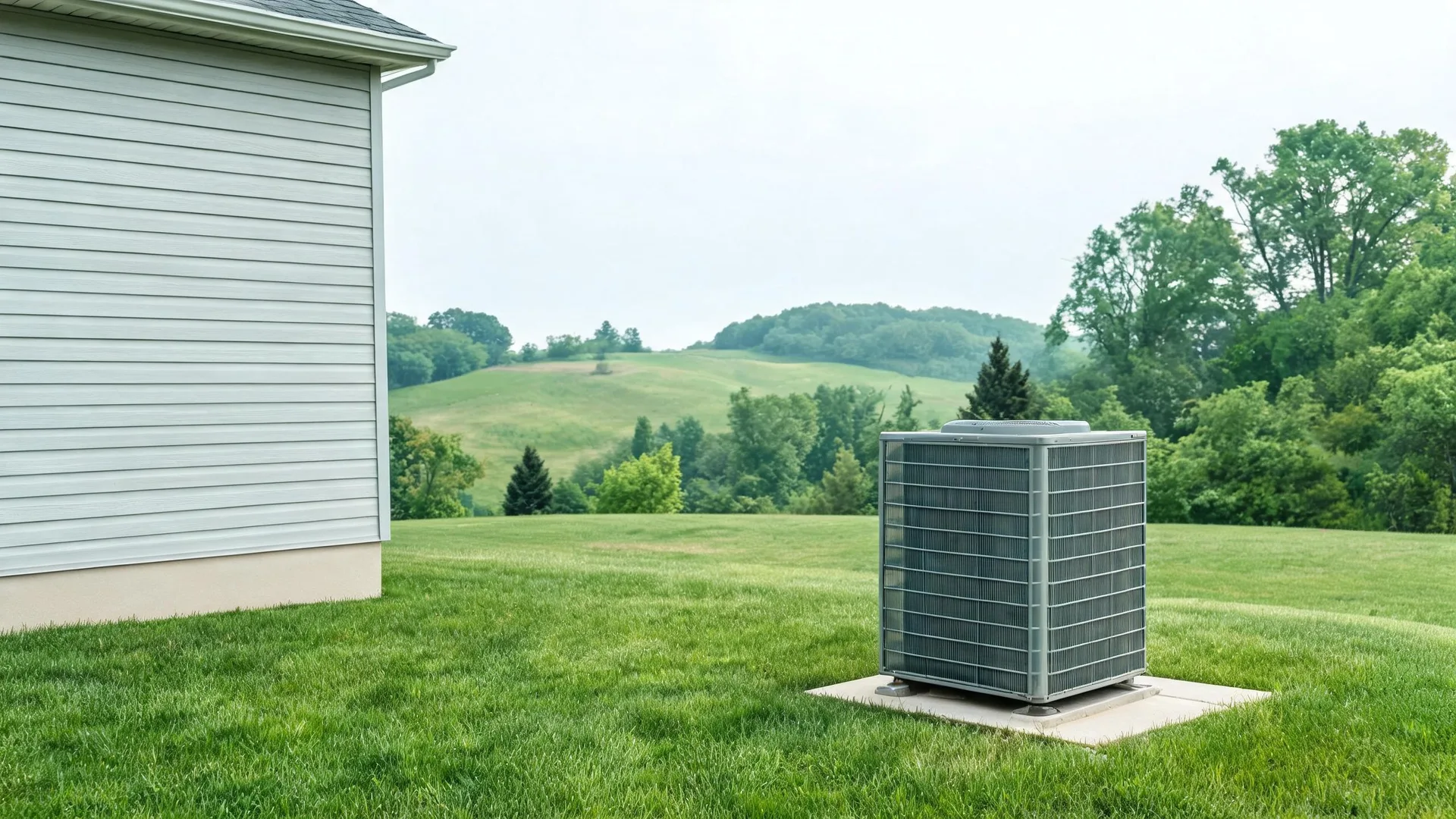
A residential heat pump outdoor unit mounted on a concrete pad next to a house with gray vinyl siding.

It works both sides of the year

A heat pump doesn't get a true off season. It cools the house for part of the year, then the reversing valve switches it over and it spends the rest of the year heating, so that valve and the compressor behind it are always the ones doing the work. Watch the outdoor unit during the heating months. A little frost on the coil is normal and it clears during a defrost cycle. Frost that doesn't clear, or ice that keeps building, means the defrost board or a sensor isn't switching the way it should. Listen for the outdoor unit struggling to start, a hum with no spin, or the system shutting off and restarting every few minutes instead of running a full cycle. That short cycling wears on the compressor fast. If the air from the vents feels weaker than it used to, in either season, or the system runs long stretches without catching up to the thermostat, that's worth a technician's attention before it turns into a bigger repair.

The compressor pays for what the rest of the system skips

A heat pump that never gets looked at keeps running on a dirty coil and a slowly dropping charge, because nothing forces it to stop. The compressor just works harder to make up for both. It's the one part in the system with no backup. Everything else, the filter, the coils, the charge, exists to keep the compressor from being the thing that finally gives out.
Skipped maintenance shows up as a bigger repair, not a smaller one

A system that's never serviced doesn't fail gently. The problems a technician would normally catch, a weak capacitor, a reversing valve starting to stick, a sensor giving a bad reading, don't go away on their own. They sit there and get worse until the system stops heating or cooling altogether, usually on the day it's needed most.

Between visits, the filter is the one thing worth checking on your own. Pull it out, hold it up to a light, and if you can't see through it, swap it in. A dirty filter chokes airflow across the indoor coil, and the system ends up working harder to move the same amount of heat. Outside, keep the area around the unit clear so air can pass through the coil freely. Leaves, grass clippings, and anything piled against the cabinet block that airflow the same way a dirty filter does. If you notice ice building up and staying on the outdoor unit, or the system short cycling, that's beyond filter and yard work. Leave the refrigerant charge, the electrical connections, and anything inside the cabinet to a technician.

A real tune-up starts outside, with the technician checking refrigerant pressures against the manufacturer's numbers for the current temperature, not just glancing at a gauge. Too much or too little charge both make the compressor work harder than it should. They'll check the contactor and capacitor, since a capacitor that's weakening is one of the more common reasons a heat pump won't start on a hot or cold day. Electrical connections get checked and tightened, because a loose one generates heat on its own and can burn a wire or a terminal over time. The indoor coil and outdoor coil both get looked at, and cleaned if airflow across either one is restricted. On the heating side, a tech checks that the reversing valve actually switches when it's told to and that defrost mode kicks in and ends the way it should. They'll also check the blower motor and the airflow it's moving, since low airflow strains the whole system even when every other part is fine. None of this is guesswork. It's measurements compared against what the equipment is supposed to be doing, written down so the next visit has something to compare against.