






Two single-story houses, one brick with a covered porch and one with pale siding, seen across a mown lawn and a trimmed hedge, beneath large oak branches draped with Spanish moss.

Heat Pump Installation in Shreveport, LA

Tell us about the job

Takes about a minute. No obligation.

New system or replacementHeat PumpCaddo Parish, LA
Step 1 of 2

What ZIP code is the job in?

Electricity in Louisiana ran 11.73 cents per kilowatthour in 2024, cheaper than most of the country. That changes the math on a heat pump. The top-efficiency models cost more up front and take longer to earn that back when power is already this cheap. What matters more in Shreveport is whether the unit keeps running when the weather turns hard, and whether it's sized right for your house. A contractor can walk you through the efficiency tiers, but don't assume the priciest one is the right call here.

5 months
November through March, your system heats
6 months
May through October, it cools
38°F
the average winter night it heats against
93°F
the average summer afternoon it cools against
Isometric cutaway illustration of a single-story house showing interior ductwork, an indoor air handler and furnace unit, and an outdoor condenser connected by a line, on a white background.
Your system heats November through March and cools May through October.

NOAA nClimDiv, 1991–2020 normals

Electricity heats 55.6% of homes in Caddo Parish, more than any other fuel.

A heat pump replaces that system without a switch in fuel type, which keeps the installation simpler.

October is the month to get a heat pump in before heat season starts

Cooling runs May through October
Heat runs November through March
Climate zone 3A
A heat pump built for Shreveport, not just the spec sheetShreveport sees its share of hard weather, and summer heat that doesn't let up.

Caddo Parish falls in climate zone 3A. Any split-system heat pump installed here has to meet federal minimums of 14.3 SEER2 for cooling and 7.5 HSPF2 for heating. That floor applies everywhere in the country, not just here. Straight air conditioners in the Southeast face a separate, higher cooling number, but a heat pump does both jobs in one unit, so it's built to the federal minimum either way. A contractor sizing the system will work from that floor, not below it.

A standard heat pump, sized right, is what this job calls for

Half the homes in Caddo Parish were built in 1975 or earlier, half in 1975 or later. That spread doesn't point toward an oversized unit or a top-tier efficiency model. A contractor sizing your heat pump will look at your house, not the parish average, and a standard size done right will serve it well.

Find a contractor
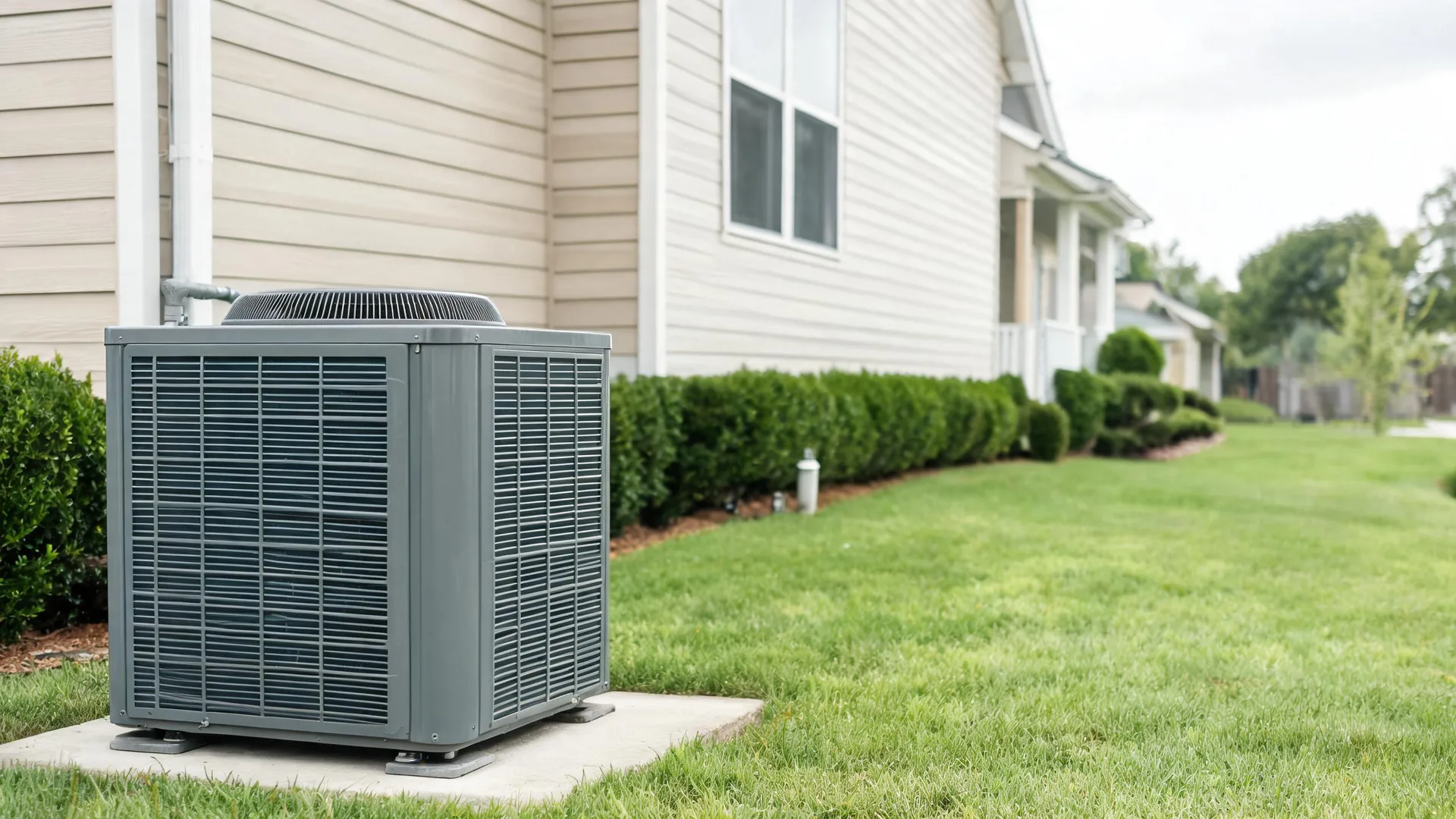
A residential heat pump outdoor unit mounted on a concrete pad next to a house with gray vinyl siding.

The label is a lab result, not a promise about your house

That SEER2 and HSPF2 number on the label comes from a lab test, not from a house like yours. The lab runs the unit through a fixed cycle at mild conditions, on and off, on and off. Your house asks something different of it. Long runs on the hardest days. Short cycles on the mild ones. A unit with a high rating still depends on the ductwork moving the air it makes, and on the contractor setting the refrigerant charge correctly at install. Skip either of those and a high rating on paper won't show up on the power bill. The label tells you the unit cleared a federal floor. It says nothing about how long the compressor will last, or how it was set up the day it went in, and those are what decide how it actually runs for years after.

Bigger isn't better, it's worse

A heat pump that's too big for the house cools the room fast and shuts off before it pulls the moisture out of the air. The house feels clammy even at the right temperature. It also cycles on and off more, and that start-stop wears the compressor harder than long, steady runs do. Too small, and it runs flat out on the hardest days and still can't keep up. Either way, the wrong size shortens the life of the unit, not just the comfort in the room.
The load calculation is the real work

Sizing starts with a room-by-room load calculation, not a number pulled from the old unit's nameplate. A contractor measures the square footage, the windows, the insulation, the orientation of the walls to the sun, and works out how much heat the house gains in summer and loses in winter. That math points to a tonnage. Whatever system was in the house before may have been sized wrong from the start, so matching it just repeats the mistake.

A few things push the price of a heat pump install beyond the unit itself. Ductwork is the big one. If the existing ducts are undersized or leaky, a contractor has to fix or replace sections before the new system can move the air it's rated for, and that work varies a lot from one house to the next. The electrical panel matters too. A heat pump draws differently than a gas furnace did, especially one with backup electric heat strips, and some panels need upgrading to carry that load. Where the indoor and outdoor units sit, and how far apart they are, decides how much line set and labor the job takes. A straightforward swap in the same location costs less than a system that needs new pads, new lines, or a relocated air handler. None of this shows up on the unit's price tag, but it's where the real labor goes.

Install day starts with the old equipment coming out, not the new one going in. A contractor disconnects the refrigerant lines, drains what's left in the system, and pulls the old indoor and outdoor units. If the line set is being reused, it gets flushed and pressure tested before anything new connects to it. More often it's replaced outright, since old line sets can carry contamination that shortens the life of a new compressor. The outdoor unit goes on a pad, leveled, with clearance on all sides so it can pull air through the coil. Indoors, the air handler or coil ties into the existing ductwork, and the refrigerant lines get connected and sealed. Once everything's in place, the system gets evacuated to pull moisture and air out of the lines, then charged with refrigerant to the weight the manufacturer specifies for that line length. A contractor checks the charge against pressure and temperature readings rather than guessing, then runs the system through both heating and cooling to confirm it's moving the air and holding the temperature it should.