







A white Southern-style house with a wraparound porch photographed at night, surrounded by Spanish moss-draped oak trees lit by landscape lights.

Heat Pump Installation in Lake Charles, LA

Tell us about the job

Takes about a minute. No obligation.

New system or replacementHeat PumpCalcasieu Parish, LA
Step 1 of 2

What ZIP code is the job in?

A heat pump that's sized wrong never works the way it should, in either direction. Too big and it short cycles, blasting the room with cold or heat and shutting off before it ever pulls the moisture out of the air. That leaves the place feeling clammy even when the thermostat says it's comfortable. Too small and it runs nearly nonstop on the hardest days, struggling to keep up and putting more wear on the compressor than it should ever see. Getting the size right means a contractor runs a load calculation on the actual house, looking at window area, insulation, ceiling height, and which way the walls face, not just the floor plan. The unit that comes out of that math is the one that holds a steady temperature and keeps the humidity in check, no matter the season.

5 months
November through March, your system heats
7 months
April through October, it cools
44°F
the average winter night it heats against
91°F
the average summer afternoon it cools against
Isometric cutaway illustration of a single-story house showing interior rooms, attic ductwork and an air handler, with an outdoor condenser unit connected by lines along the exterior wall.
Your system heats November through March and cools April through October.

NOAA nClimDiv, 1991–2020 normals

Electricity in Louisiana runs 11.73 cents per kilowatthour, below what most of the country pays.

The top-efficiency model takes longer to earn back its price here, so pick a heat pump for how it holds up through a storm outage, not just its rating.

Almost 7 in 10 homes here already run on electric heat

69.4% of homes heat with electricity
Climate zone 2A
Power costs 11.73 cents a kWh statewide
Get it in before OctoberHeat runs November through March here, so October is the month to have a new system in and running.

Cooling carries the load for most of the year here, and Calcasieu Parish falls under zone 2A. Any heat pump installed since the start of 2023 has to clear 14.3 SEER2 for cooling and 7.5 HSPF2 for heating to be sold at all. That floor is already higher than what the rest of the country has to meet, so a unit built for a cooler state won't necessarily clear it here. A contractor installing a new system has to work within that minimum, not below it.

Reliability first

Power is cheaper here, so the most efficient model takes longer to pay off. Reliability and fit matter more.

Find a contractor
A man in a cap, dark work shirt and brown cargo pants walks up concrete steps toward a blue-gray front door, carrying a worn canvas tool bag in his right hand, with a potted shrub beside the entry.
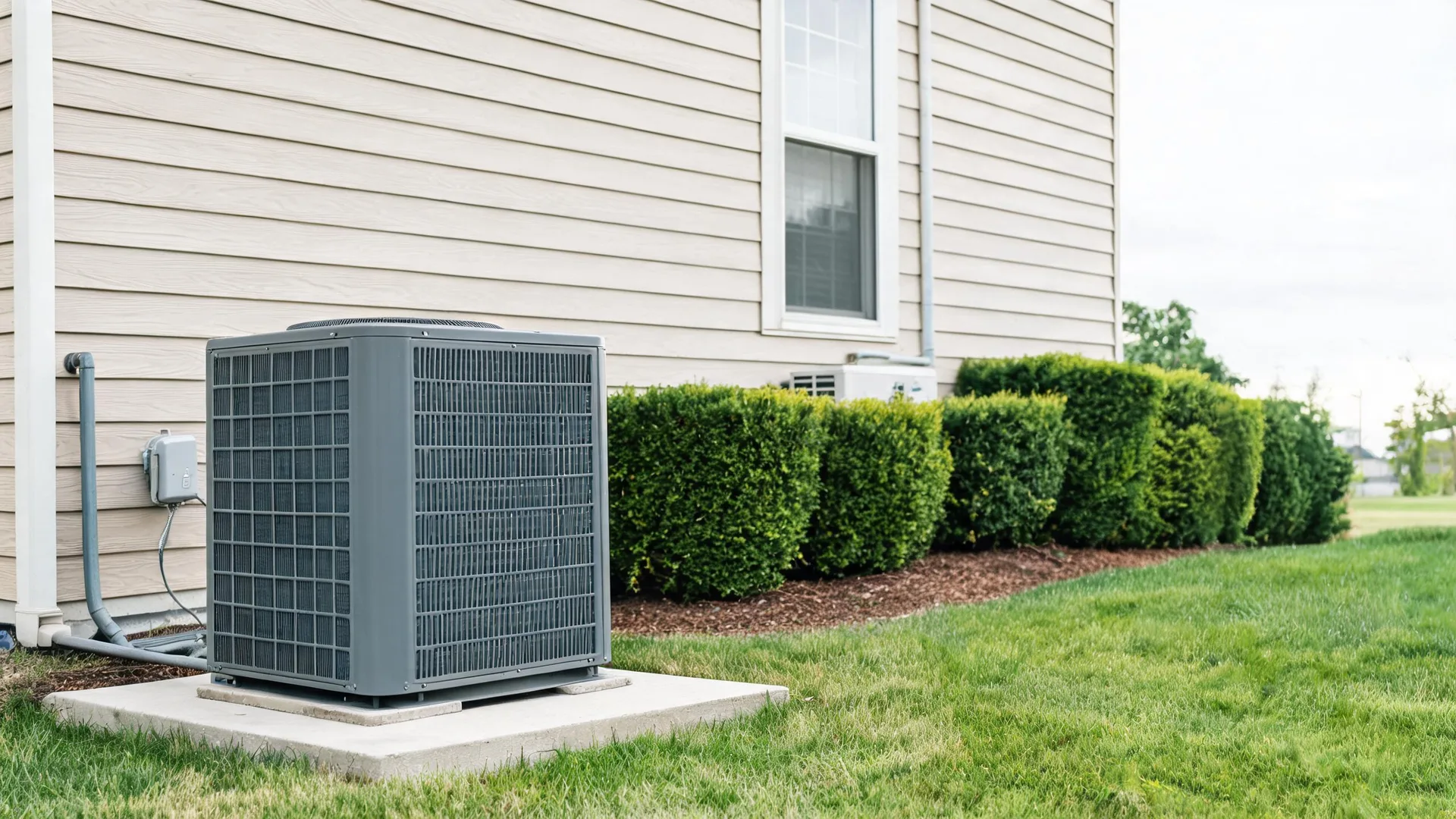
A gray outdoor HVAC unit mounted on a concrete pad beside a house with gray lap siding and a stone foundation.

Ask what keeps running, not just what's rated

A heat pump runs in both directions, all year, so it never really gets a season off the way a furnace does. That makes the compressor worth asking about. Find out whether it's single-stage or variable-speed, because that changes how often it cycles on and how hard it works each time it does. Ask what the warranty covers on the compressor specifically, apart from the rest of the unit, and whether that coverage includes labor or just the part. Ask about the defrost cycle too, how it senses frost building on the outdoor coil and switches over to clear it, since that's something a straight air conditioner never has to do. A unit that defrosts on a timer regardless of conditions wastes energy and heat compared to one that only defrosts when the coil actually needs it.

The rating is measured in a lab

SEER2 and HSPF2 come from testing under set conditions, not from the hottest or coldest day a heat pump will actually face. A unit can carry a high rating and still struggle on the one week a year that pushes it hardest, depending on how it was sized and installed. The number tells you about the equipment, not about how it will perform in a specific house.
Installation decides what the rating is worth

A heat pump only hits its rated efficiency when the refrigerant charge is correct and the ductwork moves the amount of air it was designed around. Get either wrong and a high-rated unit can run worse than a lower-rated one installed properly. The number on the label assumes the install was done right.

Equipment is only part of what you're paying for. The outdoor unit and the indoor coil have to be matched to each other, or the system never runs at the efficiency either one is rated for. Line set length and the number of bends in it matter too, since refrigerant has to travel that path without losing pressure. If the ductwork already in place is too small or leaky, a contractor may need to modify or seal it before the new system can move the air it's designed to move, and that work is separate from the unit itself. Electrical capacity counts as well. A heat pump often draws differently than whatever it's replacing, and the breaker or disconnect has to match what the new system actually needs, not just what the old one used. None of that shows up on the price tag of the equipment alone.

Installation day starts with the old system coming out, indoor coil and outdoor unit both, along with the line set if it isn't being reused. The outdoor pad gets leveled or replaced if it's cracked or sinking, since the new unit has to sit flat to drain condensation properly. A contractor will braze in new line sets or flush existing ones before anything gets connected, because old refrigerant oil and debris left in the lines will contaminate the new system. Once the lines are run and the electrical connections are made, a vacuum pump pulls moisture and air out of the system, not just refrigerant from the last job. Only after that vacuum holds does the charge go in, weighed to the amount the manufacturer specifies for that line length. Startup comes last. That means checking airflow at the vents, confirming the thermostat talks to the unit, and running it in both heating and cooling to make sure the reversing valve switches the way it should.