





A white Southern-style house with a wraparound porch photographed at night, surrounded by Spanish moss-draped oak trees lit by landscape lights.

Heat Pump Installation in Kenner, LA

Tell us about the job

Takes about a minute. No obligation.

New system or replacementHeat PumpJefferson Parish, LA
Step 1 of 2

What ZIP code is the job in?

Electricity in Louisiana ran 11.73 cents per kilowatthour in 2024, cheaper than most of the country. That changes the math on a heat pump. The highest-efficiency model on the lot will still cost less to run than your old system, but it takes longer to earn back the extra money you paid for it here than it would somewhere with pricier power. That's not a reason to skip a heat pump. It's a reason to pick one for how well it holds up and heats this house, not just the number on the sticker.

4 months
November through February, your system heats
7 months
April through October, it cools
47°F
the average winter night it heats against
90°F
the average summer afternoon it cools against
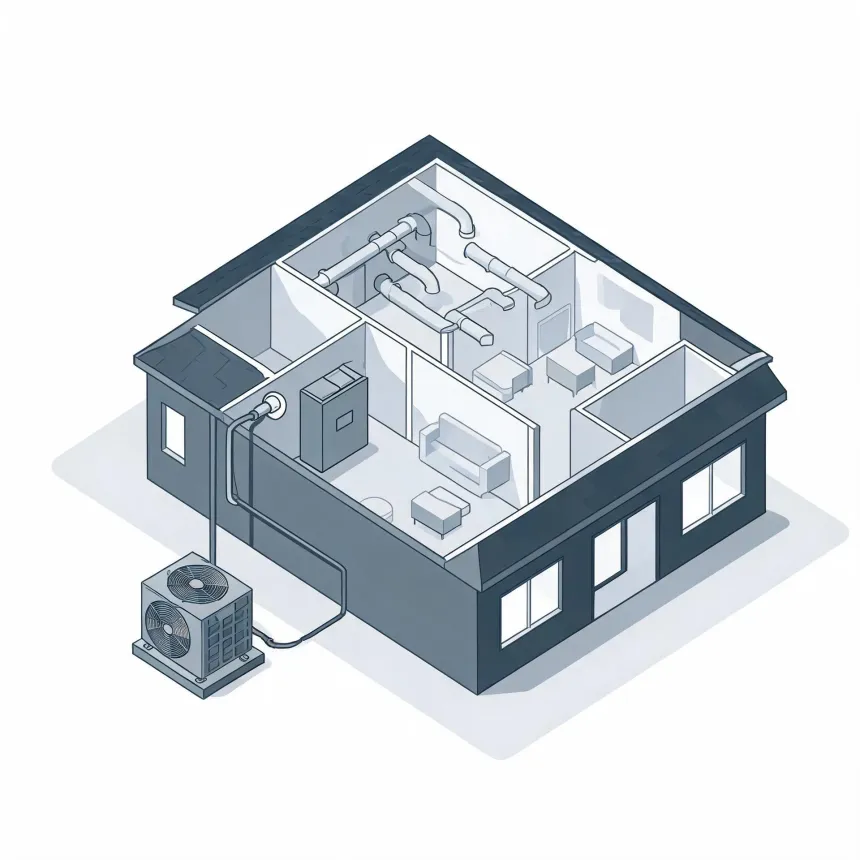
Isometric line illustration of a cutaway single-story house showing interior rooms, ceiling ductwork and an indoor air handler, connected by a line to an outdoor condenser unit on a pad beside the building.
Your system heats November through February and cools April through October.

NOAA nClimDiv, 1991–2020 normals

Kenner runs cooling April through October and heat November through February, so March and October are the only slow months on the calendar.

Install the new heat pump in March or October and it's running before the next push starts, not going in while you lean on a window unit or a space heater.

Most homes in Jefferson Parish already heat with electricity

55.6% of homes heat with electricity
Power costs 11.73 cents a kWh statewide
Climate zone 2A

Half the homes in Jefferson Parish were built in 1975 or earlier, half in 1975 or later. That spread doesn't point you toward a bigger unit or a special model. A heat pump gets sized to the house, not the decade it was built, and a contractor will size it that way either way. If your ductwork came with the house, that's worth having checked before the new system goes in, since old or new doesn't tell you whether it was sized right in the first place. Beyond that, a standard efficiency heat pump built for this climate is the right call here.

The system has to meet this region's efficiency minimum, and a federal credit can help cover it

Any heat pump installed here has to clear 14.3 SEER2 for cooling and 7.5 HSPF2 for heating, the federal minimum for this region. Jefferson Parish sits in a hot, humid cooling-dominated zone, so that cooling number is the one doing the real work. A federal tax credit is available to offset the cost of a qualifying system.

Find a contractor
A man in a cap, gray shirt and tan work pants walks up steps toward a dark front door, carrying a worn canvas and leather tool bag, with a potted shrub to the right.
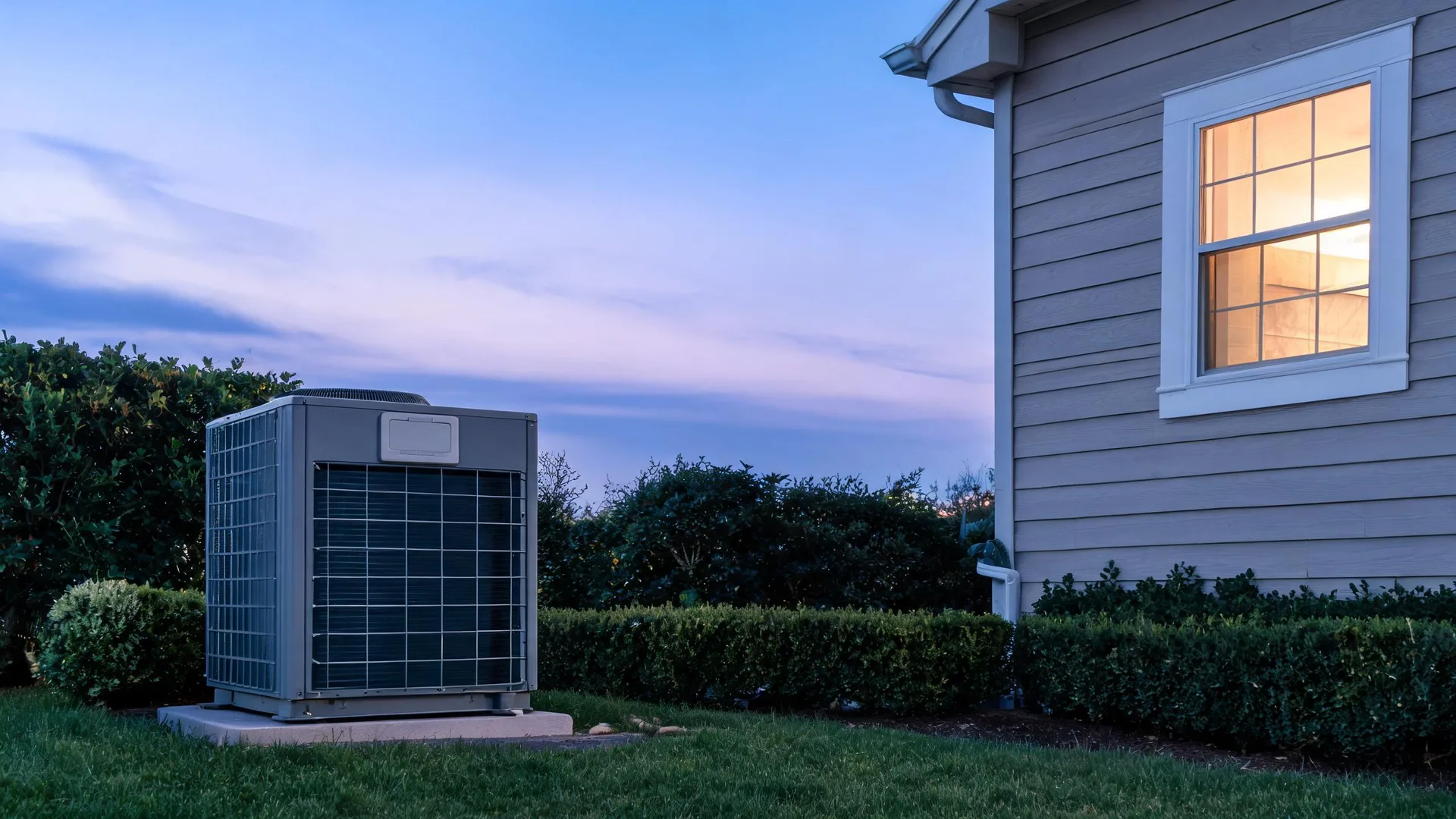
A gray outdoor HVAC unit mounted on a concrete pad beside a house with gray lap siding and a stone foundation.

The old unit comes out, not back

The old system doesn't get reused or moved to another house. Once a heat pump or furnace comes out, it's done. A contractor will recover the refrigerant from the old unit before touching it, since that refrigerant can't legally be vented into the air, then disconnect the lines, pull the indoor and outdoor units, and haul them off for scrap. If the old system ran on a different refrigerant than what's made today, that's one more reason it's not worth saving parts from. The slab or pad underneath usually stays, and the new outdoor unit sets right on it unless it's cracked or too small for the new equipment.

Ask what the ductwork has to do with it

A heat pump moves a lot more air per degree of heating than a furnace does, so if the ducts are undersized or leaky, the system will struggle to deliver what its rating promises. Ask whoever is quoting the job whether they measured airflow and checked duct sizing, not just the square footage of the house. A unit sized right for a house with poor ducts still won't heat or cool it evenly.
Ask how it performs at low temperatures

Every heat pump loses some heating capacity as the outdoor temperature drops, and the point where backup heat kicks in varies by model. Ask for the capacity at the coldest temperatures this area sees, not just the rating at mild conditions, since that number tells you how much the system will lean on backup heat strips and how steady the heat will feel on the coldest nights.

A heat pump sized right runs long, slow cycles that keep the house at an even temperature. One sized too big blasts the space, shuts off, and starts again a few minutes later, and all that stopping and starting wears on the compressor faster than steady running does. It also leaves the air damp, since a unit that satisfies the thermostat quickly never runs long enough to pull moisture out of the air. One sized too small just keeps running and never catches up on the hottest or coldest days. Getting it right means a contractor works out how much heat the house loses in winter and gains in summer, room by room, based on the walls, the windows, the insulation and how they all face the sun. That's a load calculation, not a guess based on square footage, and it's the only way to land on the size that actually fits the house.

Install day starts with the old system coming out and the new one going in, so expect the house without heat or air for stretches of that day. The outdoor unit gets set and leveled, the indoor coil and air handler get connected, and the line set between them gets run, flushed, and checked for leaks before anything is charged with refrigerant. Once the lines are tight, the system gets charged to the manufacturer's spec, not just topped off by feel. A contractor will also check airflow at the vents and confirm the thermostat or control board is wired right, since a heat pump's reversing valve and defrost controls need to be set up correctly for it to switch between heating and cooling without a hitch. Before anyone leaves, the system should run through both a cooling cycle and a heating cycle so any problem shows up that day instead of the first cold night.