






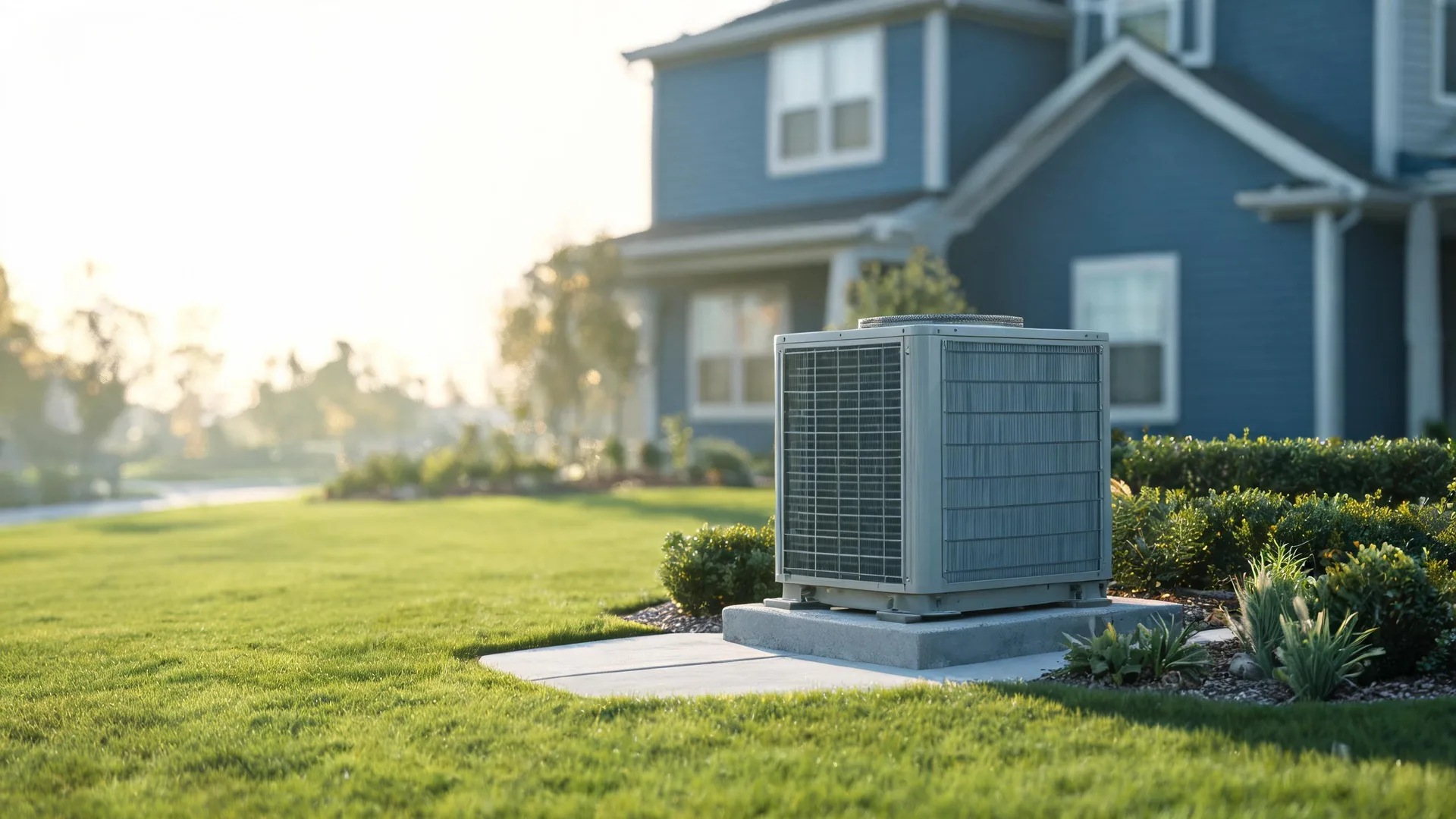
An outdoor heat pump unit mounted on a concrete pad in front of a two-story suburban house.

Heat Pump Installation in Houma, LA

Tell us about the job

Takes about a minute. No obligation.

New system or replacementHeat PumpTerrebonne Parish, LA
Step 1 of 2

What ZIP code is the job in?

A heat pump that's too big for the house will short cycle, kicking on, satisfying the thermostat fast, then shutting off before it's pulled the moisture out of the air. One that's too small runs constantly during the hottest and coldest stretches and still can't keep up. Sizing isn't a guess based on square footage alone. A contractor works out the heat loss and heat gain for the specific house, factoring in insulation, window area, ceiling height, and how much shade the place gets, then matches that load to a unit's capacity. Ductwork matters too. Even the right size heat pump will underperform if the existing ducts are too small or too leaky to move the air it produces. Ask whoever quotes the job to walk you through how they calculated the load, not just what size they landed on.

4 months
November through February, your system heats
7 months
April through October, it cools
48°F
the average winter night it heats against
90°F
the average summer afternoon it cools against
Isometric line illustration of a cutaway single-story house showing interior rooms with furniture and attic ductwork connected to an outdoor condenser unit beside the building.
Your system heats November through February and cools April through October.

NOAA nClimDiv, 1991–2020 normals

Electricity already heats 65.2% of homes in Terrebonne Parish.

A heat pump runs on that same electric power, so most houses here need no new fuel line or tank to make the switch.

Get it installed before March, and it's handling heat by November

Cooling runs April through October
Heat runs November through February
Power costs 11.73 cents a kWh statewide

Houma falls under zone 2A, a hot and humid climate where cooling carries most of the year's load. Any split-system heat pump installed here now has to hit 14.3 SEER2 for cooling and 7.5 HSPF2 for heating at minimum, under the federal standard for new equipment. That's not a target a contractor aims for. It's the floor. Units rated below it can't legally go into a home in the Southeast. A federal tax credit is available for qualifying equipment, worth checking into alongside whatever quote you get.

Power is cheap here. Reliability is what you're really paying for.

Electricity runs 11.73 cents a kilowatt-hour in Louisiana, cheaper than most of the country. That changes the math on which heat pump to buy. The highest-efficiency model on the lot will take longer to earn back its extra cost here than it would somewhere with pricier power. What matters more is picking a unit sized right for the house and built to keep running when a storm knocks the grid around. Get a quote based on that, not just the SEER2 number on the sticker.

Find a contractor
A person in a dark long-sleeve shirt and tan work pants, seen from behind, carries a canvas tool bag while stepping up porch stairs toward a dark blue front door.
A white mini-split heat pump outdoor unit mounted on a concrete pad beside a gray-sided house, surrounded by gravel and green shrubs.

The number on the label is an average, not a promise

That SEER2 number on the label is a seasonal average, not a fixed rate. It gets measured by running the unit through a full range of outdoor temperatures and loads, then averaging the output against the power it used. Mild days pull the number up. The hardest days of summer and winter pull it down, because any heat pump works harder and loses efficiency as the temperature gap between inside and outside grows. So the rating tells you how the system performs over a season of running, not what it will do on the one afternoon you're checking the thermostat. A unit with a high rating that's oversized for the house will still short cycle and still cost more to run than it should, because the rating assumes the system is sized and installed correctly in the first place.

The old equipment gets hauled away

Whoever installs the new heat pump disconnects the old unit, the indoor coil, and any line set that isn't being reused, then removes them from the property. A refrigerant recovery machine pulls out whatever refrigerant is left in the old system before it's disconnected, since venting it isn't legal. None of that is something you need to arrange separately. It's part of the install.
What stays depends on what's underneath it

If the old system shared ductwork, that ductwork usually stays and just gets connected to the new unit, assuming it's sized right and sealed well. The electrical disconnect box and the pad or bracket holding the outdoor unit often get reused too, if they're in good shape. A gas furnace paired with the old setup is a separate question. If the heat pump is replacing it outright, that furnace and its venting come out as part of the same job.

What drives the cost of a heat pump install is mostly what has to happen before the new unit ever gets set outside. A straightforward swap, same location, same line set reused, same electrical panel with capacity to spare, is a different job than one where the ductwork needs rework or the panel needs an upgrade to handle the new unit's draw. A variable-speed compressor costs more than a single-stage one, but it also holds a steadier temperature and runs longer at lower output instead of cycling hard on and off. Where the outdoor unit goes matters too. A spot that needs a new pad, a longer line set, or extra clearance from a wall or fence adds labor that has nothing to do with the equipment itself. None of that shows up on the price tag stuck to the unit, which is why contractors quoting the same size and brand can land on very different numbers.

Install day starts with the old system coming out and the new one going through pressure tests before anything gets charged with refrigerant. Line sets get flushed or replaced, connections get brazed, then the whole system gets pulled down into a vacuum to pull out moisture and air. That vacuum has to hold before refrigerant goes in, since any moisture left in the lines turns to acid once the system runs. Once it's charged, a tech checks the charge against the manufacturer's numbers for the outdoor temperature that day, not just a gauge reading that looks close enough. Then the thermostat gets wired in and the system runs through both modes, heating and cooling, before anyone calls it done. A job rushed through any of those steps usually shows up later as a system that cools fine but struggles in the cold, or one that trips a breaker the first hot week it's asked to work hard.