A row of single-story houses, one brick and others with pale siding and covered porches, behind a trimmed hedge and lawn, under large oak trees draped with Spanish moss.

Heat Pump Installation in Gonzales, LA

Tell us about the job

Takes about a minute. No obligation.

New system or replacementHeat PumpAscension Parish, LA
Step 1 of 2

What ZIP code is the job in?

Ask for the load calculation, not a guess off the old system

A heat pump sized by walking through the house and checking windows, insulation and duct runs will heat and cool evenly. One sized to match whatever was there before can short cycle or struggle on the coldest and hottest days, and either way it wears out faster.


Ask what happens when it gets cold enough to need backup heat

Every heat pump reaches a point where it needs help, usually electric resistance strips or an existing furnace staged behind it. Find out which one this system pairs with, how that switch happens, and whether the thermostat is set up to manage it or just defaults to backup too soon.

5 months
November through March, your system heats
7 months
April through October, it cools
44°F
the average winter night it heats against
91°F
the average summer afternoon it cools against
Isometric grayscale illustration of a cutaway two-story house showing interior ductwork, an indoor air handler unit, and an outdoor condenser unit on a pad beside the building.
Your system heats November through March and cools April through October.

NOAA nClimDiv, 1991–2020 normals

Louisiana homes paid 11.73 cents per kilowatthour in 2024, lower than most of the country.

A heat pump here earns back a high SEER2 rating more slowly, so weigh how it holds up over picking the highest number on the sheet.

Ascension Parish sees storms often, so plan for the outdoor unit and the outages before they happen

54 severe weather events from 2015 to 2024
49% of homes statewide lost power a day or more in 2024
30 damaging wind events from 2015 to 2024

Electricity already heats 63.1% of homes in Ascension Parish. A heat pump keeps that part the same. There's no gas line to add or vent to run, since the house already handles its heat this way. What changes is how a contractor sizes the new system to this specific house, not the wiring behind the walls. If the current setup is electric baseboard or an older electric furnace, ask how the heat pump compares on comfort, since it heats more evenly than resistance heat even though both run on the same power.

What a new system here is required to meet

Gonzales falls in climate zone 2A, where cooling carries most of the year. Any split-system heat pump installed here now has to meet 14.3 SEER2 and 7.5 HSPF2, the Southeast's minimum, not the lower national one. That rules out some of the cheaper equipment sold in other parts of the country. A federal tax credit is available for qualifying systems. Ask the contractor which units on the quote actually meet it.

Find a contractor
A man in a dark long-sleeve shirt and tan work pants, seen from behind, climbs wooden porch steps toward a navy front door while carrying a canvas tool tote, with a potted flowering plant beside the entry.
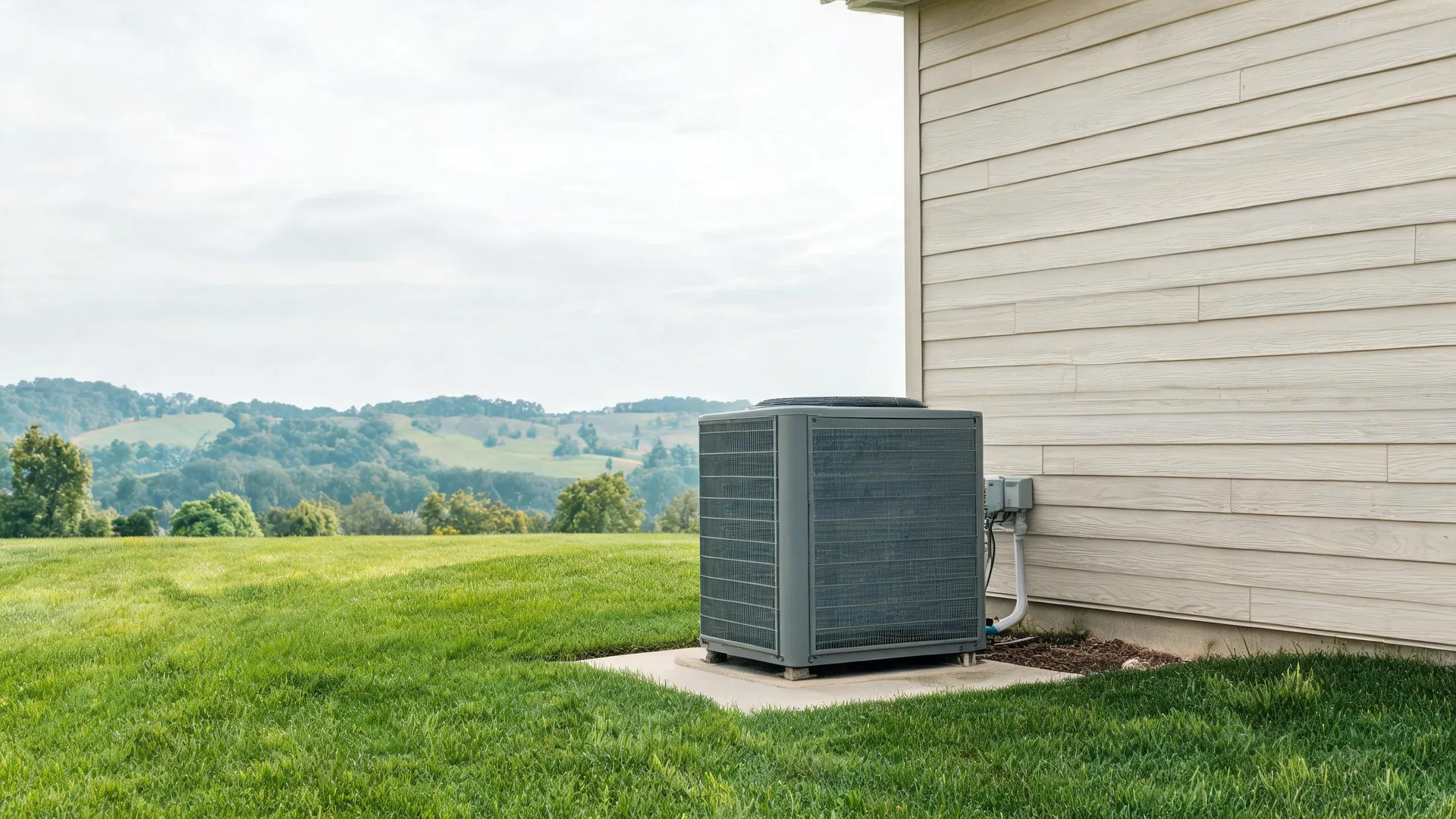
A gray heat pump outdoor unit mounted on a concrete pad next to a residential house with lap siding and stone accents.

Sized for the load, not the old unit

A heat pump that runs long hours doing both jobs, heating and cooling, needs its size worked out from the house, not picked off a chart. Too big and it blasts the space to temperature and shuts off before it pulls moisture out of the air, so rooms feel clammy even when the thermostat says they're satisfied. Too small and it runs flat out on the mildest days just to keep up, then leans on backup heat earlier than it should once the weather turns. Either mistake shows up as uneven rooms, longer runtimes, and a compressor cycling on and off more than it was built for. A contractor works out the size by going room to room, checking window area, insulation, duct runs and how much sun each side of the house takes on, then matching the equipment to that load. The unit that comes out of that math is the one that will run steady for years instead of struggling through the extremes.

The outdoor unit and indoor coil have to match

A heat pump is sold as a pair, the outdoor unit and the indoor coil, and they're engineered to work together. Mixing a new outdoor unit with an old coil might run, but it won't hit the capacity or efficiency the equipment is rated for, and some manufacturers won't warranty the mismatch at all. Replacing both at once costs more than swapping the outdoor unit alone, but it's the only way the system performs like the spec sheet says.

What the ductwork can carry sets the ceiling

A heat pump pushes a different volume of air than whatever it's replacing, and the existing ducts don't always keep up. Runs that are too narrow or too long force the system to work harder to move air, which shows up as weak airflow in rooms farthest from the unit. Finding that out means a contractor checking duct size and layout before the quote, not after the install, since reworking ductwork mid-job costs more than catching it early.

SEER2 and HSPF2 tell you how much heat the system moves per unit of power it uses, one for cooling and one for heating. A higher number means less power for the same comfort, but only once conditions are mild enough for the system to run efficiently. Push a heat pump to its limit, coldest morning or hottest afternoon, and that rating stops mattering much, since the unit is working flat out regardless of what the label says. The rating also assumes the system is sized and installed correctly. An oversized or undersized unit won't hit its rated efficiency no matter what number is stamped on it, and neither will one installed with a duct system that can't move the air it's built to push. The label is a starting point for comparing equipment, not a promise about what any one house will see.

The old equipment comes out first, indoor coil and outdoor unit both, along with the line set if it's not being reused. Before any refrigerant goes in, the new lines get pressure tested to catch a leak while it's still easy to fix. The indoor coil sets into the existing plenum, or a new one if the ductwork needed changing, and the line set runs out to wherever the outdoor unit will sit. Once everything's connected, the system gets charged to the weight stamped on the nameplate, not topped off until it feels cold enough. After that comes checking airflow at each register and confirming the thermostat stages backup heat the way it's supposed to instead of calling for it too soon. A straightforward swap moves fast. One that needs duct work or electrical changes to support the new unit takes longer, and a contractor should be able to say which kind of job this is before starting.