







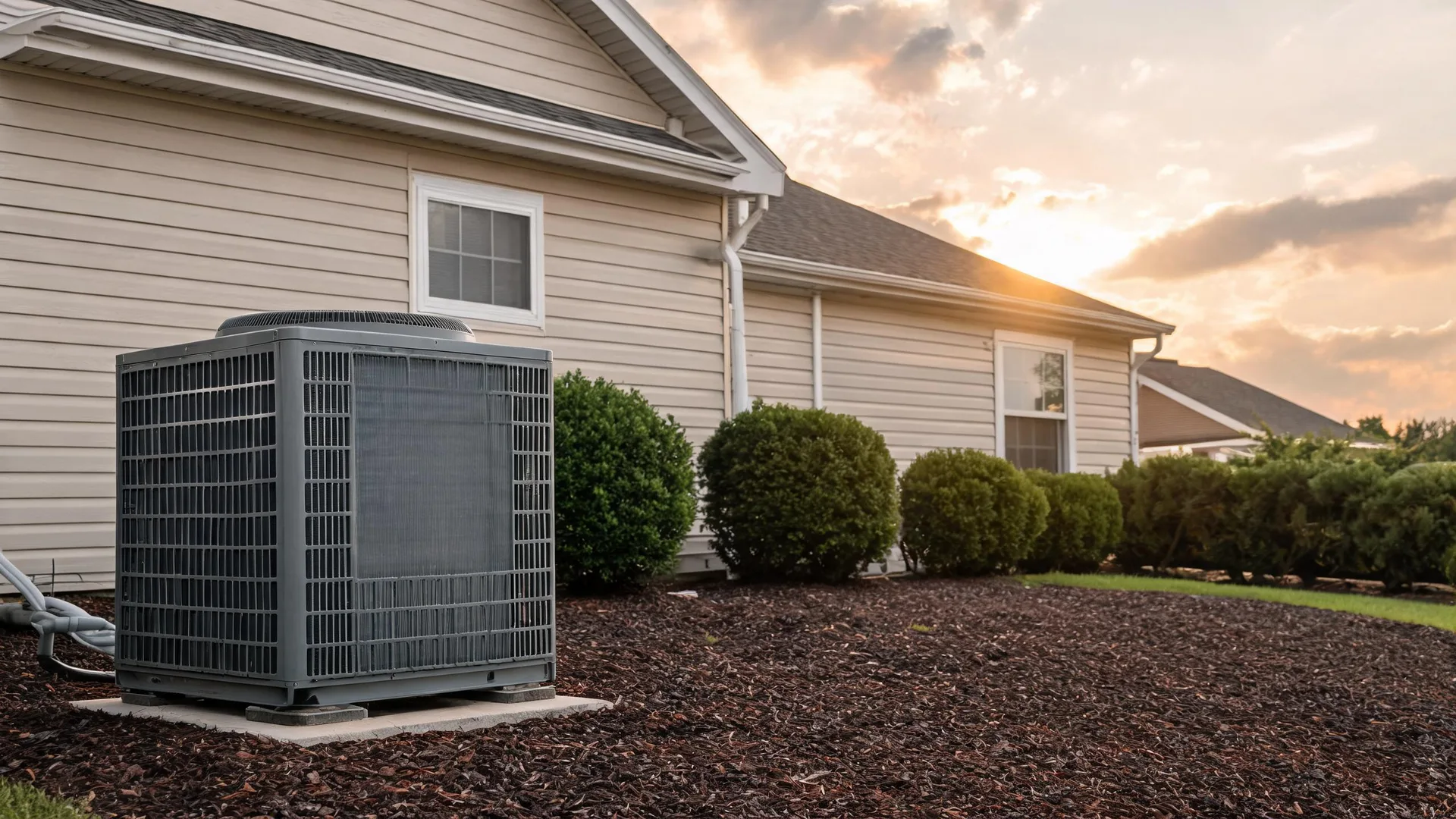
A grey heat pump outdoor unit mounted on a concrete pad against the exterior wall of a house with grey siding and stone veneer.

Heat Pump Installation in Breaux Bridge, LA

Tell us about the job

Takes about a minute. No obligation.

New system or replacementHeat PumpSt. Martin Parish, LA
Step 1 of 2

What ZIP code is the job in?

A heat pump that's too big for the house will short cycle. It runs for a few minutes, shuts off, and never pulls enough moisture out of the air. One that's too small just runs and runs and still falls behind on the coldest or hottest days. Getting the size right isn't about matching the old equipment or buying bigger to be safe. A contractor works it out with a load calculation, looking at the square footage, the windows, the insulation, which way the house faces. That number tells them what the house actually needs, not what's easiest to install.

5 months
November through March, your system heats
7 months
April through October, it cools
44°F
the average winter night it heats against
91°F
the average summer afternoon it cools against
Isometric cutaway illustration of a small house showing interior ductwork and an air handler connected by lines to an outdoor condenser unit on a pad beside the building.
Your system heats November through March and cools April through October.

NOAA nClimDiv, 1991–2020 normals

Half the homes in St. Martin Parish were built in 1986 or earlier.

A proper load calculation sizes the heat pump to the house, not the year it was built.

Most homes here already run on electricity

84.3% of homes heat with electricity
Power costs 11.73 cents a kWh statewide
Climate zone 2A
Get it in before AprilCooling runs April through October here. March is the month to have it done.

Electricity here runs 11.73 cents a kilowatt-hour, below the national average. That changes the math on a heat pump purchase. The top-efficiency model still costs less to run month to month, but it takes longer to earn back what it cost over a cheaper one. Reliability counts for more in that trade-off. A unit that keeps running through a bad storm is worth more here than a fraction of a point on the efficiency rating. Ask a contractor to walk through what each tier actually buys you before paying extra for the top of the line.

Any heat pump installed here has to meet a higher efficiency standard

A heat pump installed here has to clear 14.3 SEER2 for cooling and 7.5 HSPF2 for heating. That's the federal minimum for split systems made from 2023 on, and it's higher than what some other regions require. A system that meets it can also qualify for a federal tax credit. Ask a contractor which models on their list clear that mark.

Find a contractor
A man in a gray polo shirt and tan work pants carries a worn canvas tool bag up porch steps toward a closed gray front door, with a potted shrub beside the entry.
A dark gray heat pump unit mounted on a concrete pad next to a house with gray siding and a stone veneer wall.

This one doesn't get an off season

A heat pump does not get a season off. It switches between cooling and heating as the weather turns, so the compressor rarely sits idle the way a furnace does once the weather warms up. That makes the compressor and the reversing valve worth asking about by name. Ask how long each is warrantied, since the compressor sometimes carries its own separate coverage, longer or shorter than the rest of the unit. Ask what maintenance the manufacturer expects, because a coil that never gets cleaned and a refrigerant charge that never gets checked will wear a compressor out well before its time. Running almost all year also makes the filter matter more than it would on a system that only runs part of the year. A dirty filter chokes airflow across the coil, and a coil that cannot move air makes the compressor strain for the same result, every day it runs.

Removal is part of the job

Taking out the old system means disconnecting refrigerant lines, the ductwork connections and the electrical whip, then hauling off both the indoor and outdoor units. If the old system held refrigerant, that refrigerant gets recovered into a tank. Venting it into the air is against the law. A contractor should walk through removal as part of the quote, not figure it out after the new unit is already sitting in the driveway.
Ductwork and the pad usually stay put

A heat pump installation doesn't normally call for new ductwork. It connects to what the old system was already using. Ask the contractor to check beforehand whether those ducts and the electrical circuit can handle the new unit, not on install day. The pad is different. One that's cracked or settled unevenly should get replaced, since the outdoor unit has to sit level to run quietly and drain the way it's supposed to.

The efficiency rating on the label tells you how much heat a unit moves for the electricity it uses, nothing more. A higher rated system still needs the same careful sizing and the same upkeep as a lower rated one, and a high rating on paper never makes up for a unit that's too big or too small for the house. It also only holds up under good conditions. A dirty coil, a low refrigerant charge, or a clogged filter will drag any unit's real performance below what the label promised. The rating describes the equipment new and properly maintained, not however it happens to be running years down the road. Units with the same number on the label can still feel different to run, since things like sound level and how evenly they heat and cool a room don't show up on that rating at all.

Install day starts with the old unit coming out and the new one going in, but most of the day goes to what connects them. The line set gets run or reused, the electrical whip gets tied in, and the refrigerant lines get connected and checked for leaks before anything is charged. Once the outdoor and indoor units are set, the system gets evacuated to pull out moisture and air, then charged to the weight the manufacturer specifies for that line length. A contractor should run the system afterward and check static pressure, airflow at the vents, and temperature split between the return and supply air. That's what tells them the system is actually doing what the label says it should, not just that it powers on.