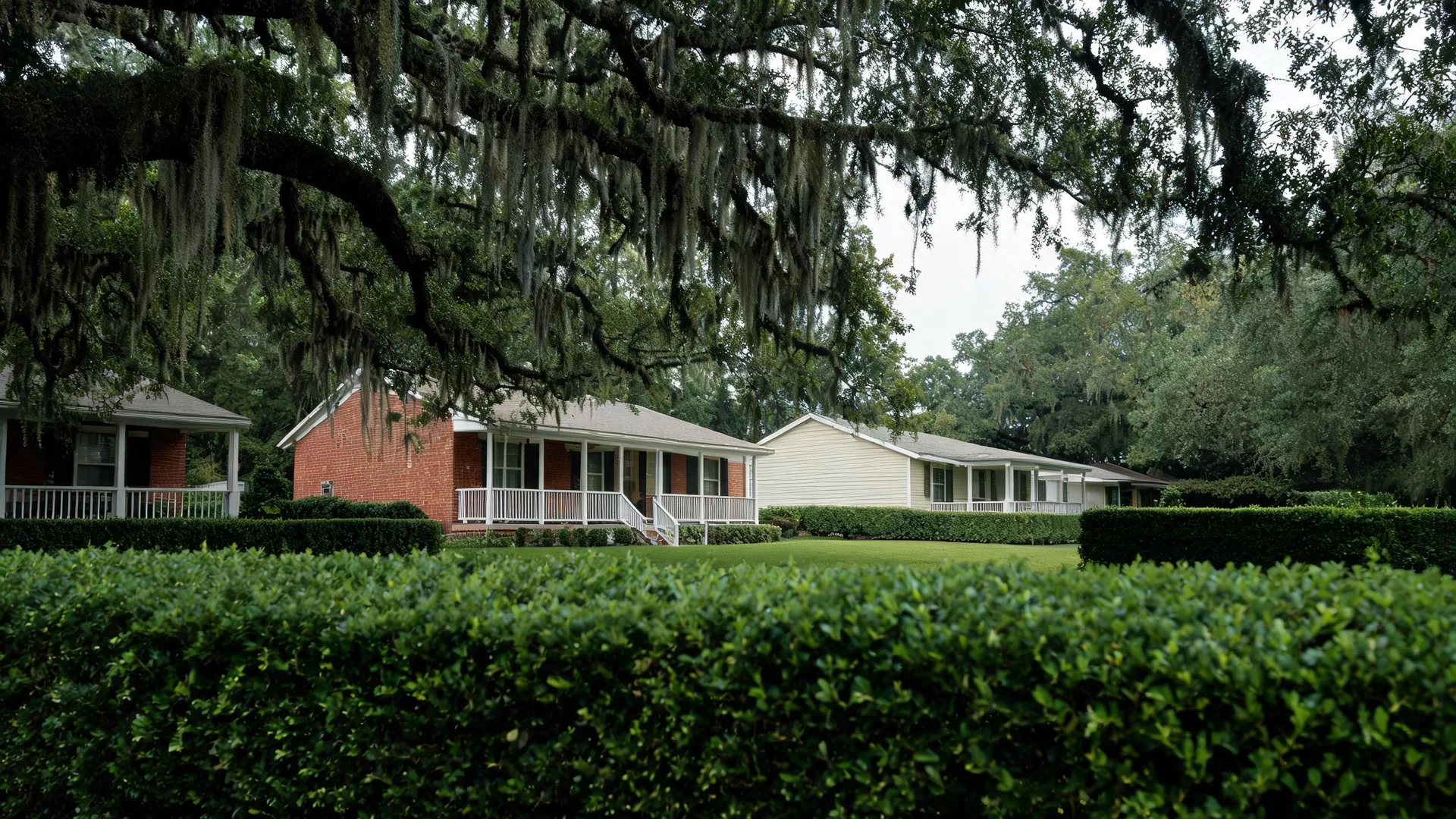






Single-story brick and white-sided buildings with covered porches behind a trimmed hedge and lawn, framed by overhanging oak branches draped with Spanish moss.

Heat Pump Installation in Addis, LA

Tell us about the job

Takes about a minute. No obligation.

New system or replacementHeat PumpWest Baton Rouge Parish, LA
Step 1 of 2

What ZIP code is the job in?

Electricity heats 65.6% of occupied homes in West Baton Rouge Parish, more than any other fuel. Utility gas covers 31.9%. A heat pump runs on electricity for both heating and cooling, so in a home that already heats electric, it takes the place of what's there now. No gas line to run, no new venting to plan around. That's the simpler install, and it's the one most houses in this parish call for.

5 months
November through March, your system heats
7 months
April through October, it cools
43°F
the average winter night it heats against
91°F
the average summer afternoon it cools against
Isometric line illustration of a cutaway house showing interior rooms with furniture, a furnace or air handler with overhead ductwork, and an outdoor condenser unit connected by lines outside the wall.
Your system heats November through March and cools April through October.

NOAA nClimDiv, 1991–2020 normals

Heat here runs November through March.

Put a heat pump in before November and it's not a rush job, it's done on your schedule.

Nothing here calls for sizing up

25 severe weather events from 2015 to 2024
49% of homes statewide lost power a day or more in 2024
11 damaging wind events from 2015 to 2024

Electricity in Louisiana ran 11.73 cents per kilowatthour in 2024, cheaper than most of the country. That changes the math on which heat pump to buy. A higher-SEER2 model costs more up front and takes longer to earn that back when power is already cheap here. Picking by efficiency rating alone doesn't make much sense in this parish. What matters more is a unit sized right for your house and installed well, since a correctly charged system with good airflow will run reliably no matter what's printed on the label.

A new system here starts with the region's efficiency minimum

Any heat pump installed here now has to hit 14.3 SEER2 and 7.5 HSPF2 at minimum, and the cooling-only units follow the same 14.3 SEER2 floor. That's the law for this region, not a feature to shop for. It narrows the field to units built for zone 2A, and a federal tax credit is available on qualifying equipment to help offset the cost.

Find a contractor
A man in a cap, dark shirt and tan pants, seen from behind carrying a canvas bag, climbs wooden porch steps toward a blue front door beside a potted evergreen.
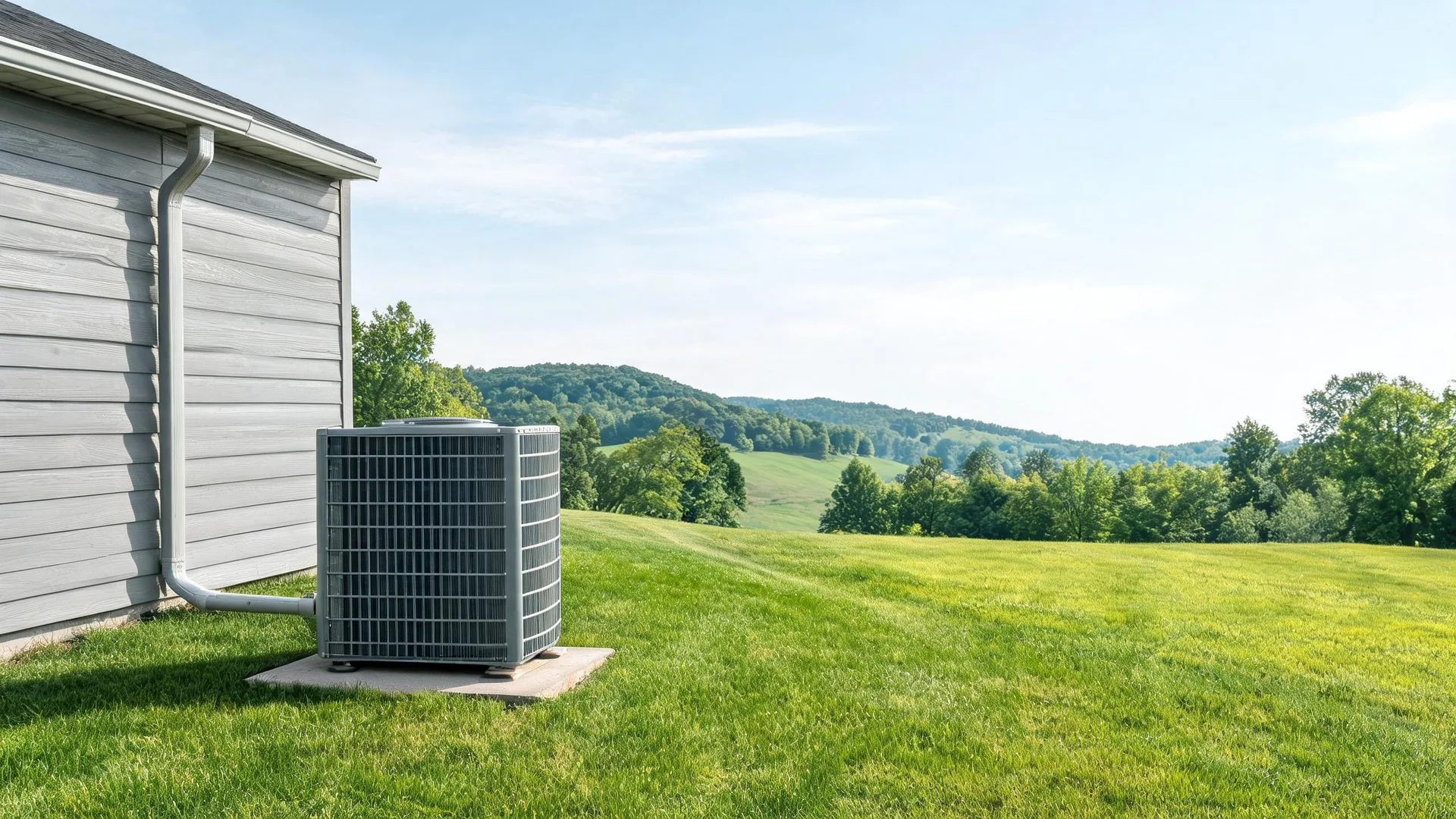
A gray air-source heat pump mounted on a concrete pad next to a house with gray vinyl siding, surrounded by gravel and flanked by green shrubs and white hydrangea flowers.

What drives the price isn't the unit alone

The unit itself is only part of the bill. Sizing drives the rest. A load calculation looks at the house, not just the old system, and decides what size heat pump it actually needs. Go bigger than that and the system short cycles, turning on and off before it can pull moisture out of the air. Go smaller and it runs long stretches without catching up on the coldest or hottest days. Either way something wears out sooner than it should. Ductwork is the other big piece. A heat pump moves a different volume of air than a furnace did, so ducts built for the old system sometimes need rework to carry air the new one needs. Leaky joints, crushed runs, or ducts sized for a smaller blower all add labor before the new unit ever gets set. The electrical side matters too. Heat pumps draw power differently than a gas furnace, and some panels need upgrading to handle that load. Past that it's the line set connecting indoor and outdoor units, the pad it sits on, and the refrigerant charge, which has to be set precisely for the system to hit its rated output. A unit can be the right one and still perform poorly if any of that is done wrong.

How a contractor sizes the unit

Sizing a heat pump starts with a load calculation. A contractor measures the square footage, counts the windows, checks the insulation and the ceiling height, and notes how many walls face outside. All of that together sets the range the equipment has to cover. Going by the old system's size skips that work, and the old system may never have been sized right either.
What happens when the size is off

An oversized heat pump cools or heats the house fast, shuts off, then kicks back on soon after. That short cycling cuts into the time it spends pulling moisture out of the air, so the house can end up cool but still feel damp. An undersized one runs almost nonstop on the coldest and hottest days and still can't catch up. Either way, the compressor sees more wear than it would running steady, matched to the house.

The rating on the label, SEER2 for cooling and HSPF2 for heating, tells you how much heat the unit moves for the power it draws. A higher number means it gets more out of each bit of electricity. It says nothing about comfort, noise, or how long the thing lasts. Units with the same rating can feel different in the house depending on how well they were sized and installed. A unit with a great rating but the wrong size for the house will still short cycle or run too long trying to catch up, and the label won't fix that. The rating is worth checking against the legal minimum for this region, not treated as a ranking of which unit is best.

When you're comparing quotes, ask what the sound rating is and where the outdoor unit will sit. A heat pump runs outside year round, not just in summer, so a unit set under a bedroom window gets noticed in a way a furnace never was. Ask about cold weather performance too. Every heat pump loses some capacity as the temperature drops, and some lean on backup heat strips to cover the gap. Find out at what outdoor temperature that backup kicks in and how often that's likely to happen here. Ask what refrigerant the unit uses, since that affects what repairs look like down the road and whether parts are easy to source. And ask for the load calculation in writing, not just a number spoken over the phone. If contractors propose different sizes for the same house, one of them skipped a step.