





A lit antebellum-style two-story house with white columns and a wraparound porch at night, framed by live oak trees draped in Spanish moss.

Furnace Repair in Lake Charles, LA

Tell us about the job

Takes about a minute. No obligation.

RepairFurnace or heatingCalcasieu Parish, LA
Step 1 of 2

What ZIP code is the job in?

A furnace that's about to need a repair usually tells you first. It might take a few tries to light instead of catching right away. The blower might kick on and run louder than it used to, or keep running after the house has already warmed up. Some furnaces start blowing air that's barely warm, which usually points to a flame sensor or an igniter that isn't doing its job right. A burner flame that looks flickery or yellow instead of steady blue is worth paying attention to as well. None of these mean you need a new furnace, but they're the kind of thing that gets worse the longer it sits.

5 months
November through March, your furnace is on duty
44°F
the average winter night it heats against
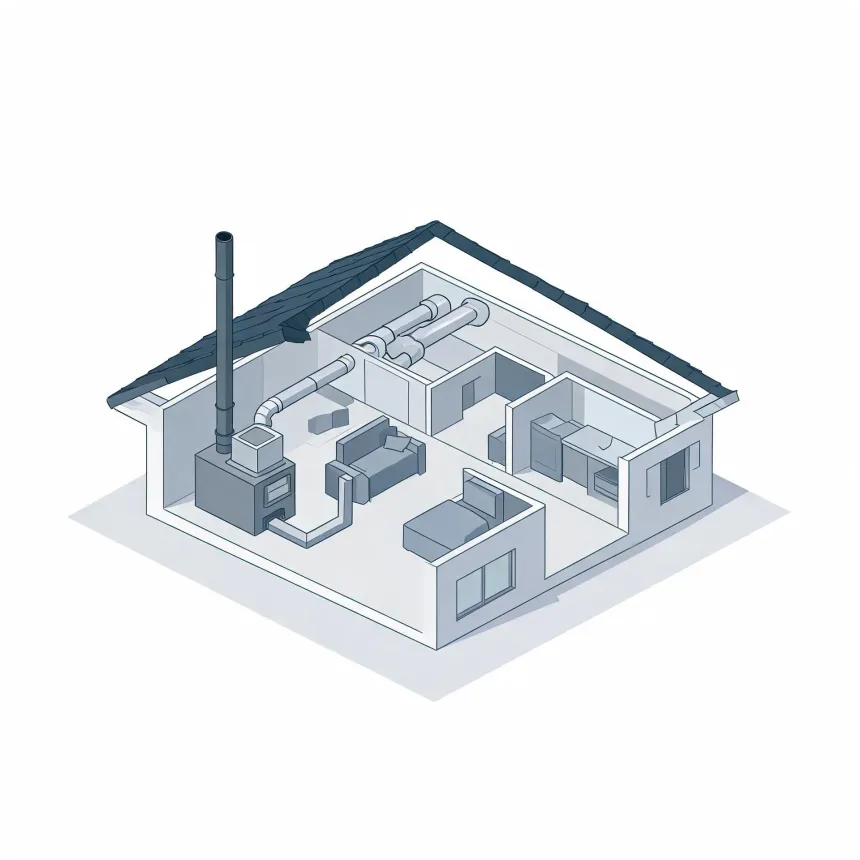
Isometric line illustration of a cutaway single-story house showing interior rooms with furniture, a furnace unit with a tall flue pipe, and connected ductwork running under the pitched roof.
Your furnace works hardest from December through February.

NOAA nClimDiv, 1991–2020 normals

Half the houses in Calcasieu Parish were built in 1989 or later.

A furnace that came with a newer house still has working life in it, and that life is worth repairing.

Five months of mild winter means less wear on your furnace

Heat runs November through March
Winter nights average 44°F
Climate zone 2A
October is when to check itFurnace season here runs November through March, and trouble tends to show up in that first month.

A tech will start by asking what the furnace is doing and when it started, since that points to where to look first. Most of the visit is testing, not guessing. They'll check the igniter or pilot for a steady glow or flame, watch a full cycle to see if the burners light clean and stay lit, and pull the panel to look at the flame sensor, since a coated sensor is one of the most common reasons a furnace shuts itself off partway through a cycle. They'll check the blower motor and wheel for the right airflow, since poor airflow strains other parts and shows up later as a different complaint. Gas pressure and venting get checked too, because a furnace can look fine and still be venting wrong. Whatever's found, you should hear what's worn, what's failing, and what it means for the furnace going forward.

Five months of light use, worth repairing

A furnace here isn't working against five months of hard winter, just one stretch of mild cold from November through March, with overnight lows averaging 44°F. That's not much strain to work against. If yours is acting up, the parts behind it have likely held up fine. Worth getting it looked at before the next cold night.

Find a contractor
A man in a gray shirt and tan pants carries a worn canvas tool bag up porch steps toward a dark blue paneled front door, with a potted shrub beside the entry.
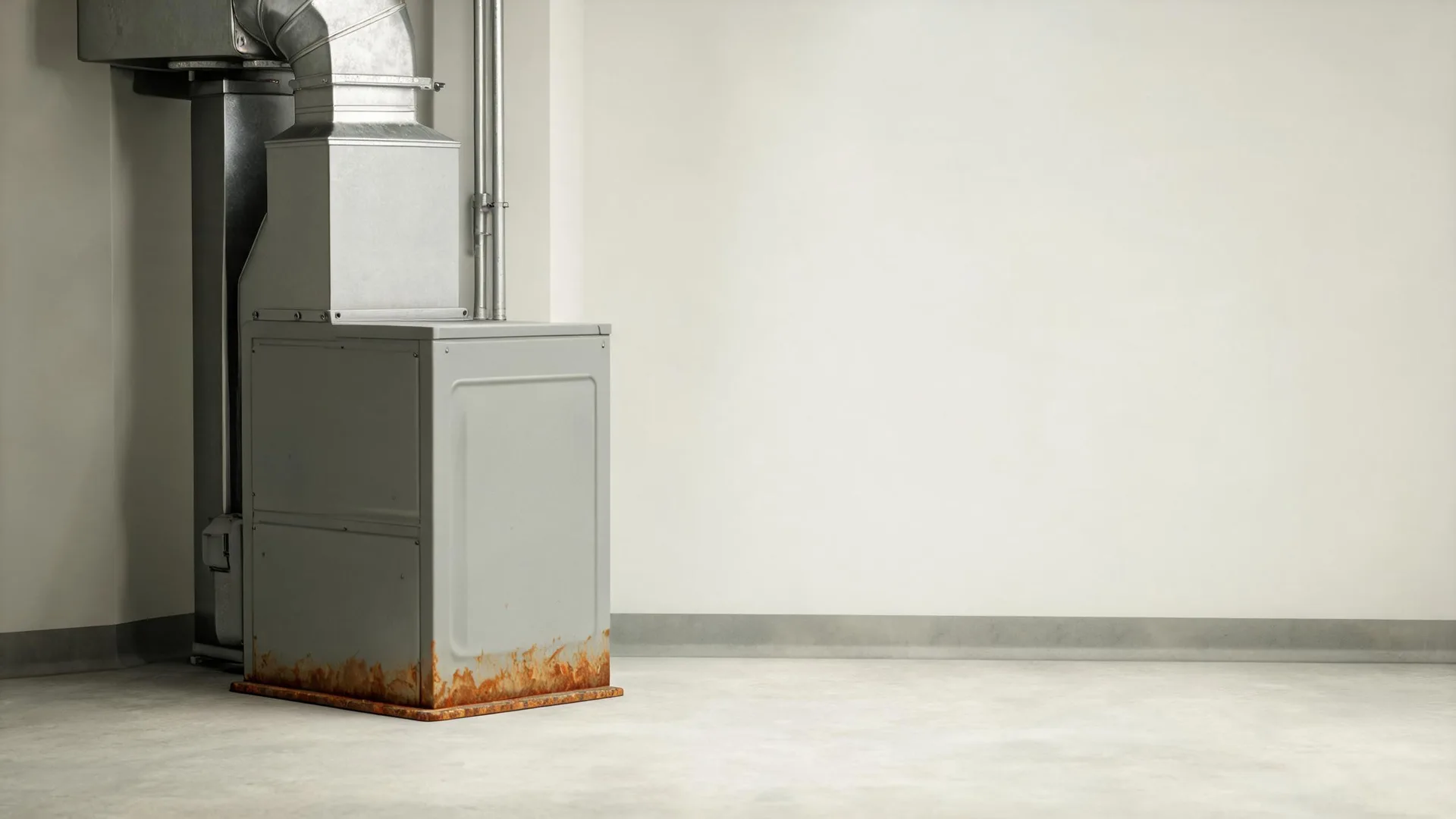
A gray gas furnace with attached ductwork and piping installed in an unfinished concrete basement.

A newer house usually means a newer furnace

That math doesn't need the furnace itself to be old. If yours came with the house and the house is newer, the furnace has had fewer winters behind it, not more. Worth asking the tech what year it was installed before you decide repair isn't worth it.

Ignition parts wear out first

The igniter and flame sensor see the most action of any part in the furnace, since they work every single cycle. An igniter has a limited number of times it can heat up and cool down before it cracks. A flame sensor doesn't wear out the same way, but it coats over with a film that builds up cycle after cycle until it can't sense the flame anymore. Both are small, both are common, and neither means anything else in the furnace is in trouble.
Airflow problems show up as something else

A dirty filter or a blower wheel caked with dust makes the furnace work harder to push air through the house. That strain doesn't stay put. It can show up as a furnace that overheats and shuts itself off, a cracked heat exchanger down the line, or a blower motor that burns out early. Fixing a furnace that keeps tripping off often means looking upstream at what's restricting the air, not just at the part that failed.

Before anyone comes out, there are a few things worth checking yourself. Make sure the thermostat is set to heat and the temperature is actually set above room temperature, since a bumped switch gets mistaken for a dead furnace more than people expect. Check the furnace switch, the one that looks like a light switch near the unit, and make sure it hasn't been knocked off. Look at the breaker it's on, since a tripped breaker will shut the whole thing down with no warning at all. If it's gas, check that the gas valve is open and that other gas appliances in the house are working. Pull the filter and hold it up to a light. If you can't see light through it, that alone can cause a lot of what looks like a bigger problem. None of this fixes a cracked igniter or a failing blower motor, but it rules out the simple stuff before you pay someone to find a flipped switch.

At some point a tech is going to tell you a part is worn and ask whether you want it fixed or want to put that money toward a new furnace instead. A cracked heat exchanger is usually the line. It's not a part that gets replaced on its own, since the cost of swapping it is close enough to a new furnace that most people go that way instead. Almost everything else, the igniter, the flame sensor, a blower motor, a gas valve, gets repaired and the furnace keeps running like nothing happened. Age matters less than what's actually failed. A furnace with one bad igniter has a straightforward path forward. A furnace with a cracked exchanger is the one where replacement starts to make more sense than repair.