A nighttime street scene featuring a row of lit white colonial-style houses with wrap-around porches, flanked by oak trees draped in Spanish moss.

Furnace Installation in Slidell, LA

Tell us about the job

Takes about a minute. No obligation.

New system or replacementFurnace or heatingSt. Tammany Parish, LA
Step 1 of 2

What ZIP code is the job in?

Wind and hail are the norm here, not the exception

St. Tammany Parish recorded 146 severe weather events between 2015 and 2024, most of it damaging wind with some hail mixed in. A furnace install is a good time to think about where the outdoor equipment sits and what, if anything, shields it.

The power can go out for longer than you'd like

Almost half of Louisiana households went at least 24 hours without power in 2024. A gas furnace with electronic ignition still needs electricity to run the blower, so it's worth asking your contractor what backup options exist for this house.

5 months
November through March, your furnace is on duty
43°F
the average winter night it heats against
80% AFUE
the federal minimum any new unit must meet
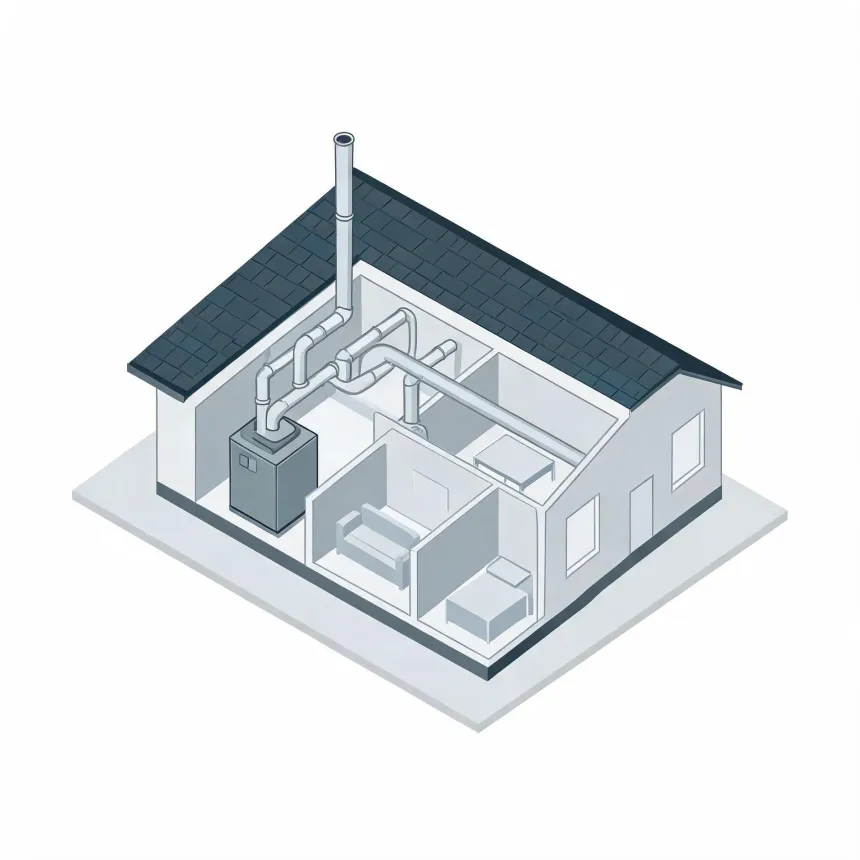
Isometric cutaway illustration of a single-story house showing a gray furnace connected to white ductwork and a flue pipe extending through the shingled roof, with simplified furniture in the interior rooms.
Your furnace works hardest from December through February.

NOAA nClimDiv, 1991–2020 normals

A Slidell furnace only has to work five months a year, November through March.

With winter lows averaging 43°F, this is not a system that needs to be oversized to keep up.

Five months of work, best planned in October

Heat runs November through March
Climate zone 2A
Winter nights average 43°F

Most houses in St. Tammany Parish heat with electricity, 61.9% of them. Utility gas accounts for 34.4%, and a small share run on bottled or tank gas. If your house already has gas line and venting in place, replacing an old gas furnace with a new one is usually the straightforward path. If you're on electric heat now, an electric furnace keeps things simple too, since nothing new has to be run to the house. Either way, matching what's already there avoids the extra work of adding fuel service that isn't currently set up.

Pick reliable, not top of the line

It won't be worked hard here, so pick a reliable system that fits. You don't need the top efficiency model.

Find a contractor
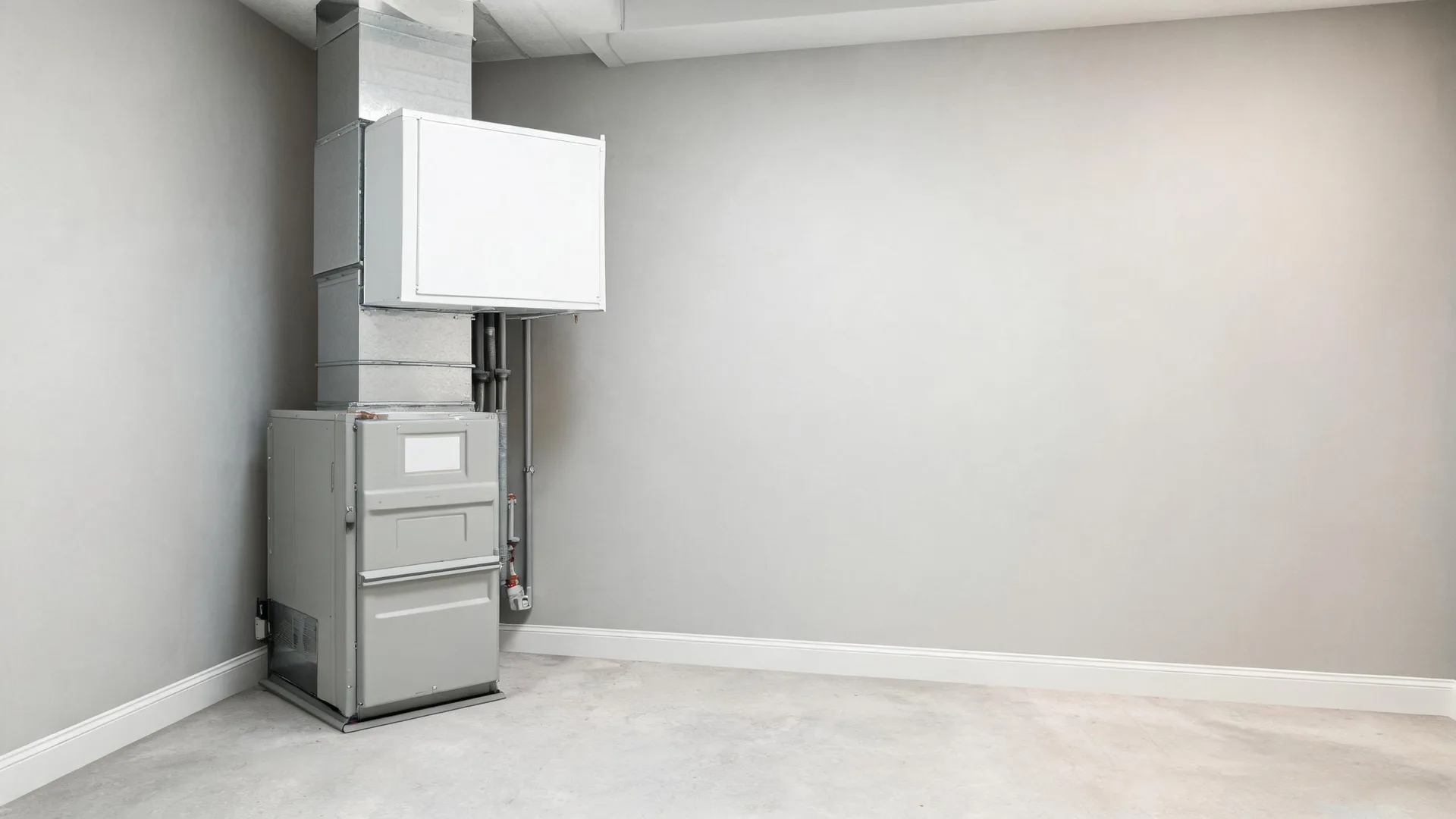
A gray residential gas furnace installed in an unfinished basement, surrounded by ductwork, a metal flue pipe, and a gas supply line.

Sized to the house, not the old unit

A load calculation looks at the house itself. Square footage, window area, ceiling height, insulation, how many exterior walls each room has. Houses that look about the same size on paper can still call for different furnace sizes once those details are counted up. Oversizing feels like it can't hurt, but a furnace too big for the house heats the air fast, hits the thermostat setting, and shuts off before it's pulled moisture out of the air or warmed the walls and furniture, not just the air between them. Short cycles like that put more wear on the igniter and the blower motor than long, steady runs do. Undersized runs the opposite risk. It never catches up on the coldest mornings and runs constantly trying. The furnace has to be sized to the house, not to whatever unit happened to be there before, since the old one may have been wrong from the day it went in.

The furnace itself is a small piece of the bill

The equipment is only part of what gets installed. The line set, the ductwork transitions, the flue or vent pipe, the gas line if one needs to be run or modified, the electrical whip for the blower, all of it factors in. A straight swap in the same spot with the same ductwork costs less work than a furnace going in a new location or replacing a system that was undersized or oversized from the start.

What the ductwork can take shapes the job

A furnace has to match the ducts it's feeding, not just the house. If the existing trunk and branch lines were sized for a smaller or larger unit, a contractor may need to modify them so airflow stays correct. Skipping that step to save labor shows up later as uneven heat, a noisy blower, or a furnace that short cycles because it can't move the air it's built to move.

Taking out the old furnace is part of the job, not an extra. A gas furnace gets disconnected from the gas line and flue before it comes out, and that flue often gets capped or resized since a new furnace may not vent the same way the old one did. An electric furnace is simpler to pull, mostly a matter of disconnecting the circuit and the ductwork collar. Either way, the old unit doesn't get left in place or reused as a backup. Ask what happens to the equipment once it's out, since hauling it off is normally included in an install rather than billed separately.

Installation day starts with the old furnace coming out and the new one going through steps a repair visit never touches. The ductwork gets sealed at every new connection, not just set in place, since a loose joint at the furnace leaks air before it ever reaches a room. The gas line, if there is one, gets pressure tested before the burner is ever lit. The flue gets checked for the right pitch and clearance, because a vent pipe that worked for the old furnace doesn't automatically work for the new one. Once it's running, a tech checks the temperature rise across the furnace against what the manufacturer specifies for that model, and adjusts the blower speed to match the ductwork rather than leaving it on a default setting. That last check is what separates a furnace that was installed from one that was just set down and wired in.