





A lit antebellum-style two-story house with white columns and a wraparound porch at night, framed by live oak trees draped in Spanish moss.

Furnace Installation in Natchitoches, LA

Tell us about the job

Takes about a minute. No obligation.

New system or replacementFurnace or heatingNatchitoches Parish, LA
Step 1 of 2

What ZIP code is the job in?

Natchitoches Parish has seen 107 damaging wind events and 42 hail events in the past decade. That kind of weather wears on an outdoor unit sitting exposed in a side yard. When you're putting in a new furnace, it's worth asking the contractor about placement and any guard or cover for the condenser outside, since that's the part taking the wind-blown debris and hail. Power is the other thing to plan for. Close to half of Louisiana households went at least a day without power last year, and a furnace with electronic ignition won't run without it.

5 months
November through March, your furnace is on duty
39°F
the average winter night it heats against
80% AFUE
the federal minimum any new unit must meet
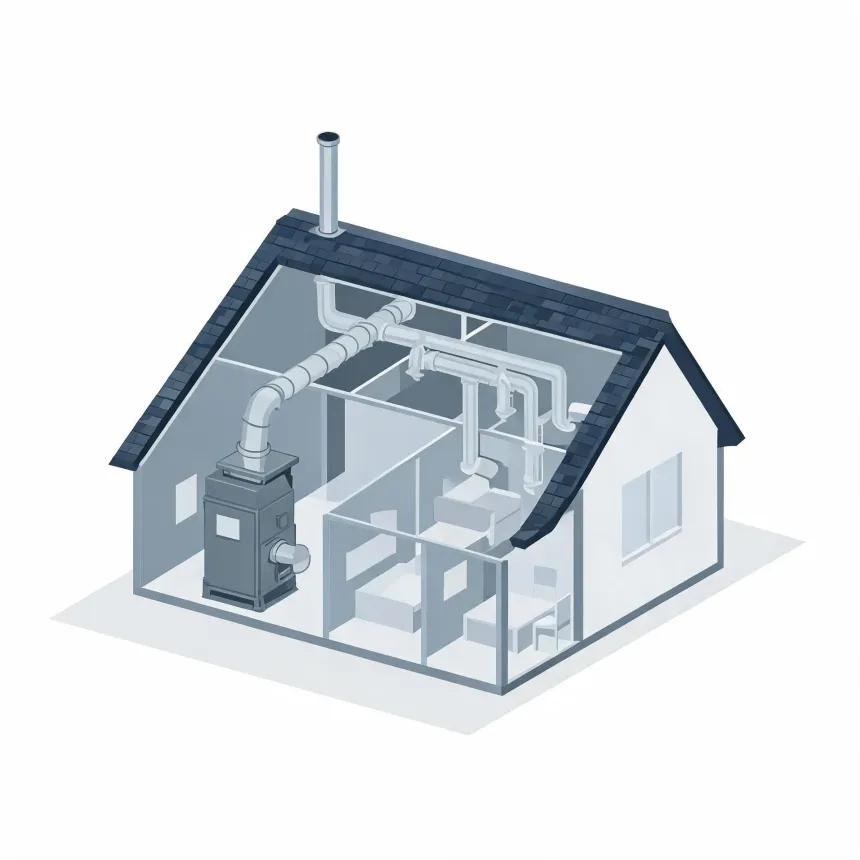
Isometric cutaway illustration of a small house showing a gray furnace unit with a flue pipe through the roof and branching ductwork running to rooms with simple furniture.
Your furnace works hardest from November through February.

NOAA nClimDiv, 1991–2020 normals

Electricity heats 67% of homes in Natchitoches Parish.

A furnace replacement here is usually electric in, electric out, so the contractor already knows what the new system needs to connect to.

Five months of heat, mild nights, nothing to oversize for

Heat runs November through March
Winter nights average 39°F
Climate zone 3A
A standard furnace fits most of this parishHalf the homes here were built in 1984 or earlier, half in 1984 or later. Age alone doesn't call for a bigger unit.

If you're thinking about backup power, a furnace still needs a say on it. An electronic ignition furnace won't light without power, so if you're adding a generator or a battery system for the outage itself, size it to carry the furnace's control board and blower along with the lights and the fridge. Ask the contractor what the furnace draws on startup, since that number matters more than what it draws once it's running. Tornadoes and hurricanes have both passed through this parish, and either one can take the grid down for longer than a day. A furnace that can't start on its own is just another thing waiting on the power company.

Pick the furnace that will start when the power comes back, not the one with the lowest bill

Electricity here runs $34.38 per million Btu, cheaper than most of the country, so a high-efficiency furnace takes longer to pay for itself on energy savings alone. That makes this a different decision than it is elsewhere. Put the money into what holds up through a storm and starts back up on its own, and let a contractor walk you through which model does that.

Find a contractor
A man in a dark long-sleeved shirt and olive work pants carries a canvas tool bag up steps toward a blue-gray front door of a shingled house, with a potted shrub beside the entry.
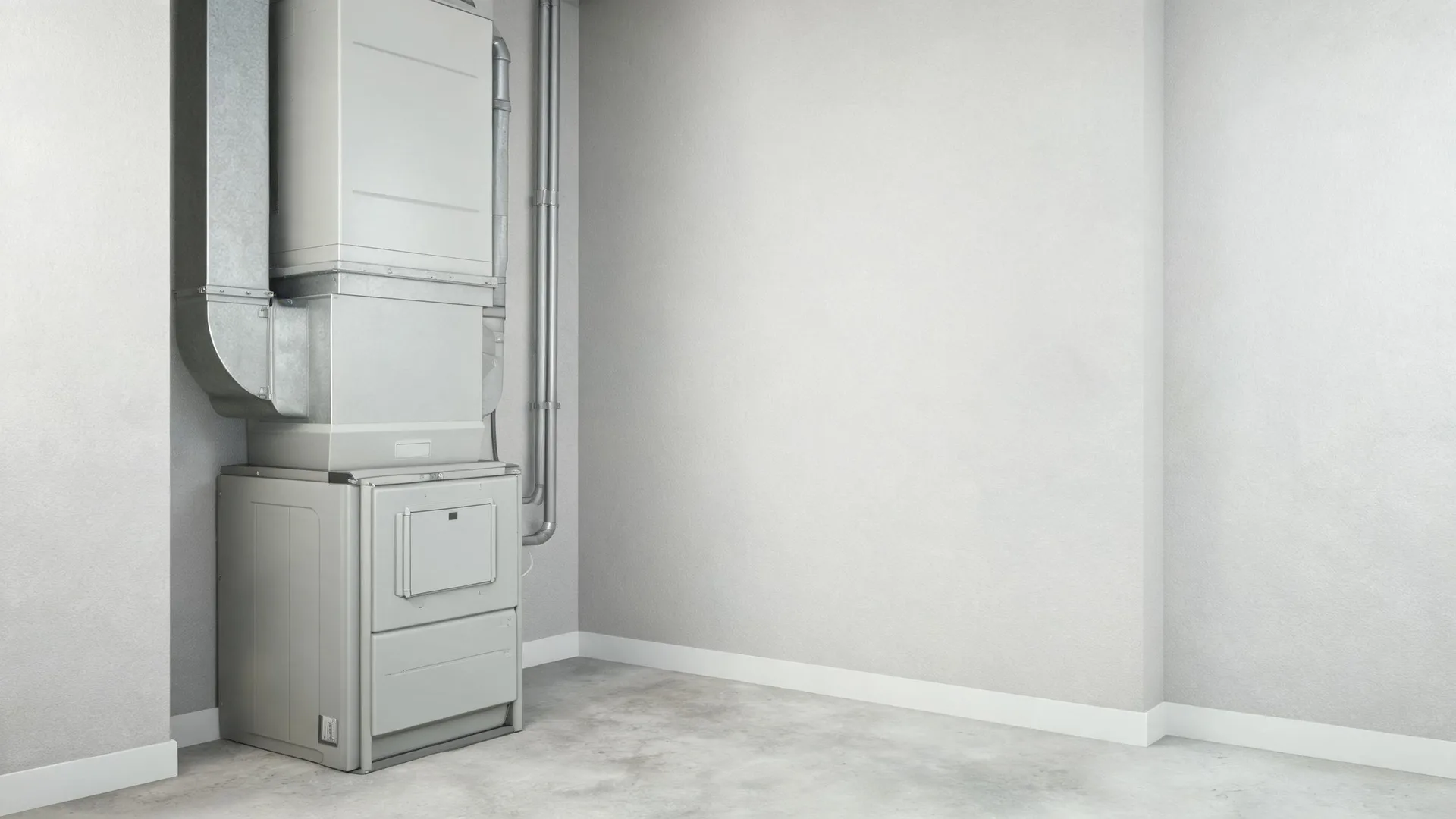
A gas furnace with attached ductwork, gas piping, and condensate lines installed in a concrete-block basement.

Five months of work ahead, one month to get ready

Heat runs November through March here, five months. October is the month to get a new furnace in, before the first cold night, not during it. A furnace installed in a hurry gets whatever's in stock and whatever slot the contractor can fit you into. One installed in October gets a full look at sizing, placement, and what it needs to tie into, on a schedule that's yours instead of the weather's.

Sizing drives the quote more than the brand

A contractor has to run a load calculation on the house, checking square footage, window area, insulation and ceiling height, before pricing a furnace. Homes built the same size can still call for different size units depending on how they're sealed up and laid out. Skip that step and you either pay for capacity that sits unused or end up with a furnace that runs constantly and still can't keep the place warm.
What's already there changes the labor

If the new furnace matches the fuel type, vent setup and duct connections of the old one, the swap is straightforward. Switching fuel types, moving the unit to a new spot, or tying into ductwork that doesn't match the new furnace's airflow all add work on top of the equipment itself. Ask the contractor to walk through what's being reused and what's being replaced before you compare numbers.

Ask every contractor for the load calculation, not just a price. A furnace quoted off square footage alone is a guess, and a guess can run you a unit that short cycles or one that never quite gets the place warm. Ask what happens to the old ductwork, too. A furnace sized right still won't heat evenly if the supply runs feeding it are too small or too leaky for the air it pushes. And ask about the warranty terms on the heat exchanger specifically, since that's the part that's expensive to replace and the one manufacturers vary on most. Bids with the same equipment listed can still leave you in different spots if one includes a proper duct check and the other doesn't.

Installation day starts with the old furnace coming out. The contractor shuts off gas and power first, then disconnects the ductwork, the vent pipe and the gas line. Getting it out of a closet or attic space sometimes takes longer than setting the new one in, especially if it didn't go in that way to begin with. Once the new furnace is in place, the work is hooking it up right. That means sealing the duct joints, running a proper vent for the exhaust, and wiring it into the thermostat and the power supply. Before anyone leaves, the furnace gets fired up and checked. The flame sensor, the airflow, a check for any gas smell near the connections. A furnace installed correctly shouldn't need a callback for a leak or a short in the first week.