






An unfinished basement interior featuring a large metal furnace unit, exposed ceiling joists, concrete walls, and scattered boxes and cables on the floor.

Furnace Installation in Marksville, LA

Tell us about the job

Takes about a minute. No obligation.

New system or replacementFurnace or heatingAvoyelles Parish, LA
Step 1 of 2

What ZIP code is the job in?

Ask what size furnace each contractor is proposing, and ask how they arrived at that number. A furnace that's too big for the house will short cycle, turning on and off more than it should, which wears out parts faster and leaves rooms feeling uneven. One that's too small will run long stretches and struggle to keep up on the coldest days. Sizing should come from a load calculation based on the house, not a guess based on the old unit. Ask about the warranty too, both on the furnace itself and on the labor to install it, since those are often separate and come from different places. And ask who handles the ductwork if it needs any changes, since a new furnace connected to the old ducts can only perform as well as those ducts allow.

5 months
November through March, your furnace is on duty
41°F
the average winter night it heats against
80% AFUE
the federal minimum any new unit must meet
Isometric cutaway illustration of a small house showing a furnace unit connected to ductwork and a vertical flue pipe extending through the dark shingled roof, with sparse furniture in the rooms.
Your furnace works hardest from December through February.

NOAA nClimDiv, 1991–2020 normals

Over half the homes in Avoyelles Parish heat with electricity, more than any other fuel.

An electric furnace is a straightforward swap here, and if your house already has the wiring for one, that's most of the sizing question answered before the contractor walks in.

Heat starts in November here. Put the furnace in during October.

Heat runs November through March
Winter nights average 41°F
Climate zone 2A
Cheap power changes what's worth paying forElectricity ran $34.38 per million Btu in Louisiana in 2024, cheap enough that reliability matters more than a high efficiency rating

A furnace in Marksville isn't working hard most of the year. Heat only runs about five months here, November through March, and even in the dead of winter the overnight low averages 41. That's a mild load compared to places where a furnace fights single digits for months at a stretch. A mid-range furnace, sized right and installed well, will cover those nights without trouble. The money is better spent on correct sizing and a clean install than on chasing the highest efficiency rating on the lot.

Replace it before the season

Replace it before the season starts, so it happens on your schedule, not in a hurry.

Find a contractor
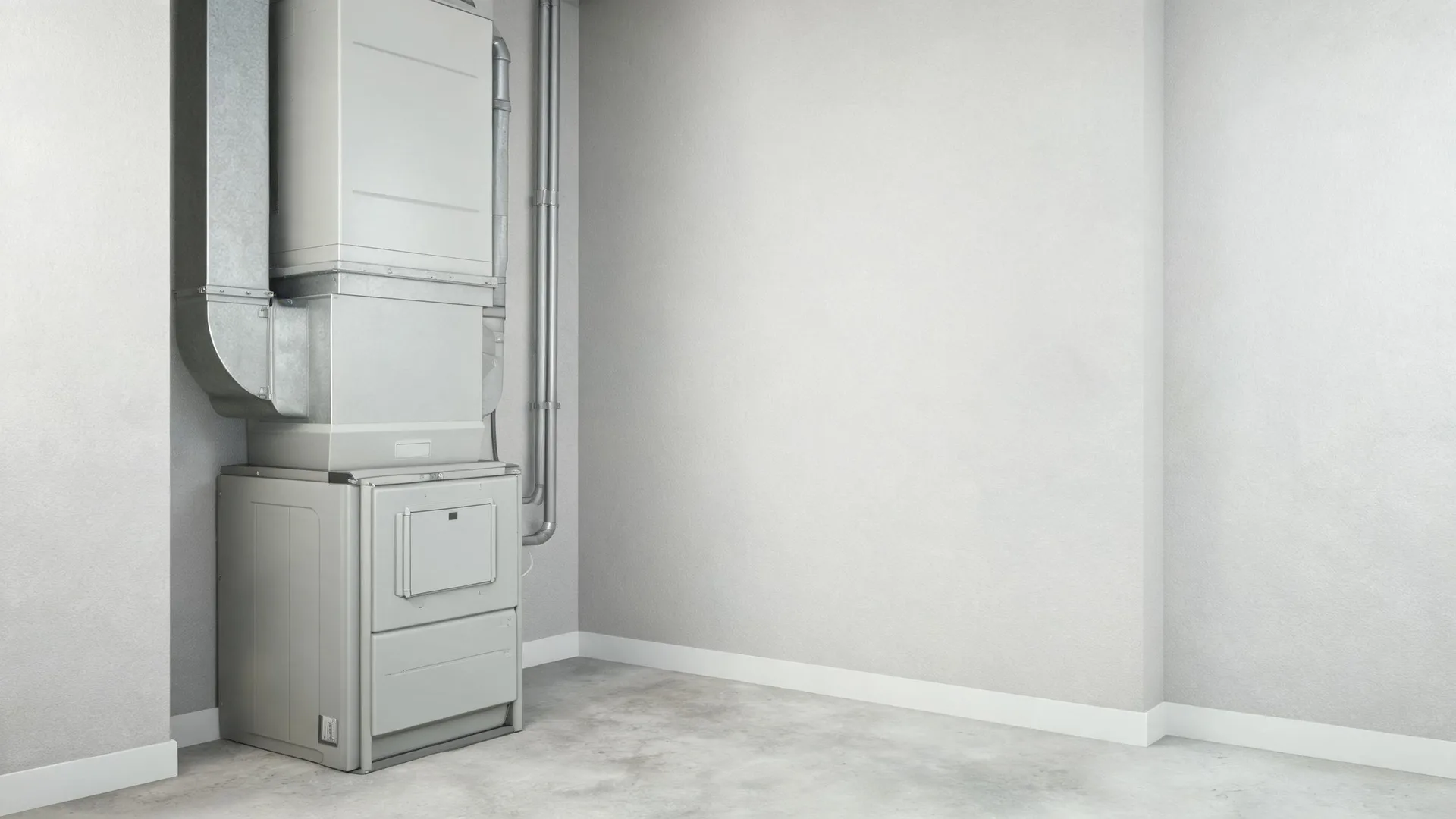
A gas furnace with attached ductwork, gas piping, and condensate lines installed in a concrete-block basement.

Nothing here asks for more than a standard furnace

Half the homes in Avoyelles Parish were built in 1980 or earlier, half in 1980 or later. That spread doesn't point toward a bigger or smaller furnace. Age of the house isn't a sizing factor, the load calculation on the house you actually have is. The same goes for mobile homes, close to a fifth of the housing stock here. A mobile home needs a furnace sized and installed for that structure, not a scaled-down version of a standard install. Nothing about this parish calls for oversizing or for equipment above mid-range. A correctly sized, standard furnace will run here for years.

The calculation accounts for more than square footage

A load calculation looks at how much glass the house has, which way the windows face, how much insulation is in the attic and walls, and the ceiling height in each room. Houses of a similar size can still need different sized furnaces because of those differences. Square footage alone is a starting point, not an answer.
The old furnace's size isn't a safe guide

If the last furnace was never sized right, or the house has had windows or insulation changed since it went in, matching its size just repeats whatever was wrong the first time or installs for a house that no longer exists. The load calculation should be run on the house as it sits now, not on what was there before.

The old furnace does not come back out through the front door in one piece. A tech disconnects the gas line, the vent, the electrical, and the ductwork, then cuts it down or walks it out in sections if it won't fit through the opening whole. The heat exchanger has usually spent years absorbing combustion heat and giving it back, and by the time a furnace is replaced, that metal has earned its retirement. Someone hauls it off for scrap, since the steel and copper in it have value even when the furnace doesn't run anymore. None of that is your job to arrange. It should be part of the installation, not a separate errand you're left holding.

A tech shows up with the new furnace, the ductwork adapters, the vent pipe, and whatever the gas line needs to hook up clean. The old unit comes out first, disconnected and hauled clear before anything new goes in. Setting the furnace means getting it level, sealing the duct connections so air isn't leaking out at the joints, and running a fresh vent if the old one doesn't match what the new furnace needs. Once it's wired and the gas line is connected, the tech fires it up and checks the flame, checks the temperature rise across the furnace, and checks that air is moving through every room it should reach. That last check matters as much as the install itself, since a furnace that heats the house unevenly usually has a duct problem, not a furnace problem. Before anyone leaves, the furnace should be cycling normally, the area around it should be clean, and you should know where the filter is and how to get to it.