A white Southern-style house with a wraparound porch photographed at night, surrounded by Spanish moss-draped oak trees lit by landscape lights.

Furnace Installation in Mansfield, LA

Tell us about the job

Takes about a minute. No obligation.

New system or replacementFurnace or heatingDe Soto Parish, LA
Step 1 of 2

What ZIP code is the job in?

Most homes here run on electric heat

Electricity heats 66.3% of homes in De Soto Parish, which means an electric furnace or heat pump setup is the standard choice. Gas service reaches some homes too, with utility gas at 26.0% and propane at 6.0%, so a furnace install here still depends on what your house already has run to it.

Matching what's already there is the easier job

If your home was built for electric heat, staying electric for the new furnace means the wiring and setup are already in place. Switching fuel types for a furnace replacement is a bigger project, since it can mean new gas lines or a different electrical panel setup than what you have now.

5 months
November through March, your furnace is on duty
38°F
the average winter night it heats against
80% AFUE
the federal minimum any new unit must meet
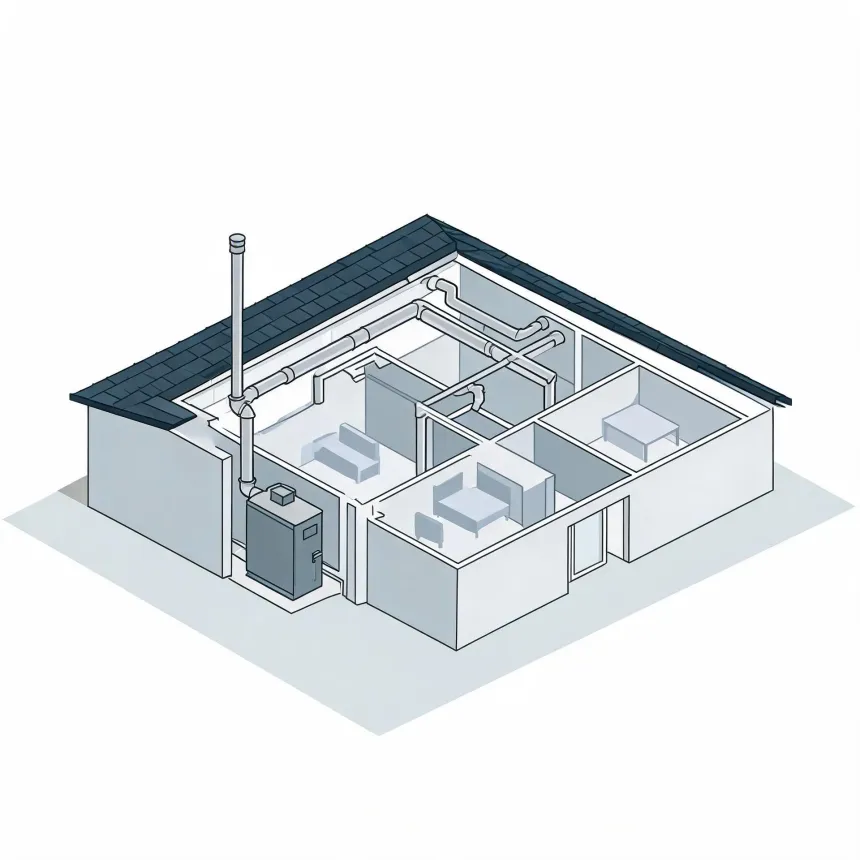
Isometric line illustration of a cutaway single-story house showing interior rooms with furniture, ceiling ductwork, and an exterior furnace unit with a tall flue pipe.
Your furnace works hardest from November through February.

NOAA nClimDiv, 1991–2020 normals

Mansfield furnaces only run about five months a year, November through March.

A furnace sitting idle most of the year doesn't need to be the top efficiency model to earn its keep.

A standard furnace fits a standard install

Half the homes here were built by 1990
Heat runs November through March
Winter nights average 38°F
What it costs to run matters less hereElectricity in Louisiana runs $34.38 per million Btu, cheap enough that a basic furnace earns its keep

A furnace that's too big for the house will short cycle. It kicks on, heats the air fast, and shuts off before that warm air ever reaches the far rooms. That leaves cold spots and a system that's cycling on and off all night instead of running a long, steady stretch. One that's too small can't keep up when the temperature drops outside. It just runs and runs and still falls short. Getting the size right means a contractor works out the heat loss of the house itself, looking at the square footage, the windows, the insulation, how much air leaks out. That's the only way to match the furnace to the house, rather than just swapping in whatever size was there before.

Installed before November, not during it

Heat goes on in November here and runs through March. A furnace put in ahead of that gives the contractor time to size it right and get it running clean, instead of working against a cold snap and a house that already needs heat.

Find a contractor
A gas furnace with attached ductwork, gas piping, and condensate lines installed in a concrete-block basement.

Five months a year, and nights that don't ask much

Five months of work a year is a light schedule for a furnace. The rest of the year it sits. Overnight lows average 38°F through December, January and February, not far below where the furnace kicks in, so even on its coldest nights it isn't straining to close a huge gap. That's a short, mild season for the parts inside to wear against. Pick one built to last through that kind of year, and skip paying extra for efficiency gains that need a long runtime to pay back.

The ductwork decides more than the furnace does

If the ducts already run through the house, the furnace connects to what's there. If they need to be added or reworked, that's a bigger job than the unit itself, since cutting in new runs and registers takes more labor than setting the furnace and hooking it up.

Venting changes the job for a gas furnace

A gas furnace has to vent exhaust outside, and newer high-efficiency models vent through a side wall with PVC pipe instead of a chimney. Running that new venting where there wasn't any before adds work beyond swapping the furnace itself.

When you're comparing quotes, ask what stage the furnace runs at. A single-stage furnace is on full blast or off, nothing in between. A furnace that can run at a lower setting most of the time gives you longer, gentler heating instead of blasts of hot air followed by long silences. Ask what the warranty covers on the heat exchanger specifically, since that's the part that's expensive to replace and the one manufacturers back differently depending on the model. Ask how the contractor plans to vent the unit, especially if you're moving from an older furnace to a high-efficiency one, since that can mean new pipe running somewhere it didn't before. And ask how they sized the furnace for your house. A contractor who worked out the heat loss from the square footage, the windows and the insulation is giving you a real answer. One who just matches the old unit is guessing.

Installation day starts with the old furnace coming out, and if the setup is changing at all, that's where the time goes, not in setting the new unit. The contractor runs the gas line or checks the electrical circuit, connects the ductwork, and sets the vent pipe or chimney connection. Once it's hooked up, they fire it up and check the flame or the heat strips, then measure the temperature rise through the plenum to confirm it matches what the furnace is rated for. They'll check static pressure in the ducts too, since a furnace pushing against too much resistance will run hot and wear out its parts early. Before they leave, a gas furnace gets checked for carbon monoxide at the exchanger and anywhere the vent pipe joins together. The whole job ends with the thermostat programmed and a run cycle watched start to finish, not just switched on and left.