






An unfinished basement containing a forced-air furnace with metal ductwork, exposed wooden ceiling joists, a hanging Edison bulb, and bare concrete floors.

Furnace Installation in Laplace, LA

Tell us about the job

Takes about a minute. No obligation.

New system or replacementFurnace or heatingSt. John the Baptist Parish, LA
Step 1 of 2

What ZIP code is the job in?

Most homes in St. John the Baptist Parish heat with electricity, 73.9% of them. Gas heat is much less common here, at 23.7%. If your house already has an electric furnace or heat pump, replacing it with the same keeps the installation straightforward, since the wiring and setup are already in place for it. Switching fuel types for a furnace install means new gas lines or new electrical work, either way, so it's worth confirming what your home is already set up for before you decide.

5 months
November through March, your furnace is on duty
44°F
the average winter night it heats against
80% AFUE
the federal minimum any new unit must meet
Isometric line illustration of a cutaway building interior showing a furnace unit with a flue pipe and ductwork running along the ceiling, plus adjacent rooms with simplified furniture.
Your furnace works hardest from December through February.

NOAA nClimDiv, 1991–2020 normals

Electricity here runs $34.38 per million Btu, cheaper than most of the country.

A high-efficiency furnace will cost more up front and take longer to earn that back, so pick one for how long it lasts, not just its efficiency rating.

Laplace doesn't need an oversized furnace, just a working one

22 severe weather events from 2015 to 2024
49% of homes statewide lost power a day or more in 2024
10 damaging wind events from 2015 to 2024

A contractor can size the furnace to your house and leave it there. Ask about the warranty and what the cabinet and heat exchanger are built from, since that tells you more about how long the unit lasts than the efficiency number on the sticker. A mid-efficiency furnace installed well and maintained will outlast a high-efficiency one that was sized wrong or never serviced. If your ductwork is already in place, matching the new furnace to it matters more than chasing the highest rating on the shelf.

Get the furnace in before November

Heat comes on in November here and runs through March. October is the month to have a new furnace in before that, so the install happens on a plain afternoon instead of the first cold night.

Find a contractor
A man in a dark t-shirt and tan work pants, seen from behind, carries a worn canvas and leather tool bag up concrete steps toward a dark gray front door, with a potted flowering plant to the right.
A gray residential gas furnace installed in an unfinished basement, surrounded by ductwork, a metal flue pipe, and a gas supply line.

Five months of work

Furnace here runs about five months a year, November through March. The rest of the time it sits. Overnight lows average 44 degrees across December, January and February, mild next to what colder states deal with. A furnace built for that short, mild season doesn't take much of a beating. That's why age and upkeep matter more here than how hard the thing has been run.

Ask what the stages actually do

A single-stage furnace runs full blast every time it fires, then shuts off. A multi-stage furnace runs on a lower flame most of the time and only kicks up to full fire on the coldest days. Ask which one you're getting and why, because the answer should match how the installer sized the unit to your house, not just what was on the truck.
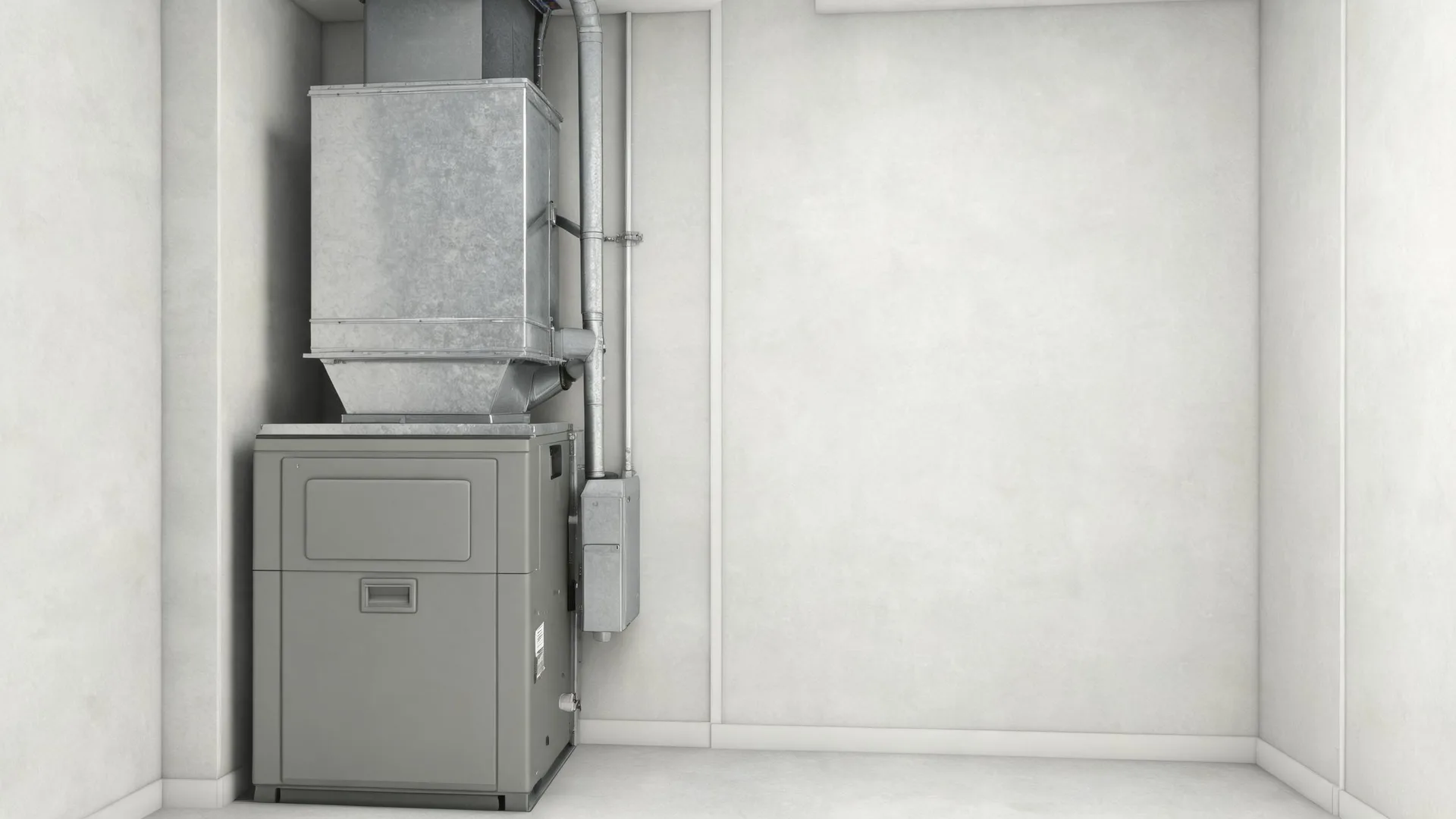
Ask how they're venting it

A mid-efficiency furnace vents through a metal flue. A high-efficiency one vents through PVC pipe and needs a condensate line to drain. Ask where that pipe will run and where the condensate drains to, because retrofitting that venting is its own job, separate from the furnace itself, and it affects where the unit can go in your house.

A furnace that's too big for the house will short cycle. It fires up, blasts heat, and shuts off again before it runs long enough to warm the place evenly. One that's too small just runs and runs and still can't keep up on a cold night. Getting the size right means a contractor works out how much heat the house actually loses through the walls, windows and ceiling, not just how many square feet it covers. Houses that look alike from the street can need different furnaces depending on insulation and window area. That calculation is what decides the size, not the unit that happened to be on the truck or the one that worked fine next door.

The unit itself is only part of what you're paying for. Pulling the old furnace, running new venting, modifying ductwork to fit the new cabinet, upgrading the electrical if the new furnace calls for it, all of that is labor on top of equipment. A straight swap, same fuel type, same vent path, same duct connections, is the simplest job a crew can do. Change any one of those and the job grows. The furnace that costs less to buy can end up costing more to install if it doesn't match what's already there, and the one that costs more can go in clean and fast if it does.