




Night view of illuminated white Southern-style houses with wraparound porches beneath Spanish moss-draped oak trees.

Furnace Installation in Hammond, LA

Tell us about the job

Takes about a minute. No obligation.

New system or replacementFurnace or heatingTangipahoa Parish, LA
Step 1 of 2

What ZIP code is the job in?

The size of the furnace matters more than the brand. One sized too big for the house will short cycle, turning on and off before it ever warms the place evenly, and that wears out parts faster. One sized too small runs constantly and still can't keep up on the coldest days. Getting that right means a contractor measuring the house rather than just matching whatever was there before. The ductwork plays into the cost too. If the existing ducts are the right size and in good shape, the new furnace connects to them with little extra work. If they're leaky, undersized, or built for a different kind of system, sealing or modifying them adds to the job. Venting matters as well. A high efficiency furnace vents differently than an older style. If the home doesn't already have the right setup for that, it means new pipe and a new termination point outside the house, not just a swap.

5 months
November through March, your furnace is on duty
42°F
the average winter night it heats against
80% AFUE
the federal minimum any new unit must meet
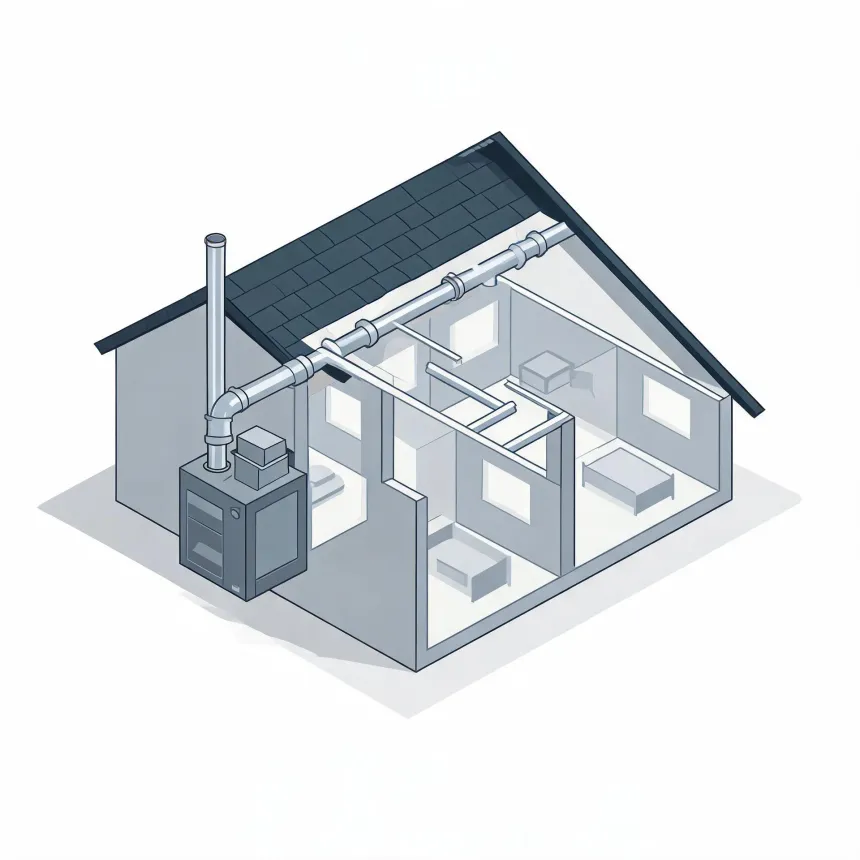
Isometric cutaway illustration of a small house showing interior rooms, ductwork running through the attic, and a furnace unit with a vertical flue pipe on the exterior wall.
Your furnace works hardest from December through February.

NOAA nClimDiv, 1991–2020 normals

73% of homes in Tangipahoa Parish heat with electricity.

For most furnace jobs here, that means matching the new system to electric service already in place, not choosing between fuels.

Electricity here runs $34.38 per million Btu, so paying more up front for the highest-efficiency furnace takes longer to earn back

Heat runs November through March
Winter nights average 42°F
Climate zone 2A

Furnace here only has to work about five months a year, November through March. Overnight lows in that stretch average 42°F, not the single-digit cold that pushes a furnace to its limit. That's a mild load for the equipment to carry. A furnace sized and installed right for this house will handle it without strain, and it won't need to be the highest-tier model on the shelf to do it. Problems that show up down the road are more likely to trace back to age or a skipped service than to the system being overworked.

Your new furnace has to meet the 80 percent AFUE minimum

Any furnace installed here now has to hit 80 percent AFUE, the federal minimum. That's the bar for this job regardless of who installs it. Furnaces built from December 2028 on will have to hit 95 percent, so the lower-efficiency models available today won't be an option much longer. Installing now still means meeting the current standard, and a federal tax credit is available for qualifying high-efficiency equipment.

Find a contractor
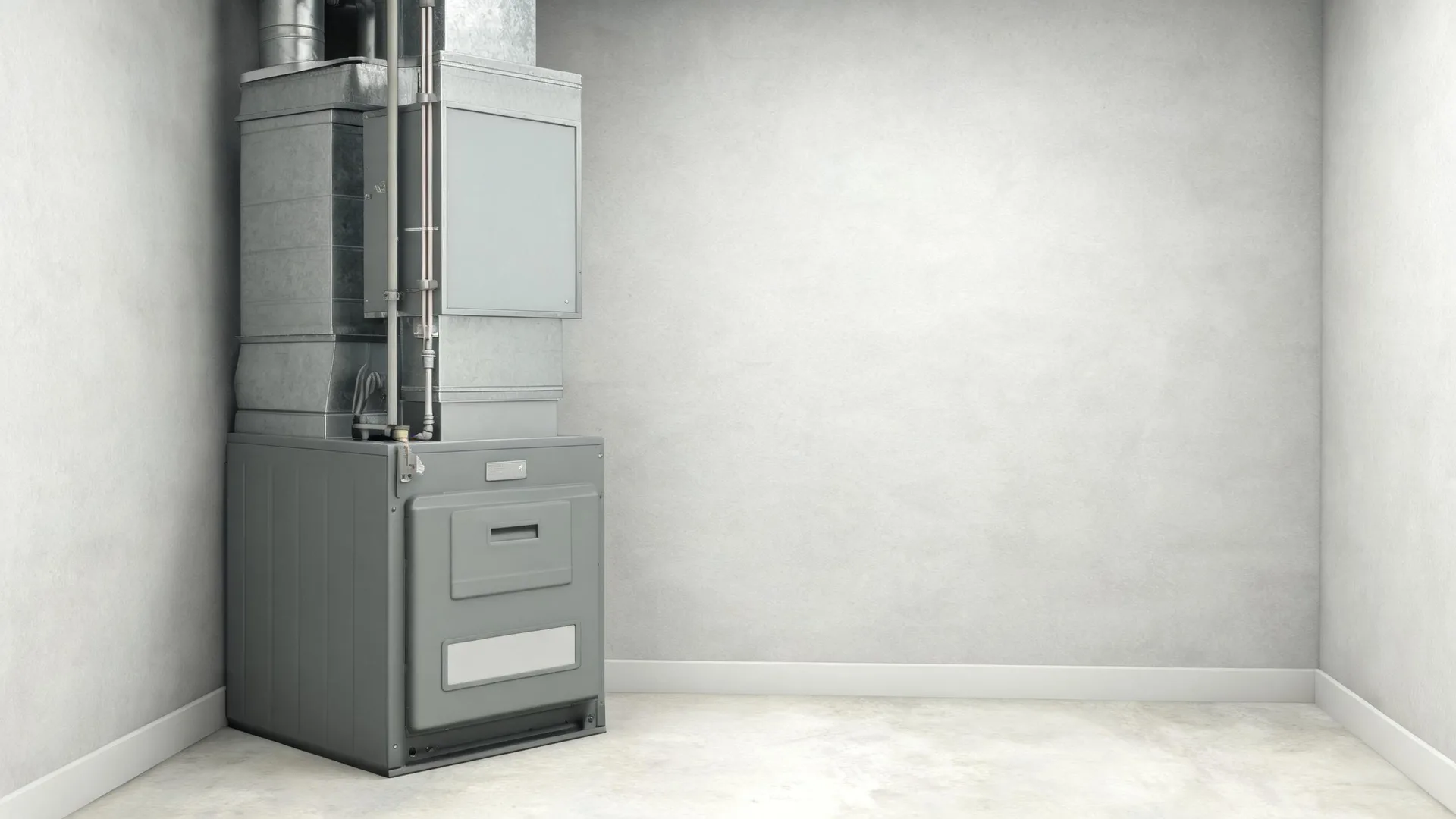
A gray residential gas furnace installed in an unfinished basement, surrounded by ductwork, a metal flue pipe, and a gas supply line.

Get it in before November, not after

Furnace here runs about five months, November through March. Install before November and it goes in on your timeline, with time to compare quotes and pick the unit that fits the house. Wait until the first cold snap and you're calling around with no heat already, taking whatever gets to you fastest.

The old furnace gets disconnected and hauled out

The gas line gets capped, the vent pipe gets removed back to where it ties into the chimney or wall, and the ductwork gets disconnected from the old cabinet. The furnace itself is usually cut down or broken apart enough to get through the doorway it didn't come in through. None of that connects to your new furnace. It all leaves with the old one.
A furnace this size isn't worth much as scrap

The cabinet is mostly sheet metal, and the heat exchanger inside is often cracked or corroded by the time a furnace gets replaced, so it's not salvaged for parts. Whoever hauls it away is paid for the hauling, not for what's inside it. If a contractor mentions a credit for the old unit, ask what it's actually for.

AFUE is the number on the furnace's label, and it tells you what share of the fuel actually turns into heat inside the house. The rest goes out the flue as exhaust. A furnace with a higher AFUE pulls more heat out of that exhaust before it leaves, and that takes a different kind of furnace, not just a better-tuned version of the same one. The exhaust coming off a high-efficiency unit is cool enough to vent through plastic pipe instead of metal, which changes how the furnace gets installed, not just what's printed on the side of it. That rating only holds up if the furnace is sized for the house and the ductwork can move the air it puts out. A high-efficiency furnace choked by bad ducts won't heat like its label says it will.

Install day starts with the old furnace coming out. The new one usually doesn't go in the exact same way, even on a straight swap. A contractor runs a load calculation and checks the duct connections before anything gets set in place. Setting the cabinet, connecting the gas line, and tying into the ductwork is usually the fastest part of the day. Venting takes longer, especially if the new furnace vents through pipe instead of the old metal flue. Once it's connected, the furnace gets fired up and checked. Gas pressure, temperature rise across the heat exchanger, airflow at the registers all get tested before the contractor calls it done.