






Night view of illuminated white Southern-style houses with wraparound porches beneath Spanish moss-draped oak trees.

Furnace Installation in Denham Springs, LA

Tell us about the job

Takes about a minute. No obligation.

New system or replacementFurnace or heatingLivingston Parish, LA
Step 1 of 2

What ZIP code is the job in?

A furnace that's too big for the house will short cycle, kicking on, blasting heat, and shutting off again before it ever warms the place evenly. That's hard on the heat exchanger and the blower motor both, and it leaves you with rooms that never feel quite right no matter where you set the thermostat. One that's too small just runs and runs, trying to keep up on the coldest days and never getting there. Getting the size right starts with a load calculation, which looks at the square footage, the windows, the insulation, the ceiling height, and how the place is laid out, room by room. It's not a guess based on the old unit or a flat rule of thumb. The furnace that comes out of that math is the one that actually matches the house it's heating.

5 months
November through March, your furnace is on duty
42°F
the average winter night it heats against
80% AFUE
the federal minimum any new unit must meet
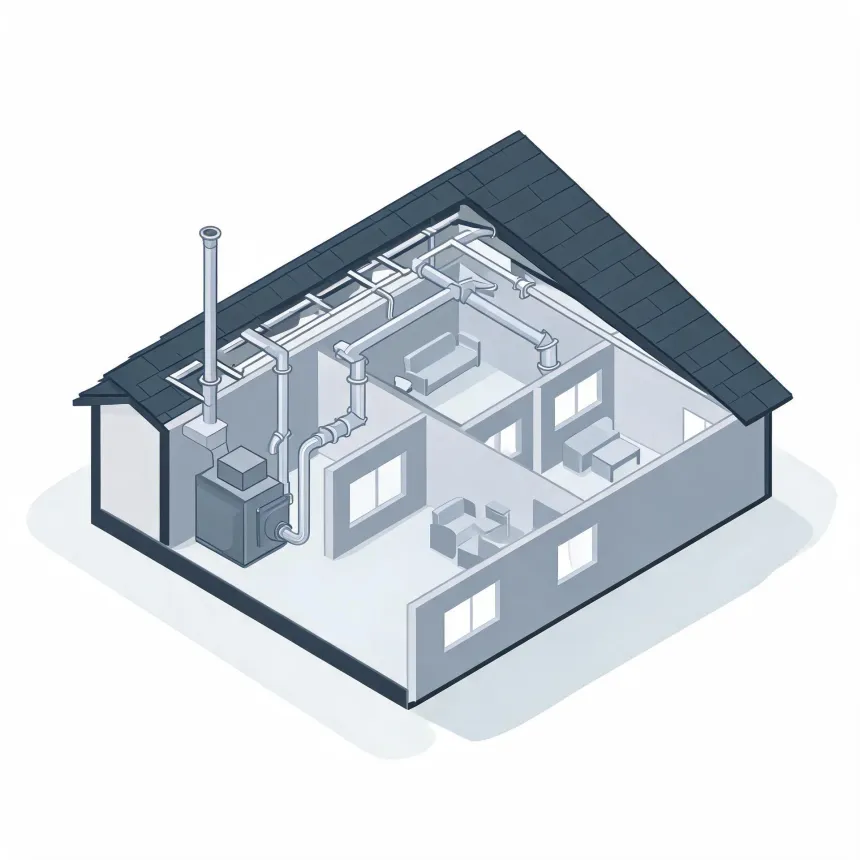
Isometric cutaway illustration of a single-story house showing interior rooms, a furnace unit with flue pipe, and branching ductwork running through the ceiling space under a dark shingled roof.
Your furnace works hardest from December through February.

NOAA nClimDiv, 1991–2020 normals

Furnaces here start running in November.

Put yours in during October, and the first cold night isn't a scramble.

Five months of mild winters means your furnace won't be working hard here

Heat runs November through March
Winter nights average 42°F
Climate zone 2A
Built for homes that already run on electricityElectricity heats 73% of homes in Livingston Parish, gas furnaces are the exception here, not the rule

The furnace itself is only part of what you're paying for. The ductwork it ties into matters just as much. If the existing ducts are undersized, leaky, or built for a different furnace, a contractor has to account for that, sometimes sealing joints, sometimes replacing whole runs, before the new unit can heat the house the way it should. The venting matters too. A high-efficiency furnace vents differently than an older one, often needing new PVC pipe run to the outside instead of tying into an existing flue. Then there's the gas line and electrical hookup. If the new furnace draws more power or needs a different gas connection than the old one, that work has to happen before the furnace is ever set in place. None of this shows up when you're just comparing furnace models side by side, but it's where a lot of the real work happens.

Pick the furnace that fits, not the one with the highest rating

Electricity here runs $34.38 per million Btu, so a high-efficiency model takes longer to earn back its higher price than it would somewhere with steeper power costs. That makes the load calculation and the ductwork the things worth getting right. A furnace sized and vented properly for this house will serve it well for years, whatever efficiency tier you land on.

Find a contractor
A man in a dark shirt and tan pants carries a canvas tool bag up stone steps toward a dark blue front door, with a potted shrub beside the entry.
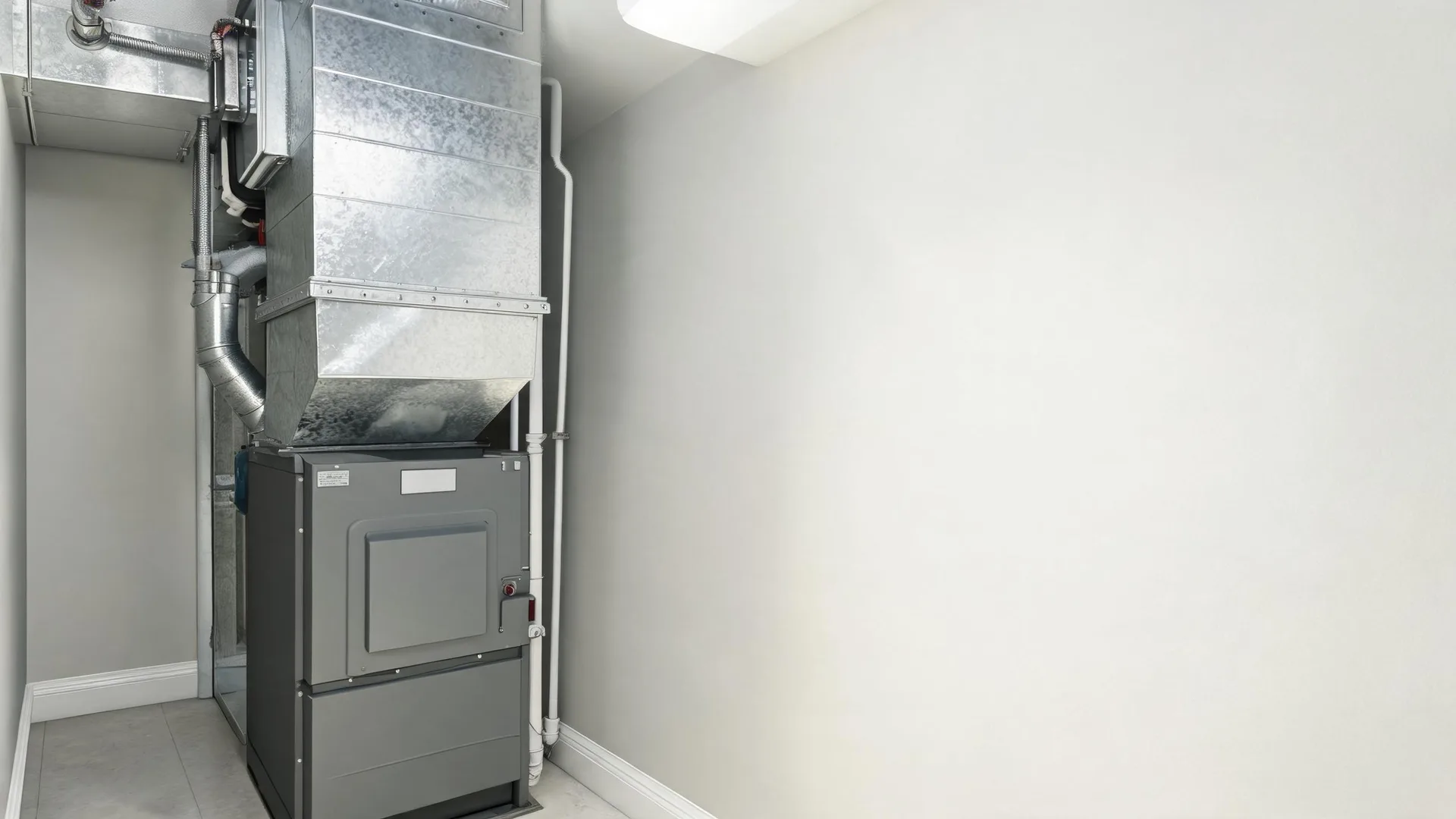
A gray gas furnace with attached ductwork and piping installed in an unfinished concrete basement.

A furnace that fits beats a furnace that's rated high

Five months of real work a year leaves a lot of room on the spec sheet. Skip the top-tier efficiency model and put that money into the load calculation and the ductwork instead. A mid-range furnace, sized right and vented right, will carry a Livingston Parish winter without ever being asked for more than it has.

Someone has to haul the old furnace away

The old furnace doesn't just get unhooked and left behind. Once the gas and electrical are disconnected and it's pulled from the ductwork, it has to go somewhere. Most contractors include hauling it off as part of the job, but it's worth confirming before the work starts rather than finding out after.
The old gas line and vent don't just disappear

If the new furnace vents differently or runs on a different gas connection, the old pipe and flue don't always get reused. Sometimes they're capped off, sometimes removed outright. Leaving an old flue connected to nothing is a mistake worth asking about before the crew leaves.

When you're comparing quotes, ask what stage each furnace runs. A single-stage furnace fires at full blast every time it kicks on. A multi-stage furnace can run at a lower output most of the time and save full blast for the coldest nights, which tends to make the heat feel more even room to room. Ask about the blower motor too, since a variable-speed motor adjusts airflow in small steps instead of snapping between on and off. Ask what the warranty covers on the heat exchanger specifically, since that's the part that costs the most to replace and the one most worth protecting. And ask who's responsible if the ductwork needs work once the furnace is set. A quote that leaves that part out isn't a complete quote.

Installation day starts with pulling the old furnace out. The gas line and electrical get disconnected first, then the ductwork comes loose so the contractor can see what they're actually working with once the space is empty. Setting the new furnace rarely takes long. The slower work is fitting the plenum, sealing the duct connections where they meet the new unit, and running new vent pipe if the furnace needs it. The gas line and electrical have to match what the new furnace draws, not what the old one did, so those connections often need adjusting too. Once it's in place, a contractor checks the gas pressure, confirms the vent is drawing properly, and runs the furnace through a full cycle to watch it fire, heat, and shut off the way it should. A furnace that skips that last check can run for years without ever quite working right.