Five months of work
Furnaces in Alexandria run November through March. The rest of the year it sits idle, and even on winter nights the low only averages 41°F. That is not a hard load for a furnace to meet.
Takes about a minute. No obligation.
Furnaces in Alexandria run November through March. The rest of the year it sits idle, and even on winter nights the low only averages 41°F. That is not a hard load for a furnace to meet.
A furnace that sits unused most of the year does not need the highest efficiency rating to pay for itself. What matters more here is a unit that starts reliably when the power comes back on after a storm, and an install done right.
NOAA nClimDiv, 1991–2020 normals
Different furnaces come with different warranty terms on the heat exchanger versus the rest of the parts.
Ask which part failing actually gets covered, since a cracked heat exchanger and a dead blower motor aren't treated the same by most manufacturers.



Half the homes in Rapides Parish were built in 1980 or earlier, half later. That spread doesn't call for a different furnace. A standard unit, sized to the house and the ductwork already in place, works in either one. Mobile homes make up a real share of the housing stock here, and those need a furnace rated for manufactured housing specifically. Outside of that, nothing about homes in this parish pushes toward a bigger unit or a pricier one.
It won't be worked hard here, so pick a reliable system that fits. You don't need the top efficiency model.
Find a contractorNovember through March, about five months. Get the new furnace in before November and the first cold night isn't a test of anything. Wait, and you're doing this install the week a cold front already came through, on whatever timeline a crew can give you.
A load calculation works out how much heat a house loses through its walls, windows, ceiling and air leaks, room by room. That number is what a furnace gets matched to. Square footage alone doesn't answer it. A tight, well insulated house and a drafty one the same size can need different sized units entirely.
A furnace too big for the house heats the air fast, hits the thermostat setting, and shuts off before it finishes a full cycle. That short cycling wears on the ignition system and the blower motor faster than normal use would, and it leaves the house with warm air that never fully circulates. Bigger isn't a safety margin. It's a furnace working against its own design.
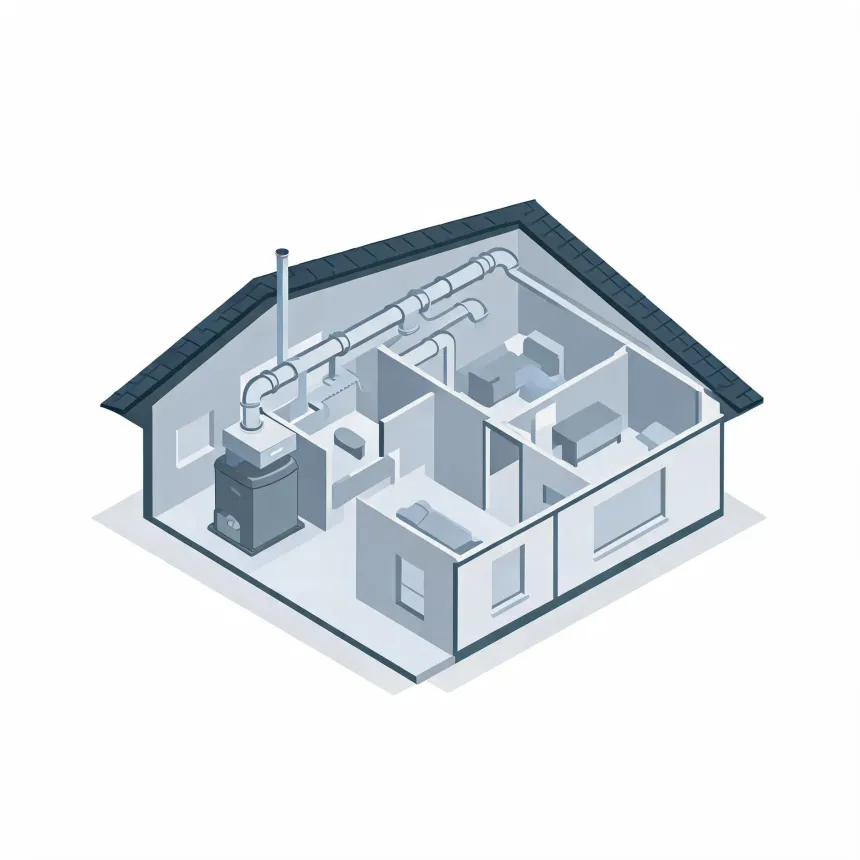
The cost of putting in a furnace comes down to more than the unit itself. The ductwork already in the house has to carry the air that furnace is rated to move, and if it's undersized or leaky, that gets addressed before the furnace goes in, not after. Venting matters too. A furnace has to vent its exhaust a certain way, and if the new unit vents differently than the old one, that's new pipe and sometimes a new path through the wall or roof. The gas line and electrical hookup get checked against what the new unit needs, since not every furnace draws the same. Labor covers removing the old unit, setting the new one, and making every connection to code, and that work is worth as much as the furnace sitting on top of it.
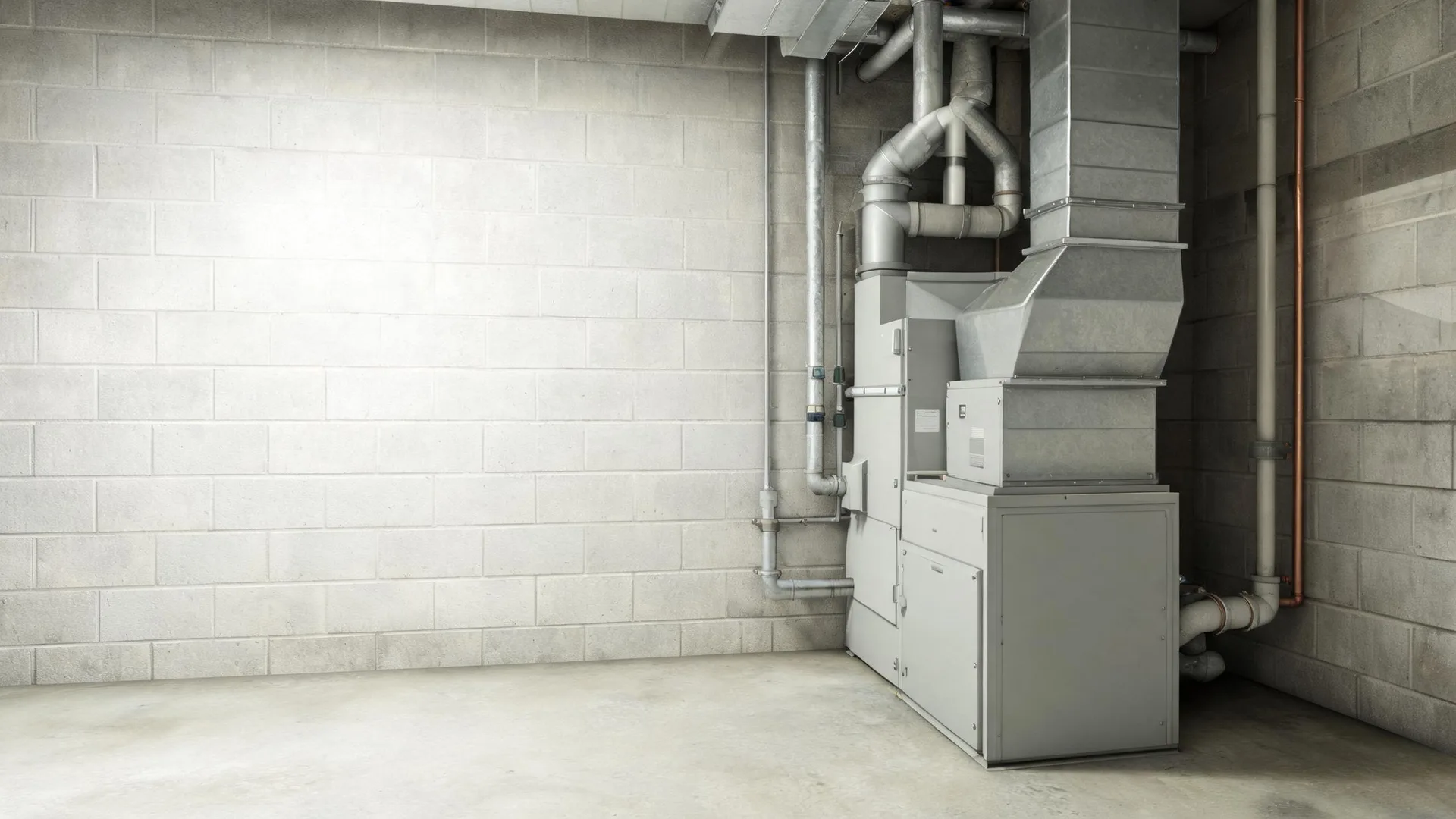
Install day starts with the old furnace coming out. The gas line gets shut off and disconnected, the vent pipe comes apart, and the ductwork connection at the plenum gets opened up. The new unit goes in on a level pad or stand. From there every connection gets remade. The gas line, the vent, the ductwork, the power, and the condensate line if the furnace is high efficiency. Each joint gets tested before anything is closed up, and the vent pipe gets checked for the right slope and the right clearance from anything that burns. Once it's hooked up, the furnace runs through a full cycle on site. The technician checks the gas pressure, the temperature rise across the heat exchanger, and the airflow at the registers while it runs. A furnace that fires once and gets left alone hasn't really been checked out. One that's been watched through a full cycle has.