
Why your furnace is leaking water in Louisiana
A furnace leaking water in Louisiana is almost never the furnace burning gas wrong. Most homes here heat with electric furnaces, and an electric furnace doesn't produce the condensation that a gas furnace's flue does. What you're seeing is usually the air conditioner side of the system, or a condensate line shared with it, backing up. The indoor coil sits right there with the furnace, and in a state this humid it pulls a steady stream of water out of the air for most of the year. That water is supposed to drain out through a line to the outside. When the line clogs with algae or dirt, or the drain pan underneath cracks or rusts through, the water has nowhere to go but down, and it shows up at the base of your furnace. A leak like this won't stop on its own, and water sitting near the furnace's electrical parts is worth getting looked at before it causes more damage.

The coil behind the leak
Most furnaces here are paired with the home's air conditioner, and the indoor coil sits right above the furnace cabinet. That coil pulls moisture out of the air every time the AC runs, and with Louisiana summers as muggy as they are, that coil is wet for months at a stretch. The water is supposed to drain off through a condensate line. When that line clogs or the drain pan cracks, the water backs up and finds the furnace below it instead.

Why it shows up now
A clogged condensate line doesn't leak all at once. It backs up slowly, so the pan fills and overflows only after the system has run long enough to push more water through than the line can carry off. That's why a furnace can sit dry for weeks and then start dripping once the AC gets heavy use. The same line serves the system whether the furnace is heating or just sitting idle while the AC runs, which is most of the year here.
Why does my furnace only leak water when the AC is running?
You notice the water only shows up when the air conditioner is on, not when the furnace is running heat. That timing is a clue, and it points away from the furnace itself.
Because the coil above the furnace does the work, not the furnace
The furnace isn't producing that water. The indoor coil is, and it sits inside the same cabinet, right above the furnace. When the AC runs, that coil pulls humidity out of the air and drains it away through a condensate line. The furnace just happens to be what the water runs past on its way down. If the drain line is clogged or the pan underneath has cracked, water backs up or spills over, and it shows up around the furnace even though the furnace had nothing to do with making it. That's why you never see it when the heat is running by itself. No cooling, no coil pulling moisture, no water.
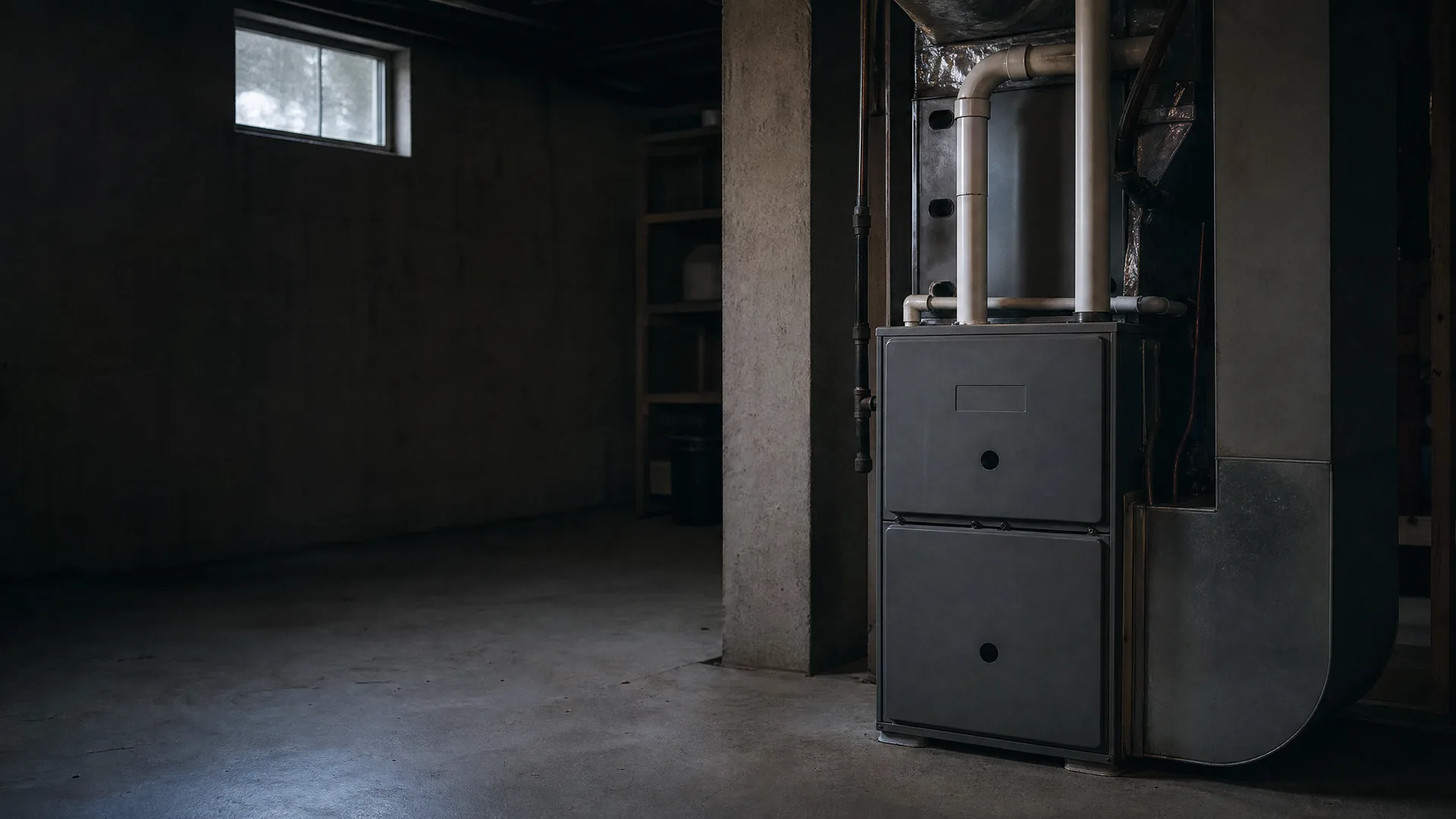
It's a November evening, and the house has finally cooled enough to want heat. You flip the thermostat over and head down to the basement to check why nothing's happening. The furnace sits there dark, quiet, a thin haze of dust catching the light from the bare bulb overhead. You crouch down and see it: a dark stain spreading across the concrete under the cabinet, the edge of it still wet. The furnace hasn't run yet tonight. You touch the floor near the coil above the cabinet and your fingers come away damp. Upstairs, the air is finally cool enough to need a jacket. Down here, you're still looking at water that has no business being there in November.
Hand off the search today
A water stain spreading across the ceiling below, or a pan that keeps filling no matter how many times you empty it, isn't something to watch for another week. Left alone, that water finds drywall, flooring, and the furnace cabinet itself, and what started as a clogged drain line turns into a repair bill with more zeros on it. You could spend an afternoon calling around, explaining the same thing to three different companies, then sitting with three quotes trying to guess who actually knows electric furnace and coil setups versus who's guessing same as you. Or you could send this request once and let a contractor who works on these systems in Louisiana homes get back to you. That's the part that stops being yours to carry. The leak still needs a look, but finding someone qualified to take that look doesn't have to be the thing standing between you and a dry ceiling.
You can keep emptying the pan yourself, checking it every evening and running a shop vac when it overflows, for as long as you're willing to make that part of your routine.
Or a contractor finds out whether it's the drain line, the pan, or the coil, and you stop checking altogether. That's the difference between managing the leak and ending it.


The drain line is a narrow PVC pipe, and over a summer of steady AC use it collects algae and dust until the water can't move through it fast enough. The pan backs up first. Once it's full, the overflow doesn't stay contained, it runs straight down into the furnace cabinet below. Some pans have a float switch meant to catch this, shutting the system off before it gets that far, but if the switch is stuck or missing, nothing stops the pan from spilling over. Age plays a part too. A pan that's held standing water for years can rust through at the seams, and when that happens it leaks no matter how clear the line is. There's one more case worth knowing: if the coil itself has iced over from low refrigerant, it melts into far more water than the pan or line was ever sized to carry, and that volume alone can be enough to send it over the edge.
Where the water actually comes from
- The coil sits in a drain pan, and a small PVC pipe carries the water the coil collects out to a drain or outside the house.
- Algae and dust build up inside that drain line over months of summer use and narrow it until water backs up into the pan.
- Once the pan fills faster than the line can drain, water spills over the pan's edge and runs down into the furnace cabinet below.
- Some systems have a float switch in the pan meant to shut the system off when water rises too high, and a stuck or missing one lets the pan overflow unchecked.
- The pan itself can rust through at the seams after years of holding standing water, which leaks regardless of whether the line is clear.
- A coil that's iced over from low refrigerant melts into far more water than the pan or line was ever built to handle at once.


Winter nights average 43°F statewide
Winter nights here average 43°F, mild enough that your electric furnace isn't running long or hard on any given night. That's one more reason a puddle under it in winter almost always traces back to the AC coil overhead, not the furnace itself.
NOAA nClimDiv 1991-2020 county normals weighted by homes

The water is coming from the coil, not the furnace
The leak under your furnace almost always starts at the coil above it, where your AC pulls moisture out of the air all summer long. A clogged drain line, a full pan, or a cracked pan sends that water down into the furnace cabinet below. The furnace itself is rarely the problem. That's the answer, and it holds whether the water showed up last night or you've been dealing with it for weeks.
What's left is finding out which of those three it is, and that takes someone looking at the drain line, the pan, and the coil itself. You could spend your evenings calling around for someone who works on furnaces, explaining the same puddle and the same timing to each one, then sorting through who quoted what. Or you could send one form and let a contractor get found for you, so your evening goes back to whatever you'd rather be doing with it.

Stop chasing a furnace pro
Describe your furnace job once, to one pro.
No charge to send it. You decide if you hire them.