








Furnace leaking water in Lafayette, LA

Send the request today and stop worrying about who to call.

RepairFurnace or heatingLafayette Parish, LA
Step 1 of 2

What ZIP code is the job in?

Why is water leaking from my furnace in Lafayette?

Water pooling near your furnace is unsettling, especially when the unit still seems to run fine. In Lafayette, most homes heat with electricity, and a furnace tied to a heat pump or straight electric system has a different reason for leaking than a gas furnace does. Before anything gets worse, it helps to know what's actually dripping and why.

It's almost always condensation, not a gas or water line problem

Most furnaces in Lafayette Parish are paired with cooling systems that pull a lot of moisture out of the air, since summers here stay muggy for months. That moisture collects in a drain pan and runs out through a condensate line. If that line clogs or the pan cracks, water backs up and finds its way out of the unit instead. A clogged drain is the most common cause by far. Less often, the issue is a cracked heat exchanger or a blower pulling air wrong, which is worth having checked since it affects more than just water on the floor. Either way, a leak means something downstream of the furnace needs attention, not that the furnace itself is failing.

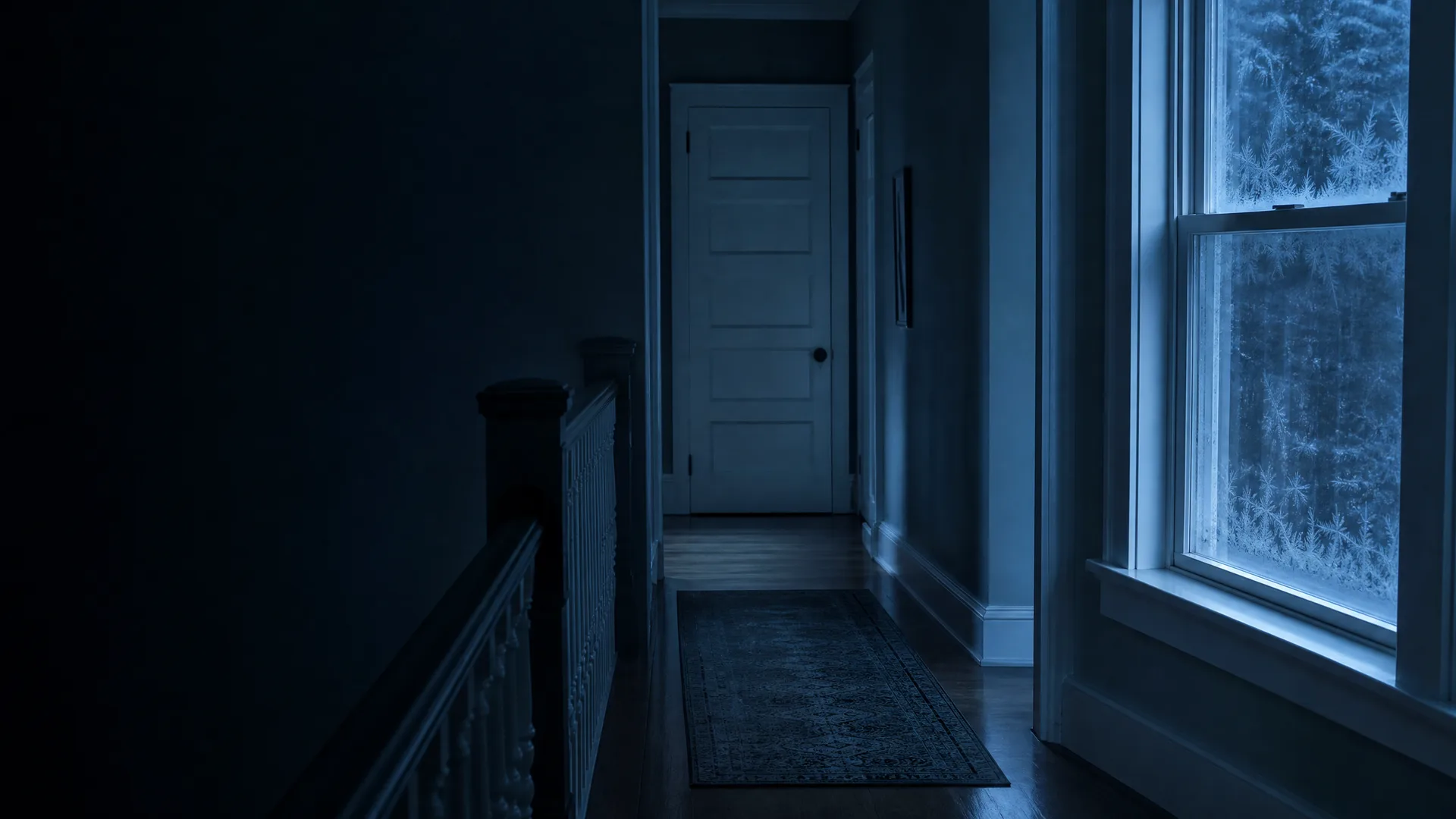
Dimly lit interior hallway at night with a closed white paneled door at the end, a long runner rug on a wood floor, a stair railing at left, and a frost-covered window admitting blue light at right.

You wake up a little after two and the house feels off, too quiet. No hum of air moving through the vents. You walk the upstairs hallway in the cold and the window at the end of it has frost creeping in along the edges, pale in the blue dark. Outside, it's a still January night, the kind Lafayette Parish only gets a handful of each winter. You crouch by the floor vent and hold your hand over it. Nothing. Somewhere below you, near the furnace, water is finding its way across the floor, and the house is colder than it should be for a system that's supposed to be running.

Why does a Lafayette furnace only leak water a few months a year?

  • Winter nights average 44°F

    Nights here average 44°F in December, January and February, cold enough to run heat but mild enough that the system cycles on and off often, and each cycle is a chance for condensation to form.

  • Heat runs November through March

    Heat only runs November through March here, so a leak often shows up the first cold snap after months of the furnace sitting unused, when a cracked line or clogged drain finally gets tested.

  • 77.4% of homes heat with electricity

    Most homes in Lafayette Parish heat with electricity, and an electric furnace or heat pump makes condensate the same way an AC coil does, so the drain line can clog or leak even in the cold months.

NOAA nClimDiv 1991-2020 · ACS 2020-2024

Where the Water Actually Comes From

  • A high-efficiency furnace cools exhaust enough to condense water, which drains through a PVC line to a floor drain or condensate pump.
  • A clogged condensate line is the most common cause, usually from algae or sediment building up inside the PVC over time.
  • The condensate pump, a small box near the furnace with a float switch, can fail and let water back up instead of pumping it out.
  • A cracked or disconnected drain trap under the furnace will let water drip out before it ever reaches the line.
  • If the furnace shares a coil with the AC system, a clogged evaporator drain can also show up as water near the furnace.
  • Standard furnaces without a secondary heat exchanger shouldn't produce condensate at all, so leaking there often points to a cracked heat exchanger or a nearby humidifier line.

A furnace that produces condensate has to get rid of it somewhere, and that path has several points where it can fail. High-efficiency models pull enough heat out of the exhaust that it condenses into water, and that water is supposed to run down through a PVC line, usually to a floor drain or into a small condensate pump box sitting near the unit. Algae and sediment build up inside that PVC over months, and once the line narrows enough, water backs up and finds the nearest low point instead, which is often the floor under the furnace. The condensate pump itself is a common failure point too. It has a float switch that's supposed to trigger the pump when water reaches a certain level, and if that switch sticks or the pump motor dies, water just keeps rising until it spills over the side of the box. Below the furnace there's usually a drain trap, a bent piece of PVC that holds a small amount of water to block sewer gas from coming back up the line. If that trap cracks or works loose, water drips out before it ever makes it into the drain system at all. Furnaces that share a coil with the home's AC system have a second drain pan for the coil, and when that one clogs, the water shows up near the furnace even though the furnace itself did nothing wrong. A standard furnace without a secondary heat exchanger isn't built to produce condensate in the first place, so water showing up there points somewhere else entirely, usually the heat exchanger itself or a humidifier line running nearby.

A gray furnace with sheet-metal ductwork, PVC vent pipes and a yellow gas line stands on a concrete basement floor beside wooden stair framing.
A furnace like this drains condensation through its PVC line as it runs, with no puddle forming on the floor.
An older gas furnace with a louvered front panel stands on a concrete basement floor beside galvanized sheet-metal ductwork, a metal flue pipe, gas piping and a flexible conduit along a concrete wall.
Once that line clogs or the pump fails, the same furnace backs water up and lets it spill onto the concrete.

The trap below the heat exchanger holds a small amount of water on purpose. That seal keeps air from fooling the pressure switch into reading a blockage that isn't there. If the trap cracks or pulls loose, water drips onto the floor instead of following the PVC line to the drain. On furnaces that use a condensate pump rather than a gravity drain, the float switch inside it is what tells the pump to kick on. That switch can stick or wear out, and when it does, water just sits there instead of getting pumped out. Sometimes the furnace catches the problem before you do and shuts itself down on a safety switch, so a unit that keeps restarting on its own can be worse off than one that's just dripping steadily. Further back, the secondary heat exchanger is where the exhaust cools enough to turn to water in the first place, and age can crack it too. A technician works through the trap, the pump, the float switch and the exchanger in that order, because any one of them produces the same puddle.

Where the water actually starts

  • The condensate trap sits just below the heat exchanger and has to stay primed with water to seal out air, or the pressure switch reads it as a blockage.
  • A cracked or disconnected trap lets water drip straight onto the floor instead of routing into the PVC line toward the drain.
  • The condensate pump, if your furnace uses one instead of a gravity drain, has a float switch that can stick or wear out and stop pumping water out at all.
  • Some furnaces shut down on a safety switch before you ever see a puddle, so a system that keeps restarting and tripping is often further along than one that just drips.
  • The secondary heat exchanger, where the exhaust actually cools enough to condense, can crack with age and let water escape before it ever reaches the trap.
  • A technician checks the trap, the pump, the float switch and the exchanger in that order, since each one can cause the exact same puddle on the floor.
A woman in a knitted shawl sits in a living room with a fireplace, shelves, a sofa with cushions, and a lamp by a bright window, looking off to the side.
A woman with long brown wavy hair in a green shirt over a white top stands in a living room with built-in white shelves, a ceiling fan, a potted plant and a sliding glass door.
A woman with shoulder-length gray-streaked hair in a light gray knit sweater stands smiling and looking off to the side in a living room with a sofa, houseplant, framed picture, and sunlit sliding glass door.
A woman with shoulder-length curly gray hair wearing a gray knit sweater stands near a window with a sheer curtain, looking to the side, with a blurred interior room behind her.

Hand off the search today

A clogged line or a cracked trap won't clear itself, and running the furnace while water keeps pooling risks the pressure switch shutting the system down or water reaching the circuit board underneath. Nights in the 40s mean you still need the heat, not a unit sitting off while you figure out what's wrong. Finding a condensate line often means pulling the furnace apart enough to get to the trap and the drain, work that goes faster for someone who services this furnace model regularly in Lafayette homes and has likely seen this exact clog or crack before. One contractor gets your request, local to the parish, so you're dealing with a single call back instead of sorting through several. Send the request and let someone who knows this equipment take it from here.

The float switch is doing its job

Most high-efficiency furnaces built in the last couple decades have a small float switch sitting in the condensate line or the drain pan underneath. When water backs up past a certain point, that switch trips and shuts the furnace down before water reaches anything electrical. So if your furnace stopped running the same day you noticed water, that's likely not a coincidence or a second problem. It's the switch doing exactly what it's supposed to do. Clearing the clog or fixing the trap is usually what gets the furnace running again, not resetting a breaker or anything on the electrical side.

Where the water actually starts

The water isn't coming from a leak in the ductwork or a pipe bursting somewhere in the house. It's a byproduct of combustion, the same way a car's tailpipe drips water on a cold morning. A high-efficiency furnace pulls so much heat out of the exhaust gas that it condenses back into liquid before it ever leaves the house. That water is supposed to travel a short, specific path out through the PVC line. When it shows up on the floor instead, something along that path failed. The furnace itself usually isn't broken. The drain is.

A beige furnace with a louvered front panel and metal ductwork stands on a concrete basement floor beside pipes and a white cylindrical water heater.
Before you get your furnace repair
A gray high-efficiency furnace in a basement with PVC venting pipes, a yellow gas line, metal ductwork, concrete walls and floor, and a wood-framed stairway at left.
After you get your furnace repair

Before you get your furnace repair

Water keeps showing up near the furnace, maybe just a damp spot, maybe enough to pool on the concrete. You might be running a wet vac over it every couple of days or keeping towels down so it doesn't spread. The furnace could still be heating fine, or it could be cycling off on its own when the float switch trips. Either way you're watching it instead of trusting it, checking the floor before bed and again in the morning, not sure if tonight's the night it shuts down for good on a cold night.


After you get your furnace repair

The line is clear, or the trap is sealed, or the pump is doing what it's supposed to do again. Condensation drains out through the PVC the way it's built to, and the floor underneath stays dry. You're not checking it anymore. The furnace runs through the night at 44°F without the float switch cutting it off, and you're not up at two in the morning wondering if the heat is still on. It just runs, and you stop thinking about it.

Winter nights average 44°F

At 44°F, your furnace isn't running flat out all night, it's cycling on and off as the house drifts a few degrees and calls for heat again. Each start and stop sends warm exhaust through a cold flue, and that's when condensation forms. A furnace stuck running non-stop barely gets the chance.

NOAA nClimDiv 1991-2020

Water on the floor by your furnace means a drain line is blocked, a trap has cracked, or a float switch has already done its job and shut the system down. None of those clear up by themselves. A furnace that keeps cycling on cold nights in the 40s will keep making the condensation that's causing the problem, so the puddle comes back until the line, the trap, or the switch gets fixed. A licensed local contractor who works on these systems through the winter can tell which one you've got and clear it so the furnace drains the way it's supposed to, straight through the PVC line and out, with nothing pooling on the concrete. You don't need to figure out which part failed before you call. You just need the water to stop and the heat to stay on through the next cold night.

A woman and a child wrapped together in a thick knitted blanket on a sofa, both with eyes closed, with a lit table lamp and houseplant in the dim background.
An older woman with short gray hair in a cream cable-knit turtleneck sweater smiles while looking to the side in a wooden kitchen, with a round loaf of bread on a board in the foreground and a lit candle by a dark window.

Stop chasing a furnace pro

A clogged condensate line or a cracked trap won't fix itself, and water near the circuit board can take the furnace down on a cold night. A local contractor who works on these systems all winter knows where Lafayette furnaces clog first and what a float switch trip usually means before even looking at the unit. Send the request and one licensed contractor in Lafayette takes it from there, not a handful of companies competing for the job. You stop tracking down who's available and get back to a dry floor and a furnace that runs the rest of the winter.

Hand it off

A licensed pro who repairs furnaces in Lafayette Parish gets your request.

You only hire the pro if you want to.