Two illuminated white Southern-style houses with wraparound porches and staircases, framed by a Spanish moss-draped tree on a quiet street at night.

Heat Pump Maintenance in Slidell, LA

Tell us about the job

Takes about a minute. No obligation.

Tune-up, service, or cleaningHeat PumpSt. Tammany Parish, LA
Step 1 of 2

What ZIP code is the job in?

The refrigerant charge is never obvious from outside

A heat pump low on refrigerant can still blow air and still shift between heating and cooling, so nothing seems wrong. The coil underneath may be icing, or the compressor may be running harder than it should, and none of that shows itself until the system stops keeping up or trips out on its own.


What a tune-up means for your heat pump specifically

Because this system reverses to heat your home as well as cool it, it leans on the reversing valve and defrost control all year, parts a straight air conditioner doesn't have. A technician checks that the valve shifts cleanly and the defrost cycle clears the outdoor coil, since either one sticking can leave you without heat on a cold night without ever tripping a breaker.

Half the homes in St. Tammany Parish were built in 1995 or later.

A heat pump installed with a newer home still has a working life ahead of it, and a yearly check is what keeps it on track for the rest of that life.

A heat pump that reverses to heat your home works hardest right as the cold moves in

Cooling runs April through October
Heat runs November through March
Power costs 11.73 cents a kWh statewide
Storm season tests the unit outside your doorSt. Tammany Parish saw 146 severe weather events between 2015 and 2024

If your heat pump came with the house, a yearly check is the thing that keeps it running the way it did on day one. A technician cleans the outdoor coil, checks refrigerant charge, and confirms the reversing valve and defrost control are doing their job before a cold snap finds the one that isn't. That's a short visit against years of use. Skip it and small wear goes unnoticed until the system can't keep up or shuts itself off.

Keep it in good shape

If your system is fairly new, a yearly check keeps it in good shape for longer.

Find a contractor
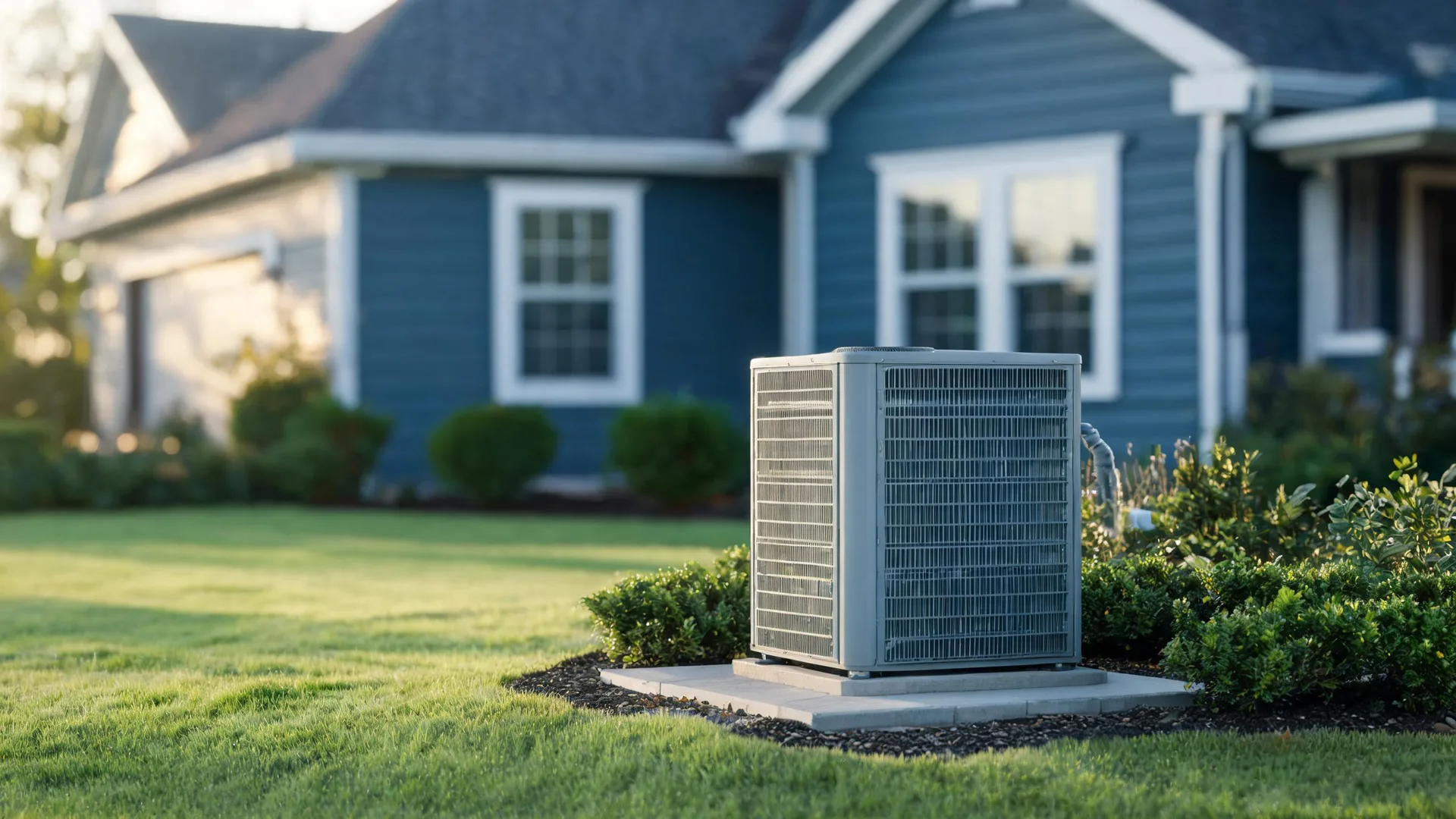
A gray heat pump outdoor unit mounted on a concrete pad next to a residential house with lap siding and stone accents.

What's yours to do, and what isn't

The filter is the one thing worth doing yourself, and it matters more on a heat pump than a furnace since air moves across that indoor coil year round. A clogged filter starves the coil whether it's running heat or cooling, and a frosted coil won't clear itself just because you change the filter later. Keep the area around the outdoor unit clear too. Leaves, grass clippings and anything stacked against it blocks the airflow the coil needs to shed heat or pull it in. Beyond that, leave it alone. The refrigerant charge, the reversing valve and the electrical components aren't something to check or adjust without the right gauges, and opening the cabinet without knowing what you're looking at usually does more harm than the problem you were trying to catch.

Airflow has to get through the filter first

A dirty filter chokes the air moving across the indoor coil. Starve that coil of airflow and it can frost over even when the system has plenty of refrigerant. The outdoor coil has the opposite problem. It sits outside collecting leaves, grass clippings and dust, and once that's caked on, the system can't shed heat properly in cooling or pull heat in during the colder months.

The condensate drain has nowhere forgiving to fail

A heat pump pulls moisture out of the air every time it cools, and that water has to leave through the condensate drain and pan. Algae and dust build up inside that line the same way they would in any drain that sits wet. When it clogs, the pan backs up and overflows, usually right where the indoor unit sits, long before anyone notices the airflow or the coil behind it.

A heat pump rarely announces trouble on its own. A thermostat that short cycles, turning on and off in quick bursts instead of settling into a steady run, usually points to a sensor reading wrong or a reversing valve that isn't shifting clean. Warm air out of the vents in the dead of winter can mean the system is stuck in the wrong mode rather than actually broken. Ice building up on the outdoor unit outside of a normal defrost cycle means that cycle isn't clearing the coil the way it should. None of these stop the system from running, so they go unnoticed until something fails outright. A technician checking cycle times and sensor readings during a yearly visit catches that drift while it's still a small adjustment.

A tune-up on a heat pump starts with the electrical side, not the refrigerant. A technician checks the contactor and capacitor that get the compressor and fans started, since a weak capacitor makes a motor strain every time it kicks on, long before it fails outright. Amp draw on the compressor gets checked against what that unit is supposed to pull, which catches a motor working harder than it should before it burns out. The thermostat gets checked too, making sure it calls for heat or cooling correctly and the system answers in the right mode. None of this shows up by looking at the unit from across the yard. It takes someone opening the panel and reading the numbers against what they should be.