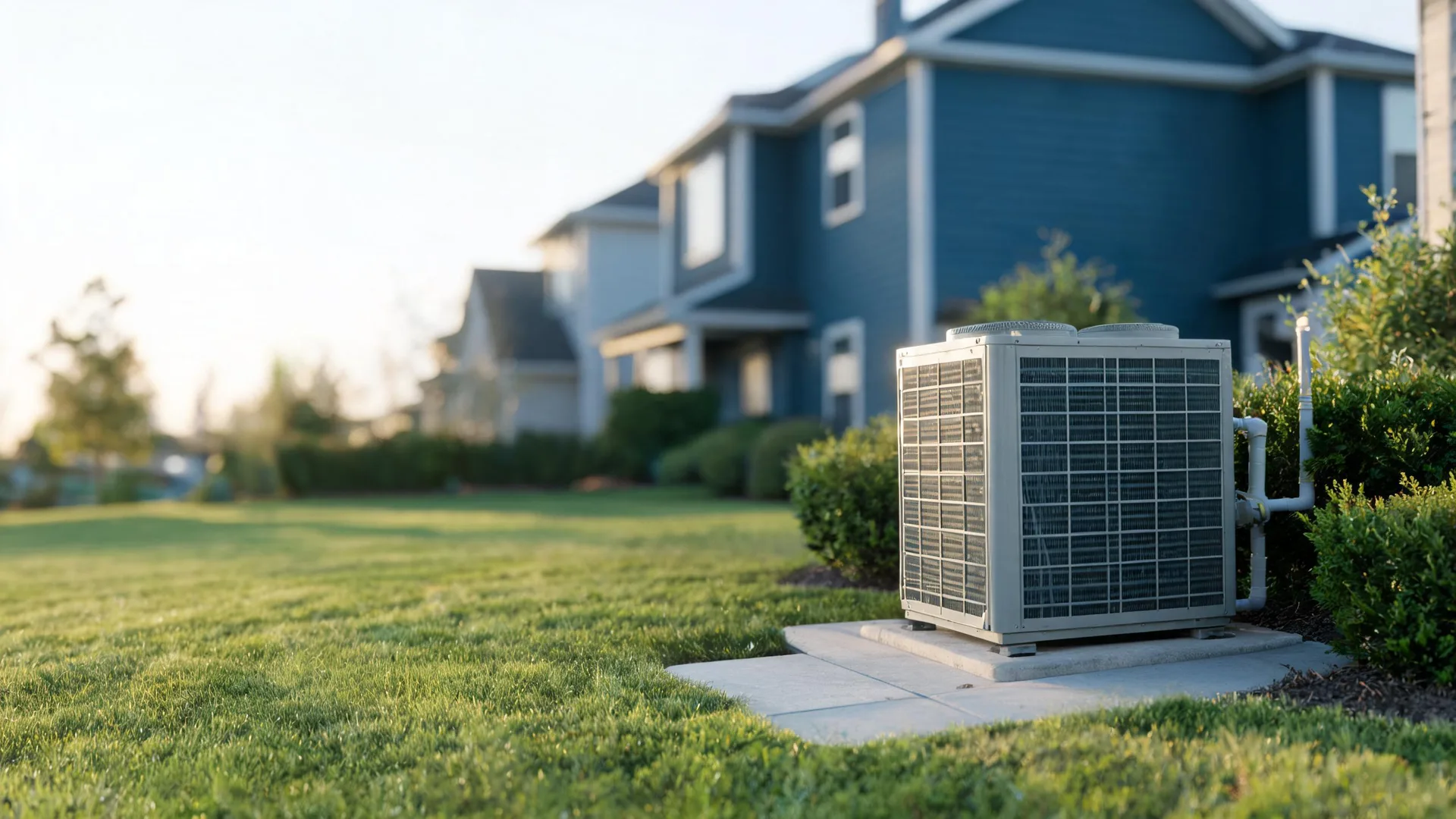
An outdoor heat pump unit mounted on a concrete pad beside a house with beige siding and a landscaped garden bed.

Heat Pump Maintenance in Natchitoches, LA

Tell us about the job

Takes about a minute. No obligation.

Tune-up, service, or cleaningHeat PumpNatchitoches Parish, LA
Step 1 of 2

What ZIP code is the job in?

A dirty filter chokes the whole system

When the filter clogs, the indoor coil doesn't get enough airflow across it. In heating mode that coil is giving up heat to your air, and in cooling mode it's pulling heat out. Either way, starved airflow can let that coil ice over, and once it's iced the system has to work harder for less heat or less cooling.


The drain line matters as much as the coil

Any moisture the indoor coil pulls from the air has to leave through the condensate drain. If that line clogs with algae or debris, the water backs up instead of draining out, and it can overflow into the pan or the space around the unit. Checking that the drain runs clear is as much a part of upkeep as cleaning the coil itself.

Skip maintenance long enough and the outdoor coil stays caked with dirt and pollen.

A dirty coil can't give up heat or shed it, so the compressor runs longer and wears faster to do the same job.

Heat pump works hardest come May, so get it looked at in April

Cooling runs May through October
Heat runs November through March
Power costs 11.73 cents a kWh statewide
One maintenance visit a year covers itHalf the homes in Natchitoches Parish were built in 1984 or earlier, and almost a quarter of all homes here are mobile homes.

A refrigerant charge that's a little low won't always show up as warm air. It can just show up as a system that runs longer than it used to, and most homeowners never catch that from the thermostat alone. A tech checks the charge against what the system is rated for, along with the pressures on both the high and low side. They'll also check the reversing valve, the part that switches the system between heating and cooling, since a valve that's starting to stick can leave you with cool air when you asked for heat and no clear reason why. None of that shows up from looking at the unit. It shows up from gauges and a meter.

Book it before the season

It starts running hard in the first month of the season here. Book the check the month before.

Find a contractor
A gray heat pump outdoor unit mounted on a concrete pad next to the stone-accented exterior wall of a house.

The system tells you before it fails

A heat pump that needs a look doesn't always make noise about it. Watch the cycle instead of the sound. If it's kicking on and off every few minutes instead of running a steady stretch, something's making it work harder than it should. Ice on the outdoor unit outside of a defrost cycle is another one. It should melt off on its own within a few minutes of defrosting. If it stays frosted, or if frost shows up on the indoor coil too, airflow or charge is off somewhere. Water pooling near the indoor unit means the condensate drain isn't doing its job. And if the air coming out feels lukewarm instead of properly hot or cold, that's usually the first thing a homeowner notices and the last thing they think to check for.

Keep the filter clean yourself

A dirty filter is the one thing on this list you can fix without a tech. Pull it, hold it up to the light, and if you can't see through it, swap it or wash it depending on the kind you have. Do this on a schedule instead of waiting for a sign, because by the time airflow problems show up the coil may already be iced.

Keep the outdoor unit clear

The outdoor unit needs open air on all sides to give up or pull in heat. Keep grass clippings, leaves, and mulch away from it, and don't stack anything against the cabinet. If a fence or bushes box it in, airflow suffers even with a clean coil underneath.

A quick visit gets you a filter check and maybe a glance at the pressure. A thorough one gets you numbers written down. The tech should pull the panel and check amp draw on the compressor, not just listen for rattles. They should check subcooling and superheat against the manufacturer's spec, not eyeball the lines and call it good. They should test the defrost cycle itself, forcing it into defrost to watch the reversing valve actually switch, rather than assuming it works because the house felt warm that morning. If the visit takes about as long as it takes to check a filter and tighten a few screws, it skipped the part that actually catches trouble early.

A tune-up worth paying for starts with the electrical side, not just the refrigerant side. The tech checks the contactor for pitting, since a pitted contactor can stick or fail to make full contact and the outdoor unit won't start reliably. Capacitor readings matter too. A capacitor that's weak but not dead will still start the compressor and fan, just slower and with more strain, and that kind of wear doesn't show up on a visual check. They should also check the connections at the disconnect box and tighten anything loose, because a loose connection heats up under load and that heat damages the wire insulation over time. Lubricating the fan motor bearings, if the motor has oil ports, keeps the fan from working harder to spin. None of this looks like a problem yet. That's the reason to catch it now instead of waiting for the unit to tell you itself.