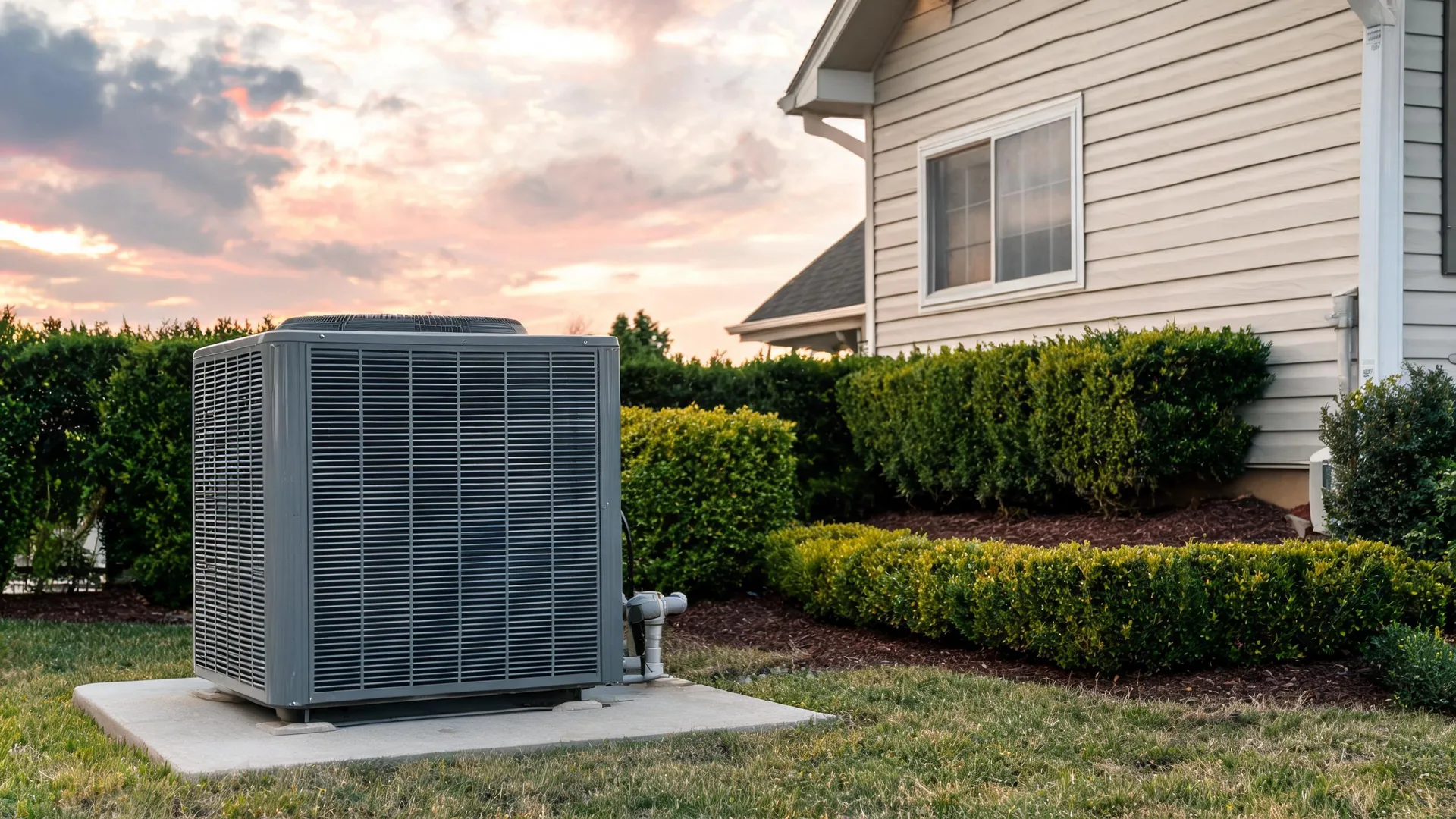
Assumption Parish has seen 22 severe weather events over the past decade, counting wind, hail, tornadoes and tropical storms, plus one winter storm. That's what your heat pump's outdoor unit sits through year-round. One visit a year is enough to catch what that exposure does to it, as long as it's not skipped. A tech can check the coil for damage, confirm the unit is still level, and make sure nothing got knocked loose in the last storm. Worth doing after power outages too, since a hard cycle off during one can stress parts that were already due for a look.
A heat pump that runs long cycles and still leaves rooms uneven is losing ground somewhere.
Catching that before the compressor strains is the whole point of a yearly check.
Half these homes predate the unit. The maintenance doesn't.
Half the homes here were built by 1983Climate zone 2APower costs 11.73 cents a kWh statewide
Keep the area around the outdoor unit clear. Grass clippings, leaves and pollen build up on the coil and block airflow, and a plant pressed up against the cabinet does the same thing from the other side. Give it a couple feet of open space on all sides. The filter matters just as much, maybe more, since a heat pump pulls double duty as both your heating and cooling system and the filter is working that whole time. A dirty filter chokes airflow and makes the system run longer to move the same amount of air. Check it monthly and swap it when it looks gray instead of white. Outside, after any hard storm, look for bent fins on the coil or debris sitting on top of the unit. None of this replaces a tech's visit, but it keeps the system from fighting itself between them.
A tune-up should open the cabinet, not just glance at it
A quick visit gets you a filter check and a glance at the gauges before the van pulls out. A thorough one opens the cabinet. The tech checks refrigerant charge against what the system actually calls for, not just whether the pressure looks close. They check the reversing valve, since that's the part that lets a heat pump heat at all, and a sticky one shows up as a system stuck in one mode. They clean the outdoor coil instead of eyeballing it, because a coil can look fine and still have a film across it that blocks airflow. Electrical connections get tightened, not just checked for scorch marks. The condensate drain gets cleared, since a clogged one backs up and can shut the system down on its own. A short visit tells you the system turned on. A thorough one tells you whether it will still run right in the months after the tech leaves.
The reversing valve sticks before it fails
A heat pump that never gets looked at tends to lose the reversing valve first. It's what switches the system between heating and cooling, and the oil that keeps it moving breaks down over time without anyone noticing. It doesn't usually fail clean. It starts sticking partway, and the system gets stuck heating when you wanted cooling, or the other way around, long before anyone calls it broken.
The compressor pays for everything upstream
Low refrigerant, a dirty coil, a weak capacitor. None of those stop the system outright. They just make the compressor work harder to hit the same temperature, cycle after cycle, for months. Skip enough checkups and the compressor is what finally gives out, and it's the one part that usually means replacing the whole outdoor unit instead of fixing what's wrong with it.
A lot of what a tune-up catches never shows up as a symptom you'd notice. The capacitor that starts the compressor can test weak long before it fails outright, and you won't hear a difference, you'll just get a system that wears faster hitting the same temperature. Refrigerant charge is the same way. A heat pump running a little low still blows air, still heats and cools, it just does both while straining the compressor to make up for what's missing. A gauge set catches that. Your hand on the vent doesn't. The tech also checks amp draw on the motors, since a motor pulling more current than it should is heading toward failure well before it stops turning. None of this is visible from the thermostat, and none of it waits for you to notice before it turns into bigger repairs.
A real tune-up checks things in a specific order because each one affects the next. Airflow gets checked first. A coil that's dirty or a blower that's struggling throws off every reading that comes after it, so a tech wants that right before touching gauges. Refrigerant charge comes next, checked against the system's actual rating rather than a general sense of whether pressure feels right. Then comes the electrical side. Contactors, capacitors, wiring, anything that carries current and wears from carrying it. The thermostat gets tested last, calling for heat and then cooling, making sure the reversing valve actually answers both calls and the system shuts down between them instead of short cycling. Each step only means something if the one before it was done right.