





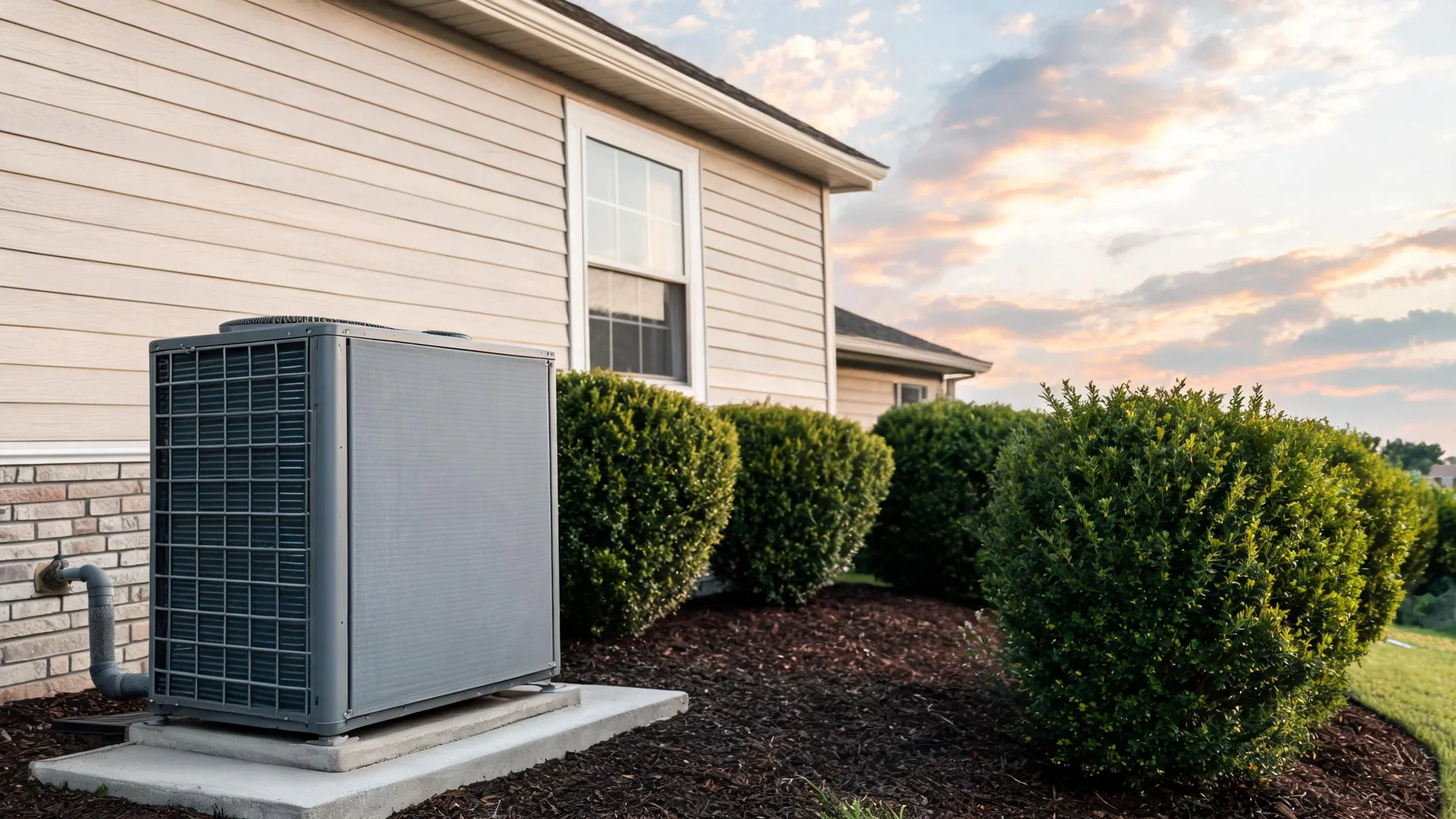
An outdoor air conditioning condenser unit mounted on a concrete pad next to a residential house at sunset.

Heat Pump Maintenance in Mansfield, LA

Tell us about the job

Takes about a minute. No obligation.

Tune-up, service, or cleaningHeat PumpDe Soto Parish, LA
Step 1 of 2

What ZIP code is the job in?

A heat pump that needs a look doesn't always stop working. It just stops working as well, and that's easy to miss at first. Watch the outdoor unit. If ice builds up on the coil and doesn't clear during the defrost cycle, something's off with the reversing valve or the sensor that triggers it. Inside, pay attention to the air coming out of the vents. It should feel warm in heating mode, not lukewarm, and if you're reaching for a blanket instead, the system is working harder than it should to keep up. A short cycle, where the unit kicks on and off every few minutes instead of running a full cycle, points to a refrigerant or airflow problem worth catching early. Dirty coils or a low refrigerant charge cause both of these, and either one is reason enough to have the system checked before it has to work through a full season like that.

A refrigerant charge can run low with no leak a homeowner would ever smell or see.

A gauge set on the service ports shows the charge is off before the compressor starts working harder to cover for it.

Your heat pump works through October and starts heating in November. Have it checked in October.

Cooling runs May through October
Heat runs November through March
Power costs 11.73 cents a kWh statewide
One visit a year covers itHalf the homes in De Soto Parish were built in 1990 or earlier, and over a third are mobile homes.

Skip maintenance long enough and the outdoor coil gets a layer of dirt and grime across its fins. Airflow through it drops, so the system pulls less heat from the air outside and the compressor runs longer to make up for it. That's wear nobody sees until the compressor itself starts to go, and a compressor isn't something you patch. The filter does similar damage from the inside. A clogged one starves the indoor coil of airflow, and in heating mode that coil can ice up the same way the outdoor one does in a bad defrost cycle. None of this shows up as a breakdown right away. It shows up as a system running longer than it should to do the same job, until the day it doesn't start at all.

Book it before the season

It starts running hard in the first month of the season here. Book the check the month before.

Find a contractor
A man in a dark cap, dark jacket and tan pants walks up gray porch steps toward a dark front door, carrying a worn brown leather duffel bag, with a potted shrub at left.

Change the filter

A dirty filter is the one thing that's really on you between visits. Check it on a regular basis, and hold it up to the light. If you can't see light through it, swap it. A clean filter keeps air moving across the indoor coil, and that alone prevents a lot of the strain that otherwise builds up quietly.
Keep the outdoor unit clear

Walk around the outdoor unit now and then. Pull weeds, grass clippings or leaves away from the cabinet, and leave open space on all sides so air can move through the coil. Don't stack anything against it or let a woodpile or trash cans crowd it. Beyond that, leave the coil itself alone. Cleaning it is a job for a contractor, not a garden hose.

The drain line is the part people forget because it never seems connected to heating or cooling at all. In cooling mode a heat pump pulls moisture out of the air, and that water has to go somewhere. If the drain clogs with algae or dirt, water backs up into the pan and can trip a safety switch that shuts the whole system down, or it overflows and damages the floor underneath. Coils do their own quiet work on both sides. The indoor coil needs airflow from a clean filter to pick up heat or shed it, and the outdoor coil needs clear fins to trade heat with the air outside. Let either one foul up and the system has to run longer to move the same amount of heat, which is wear on the compressor that a clean coil and an open drain would have prevented.

A tune-up starts with gauges on the service ports to check the refrigerant charge against what the system is supposed to hold. Low charge gets flagged there, before it turns into a compressor running long and hard to make up for it. The electrical side gets checked too. Contactors, capacitors, and the connections at the disconnect box all get tested, since a weak capacitor is a common reason a unit struggles to start. The reversing valve gets tested in both directions, since that's the part that lets the system switch between heating and cooling. A valve that sticks is what causes ice to build up on the outdoor coil and stay there. Both coils get inspected and cleaned if they need it, because a technician can see buildup on the fins before it's bad enough to show up as weak heat at the vents. The condensate drain gets flushed clear so it can't back up later and trip the system off. Thermostat settings and the defrost cycle get confirmed last, since that's what proves the rest of the work actually holds together.