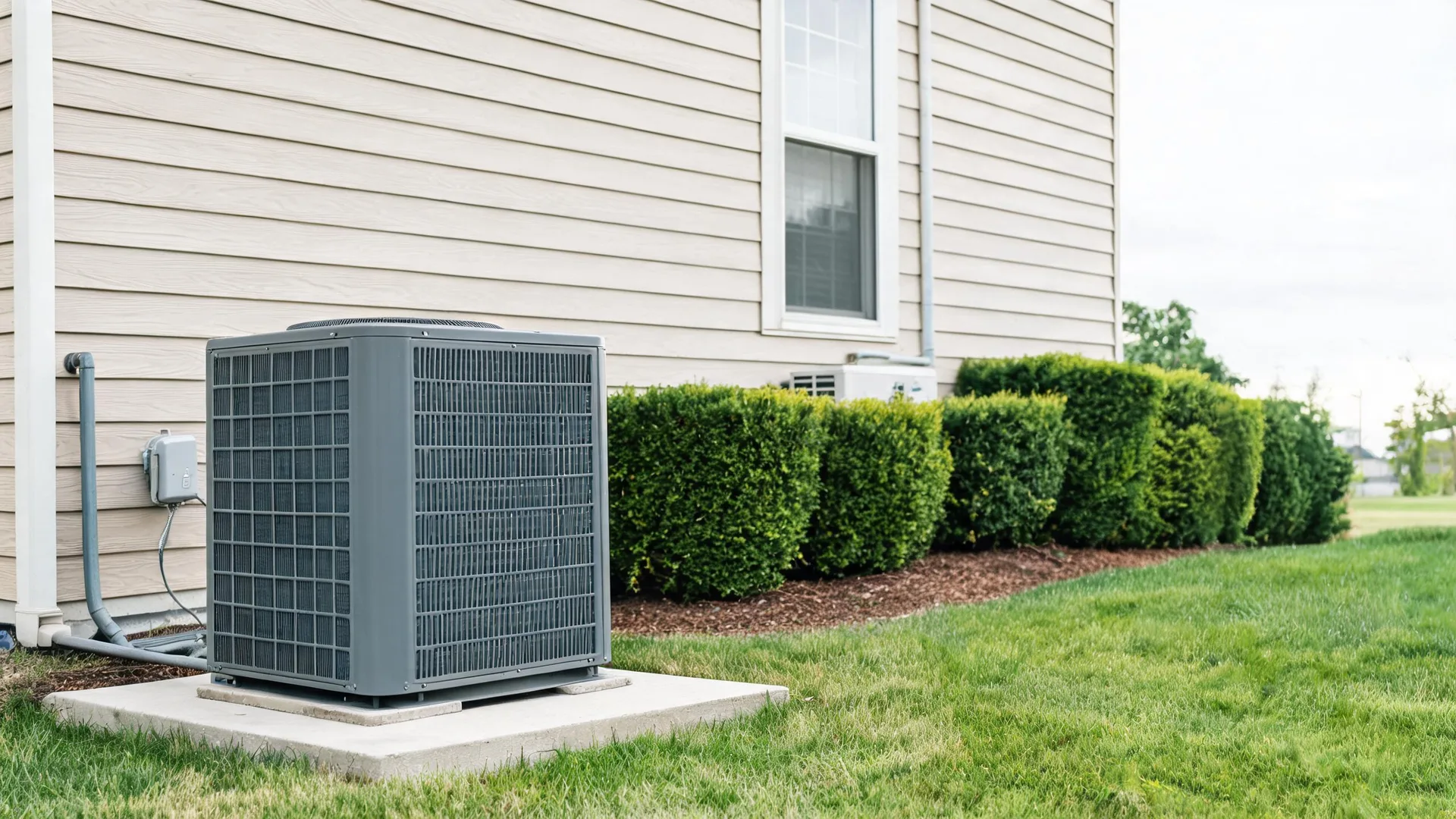
A heat pump running longer than it used to, air coming from the vents that feels weaker than it should, or a unit that's started making a new sound outside. Ice building up on the outdoor coil when it isn't supposed to be defrosting is another one. None of these mean the system is done. They mean something inside it is working harder than it should to do the same job.
Why that matters before it fails
A heat pump that's straining still heats and cools the house, so it's easy to let it go. But the parts under that strain, the compressor especially, wear faster the longer it runs stressed. Catching it while it still works means a tech can fix the cause. Catching it after it quits means replacing whatever gave out first.
The outdoor unit needs clear space, nothing stacked against it and nothing growing into it.
The filter is the one part a homeowner should actually check, and a dirty one makes the whole system work harder.
One visit a year covers what this parish puts a heat pump through
22 severe weather events from 2015 to 202449% of homes statewide lost power a day or more in 202410 damaging wind events from 2015 to 2024
Get it looked at in MarchCooling runs April through October here. March is when a heat pump gets checked before that start.
Half the homes in St. John the Baptist Parish were built in 1984 or later, so a lot of heat pumps here still have plenty of working life ahead of them. A yearly check is what protects that. A tech can catch a refrigerant level drifting low or a capacitor starting to weaken before either one takes the compressor down with it. That matters more when the system is newer, since there's more life left to lose. Skip a few years of checks and the kind of wear that gets caught early just keeps building instead.
A quick visit gets the filter swapped and the gauges glanced at. A thorough one gets the refrigerant charge actually measured against what the system is supposed to hold, not just checked for being low. The electrical connections get tightened, since a loose one heats up and burns over time. The condenser coil gets cleaned, not just looked at, because a coil caked with grime makes the whole system run harder to move the same heat. The reversing valve gets tested both directions, not just whichever way it happens to be sitting. Ask what was measured and what the numbers were. If nobody can tell you, nothing was.
What gets measured that you can't eyeball
Refrigerant charge has to be checked against what the system is rated to hold, using gauges and the line temperatures. A system can look fine and still be running low, and low charge makes the compressor work harder every single cycle it runs.
What gets found before it trips the breaker
A capacitor weakens slowly, and a motor can draw more current than it should long before it actually fails. Testing both against their rated numbers catches the drift while a part swap fixes it, instead of a service call after the unit won't start.
The filter sits between the return air and the coil, and everything downstream depends on it staying clear. A clogged one starves the system of airflow, and the indoor coil can ice over from the reduced flow across it. That ice blocks even more air, so the system struggles harder to move the little that gets through. The outdoor coil has the same problem from the other direction. Dirt and grass clippings packed into its fins keep it from releasing heat in cooling mode or pulling it in during a defrost cycle, so the compressor runs longer to do the same job. The condensate drain is easy to forget because it does nothing until it fails. Algae or dirt can clog the line, and once it backs up, water finds somewhere else to go, usually the pan under the air handler or the ceiling below it.
A full tune-up also means going after the parts that fail quietly. The contactor gets checked for pitting, since a pitted contactor can stick or fail to pull in at all. The defrost control gets tested to make sure the unit actually switches into defrost and back out again, not just that the sensor reads a temperature. Refrigerant lines get checked for rubbing against the cabinet or losing their insulation, since bare line loses efficiency the whole length of it. None of this shows up by looking at the unit running. It shows up months later as a system that won't defrost, or a compressor that trips out on a hot run because something upstream of it was never checked.