




A row of single-story houses, one of red brick and others with light siding and a covered porch, behind a mown lawn and a trimmed hedge, under large moss-draped tree branches and an overcast sky.

Heat Pump Maintenance in Lake Charles, LA

Tell us about the job

Takes about a minute. No obligation.

Tune-up, service, or cleaningHeat PumpCalcasieu Parish, LA
Step 1 of 2

What ZIP code is the job in?

A quick visit usually means someone checks the thermostat, looks at the outdoor unit, and calls it done. A thorough one takes longer because there's more to check in both directions, since a heat pump moves heat both ways instead of just making cold air. That means someone should check refrigerant charge, look at the reversing valve, and actually run the system in both heating and cooling mode to see that it switches over clean. The outdoor coil needs a real cleaning, not a glance, because a dirty coil makes the whole system work harder whether it's heating or cooling. Someone should also pull the filter and check the indoor coil, and check that the defrost cycle kicks in and shuts off the way it should. If the visit only takes a few minutes and nobody touches the reversing valve, you got the quick version.

Half the homes in Calcasieu Parish were built in 1989 or later.

A heat pump that age still has years ahead of it, and a yearly check is what keeps it getting there.

October through March, your heat pump works for its living. Have it checked in October.

Cooling runs April through October
Heat runs November through March
Power costs 11.73 cents a kWh statewide

Keep it in good shape

If your system is fairly new, a yearly check keeps it in good shape for longer.

Find a contractor
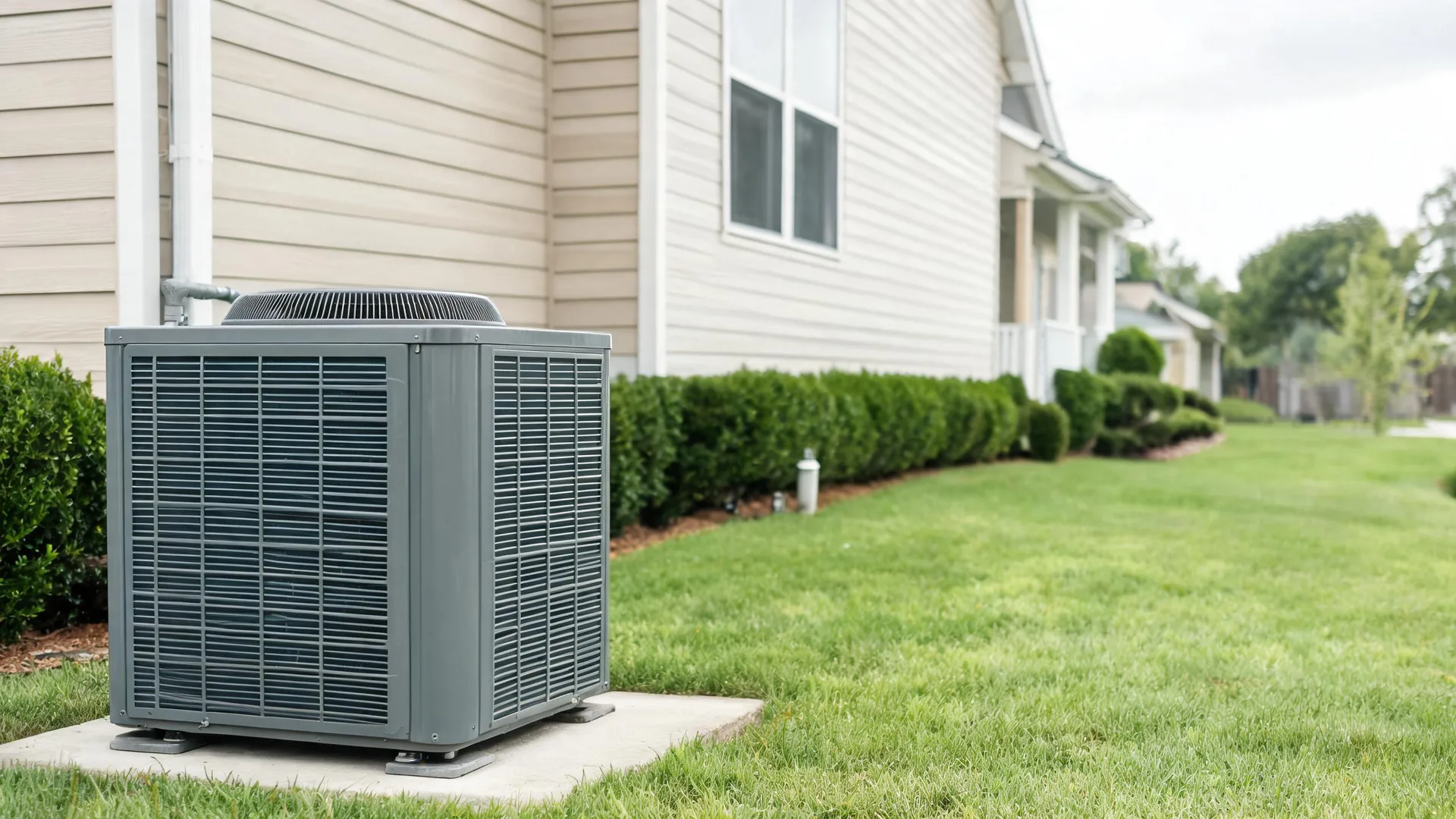
A gray heat pump outdoor unit mounted on a concrete pad next to a residential house with lap siding and stone accents.

What gets missed doesn't stay small

Skip a season of maintenance and nothing happens right away. A heat pump will keep running with a dirty outdoor coil or a low refrigerant charge, just not the way it should. It works harder to move the same amount of heat, and parts that were fine under normal load start wearing under strain instead. The reversing valve is the one that tends to go unnoticed. If it's sticking and nobody runs the system in both modes to check, you find out on the day you need heat and get cold air, or the other way around. Dirt on the outdoor coil does something similar from the other direction. It insulates the coil, so the system can't dump or pull heat the way it's built to, and the compressor just keeps running longer trying to get there. None of this shows up as a breakdown at first. It shows up as longer run times and a system that wears out before it should have.

A dirty filter hits both sides of the system

A clogged filter cuts down the air moving across the indoor coil. The coil needs that airflow to pull heat out or push it in, so a starved coil can freeze over in cooling mode or just fall short in heating mode. The system runs longer either way, trying to move heat through air that isn't getting to it.
The drain line is easy to forget and bad to ignore

The indoor coil collects condensation as it runs, and that water needs somewhere to go. If the drain line clogs with algae or dirt, the water backs up into the drain pan and from there into the house. Checking the drain line during maintenance is quick. Cleaning up after it overflows is not.

Between visits, the filter is the one thing worth checking on your own. Pull it out, hold it up to the light, and if you can't see through it, swap it or clean it, depending on which kind you have. Outside, keep the area around the unit clear. Leaves, grass clippings, and anything piled against the cabinet block the airflow the coil needs, so a few feet of open space on every side makes a real difference. After a storm, look for branches or debris sitting on top of the unit. In cold weather, a thin coat of frost on the outdoor coil during the defrost cycle is normal, but a heavy buildup of ice that doesn't clear on its own is not, and that's worth a call rather than a wait. Beyond that, leave the refrigerant, the reversing valve, and anything inside the cabinet to someone who works on these for a living.

A real tune-up ends with numbers written down, not just a visual check. The tech should measure static pressure across the system, check amp draw on the compressor and blower motor, and compare the refrigerant charge against what the manufacturer specifies for the outdoor temperature that day. Electrical connections get checked too, since a loose connection runs hot and that heat breaks down the wire over time. The contactor and capacitor are worth a look on every visit, because both wear out gradually and tend to fail on the day you need the system most. None of this takes the place of a visual inspection, it comes on top of it. A tech who hands you a page of readings did the job. One who just says everything looks fine did not.