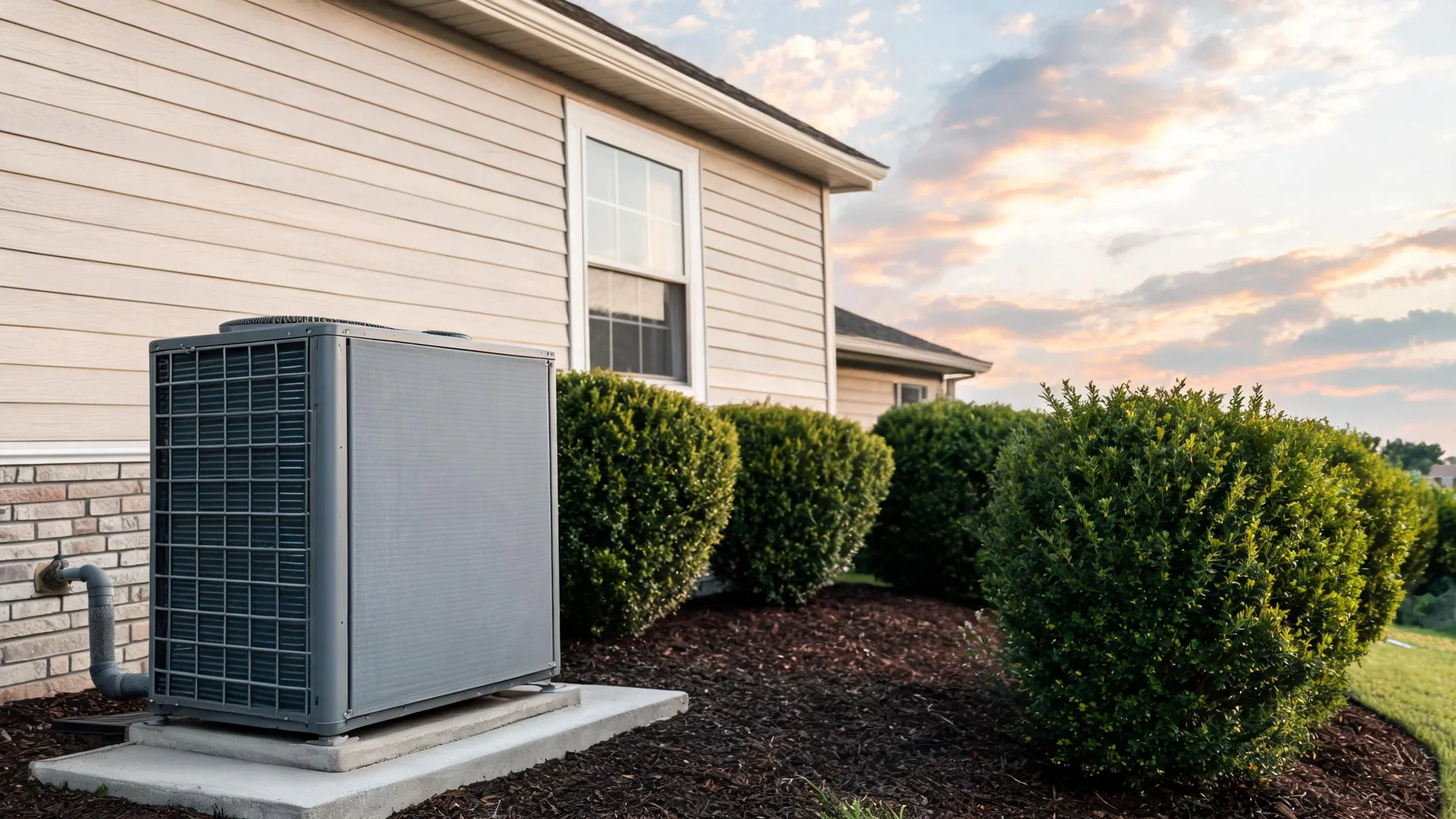
A heat pump only works as well as the air and water can move through it. A dirty filter chokes airflow across the indoor coil, so the system has to run longer to move the same amount of heat. The outdoor coil needs clean airflow too. If it's packed with leaves, grass clippings or dust, the unit can't reject or pull heat the way it should, in cooling or in heating. The condensate drain matters just as much, since a heat pump pulls moisture out of the air whenever it cools, and that water has to go somewhere. A clogged drain line backs up and can shut the system down or let water spill where it shouldn't. None of these fail all at once. They just get a little worse until the system is working harder than it needs to.
A heat pump that short cycles, turning on and off in quick bursts, isn't finishing a proper run.
Short cycling wears the compressor faster, and it's worth having looked at before the compressor is the problem.
One visit a year catches what this climate wears down
Half the homes here were built by 1980Power costs 11.73 cents a kWh statewideClimate zone 2A
Jefferson Davis Parish saw 19 damaging wind events in the last ten years. A heat pump sits outside through all of it, and the outdoor unit is what takes the hit. Wind-blown debris gets into the coil fins and the fan. A near miss can still rattle a panel loose or knock the unit out of level without anyone noticing right away. One visit a year is when a contractor checks the cabinet, the mounting, and the electrical connections before any of that turns into a breakdown. It's also when they catch the slower wear, the dirty coil or the weak capacitor, before summer or winter asks the system to run flat out.
What the gauges find that the vents don't tell you
A heat pump runs on both ends of the year, so the wear shows up in places a homeowner never looks. A tune-up has the refrigerant charge checked against the manufacturer's numbers, since a system low on charge will still blow cold or warm air, just not enough of it, while the compressor works harder to make up the difference. The reversing valve gets tested too. That's the part that switches the system between heating and cooling, and when it starts to stick, the symptom often shows up as weak heat, not as a part failing outright. A contractor also checks the capacitor's start and run readings against what they should be, because a capacitor can test weak long before it quits, and a compressor that keeps trying to start against a bad capacitor is wearing down faster than it needs to. None of this shows up by looking at the unit or feeling the air out of a vent. It shows up on a gauge.
The compressor pays for what gets skipped
A heat pump that runs with a dirty coil or a low charge doesn't stop working. It just makes the compressor work harder to get the same result. The compressor is the part that can't be reached without real teardown, and it isn't built to run hot and strained for years at a stretch. Skipped maintenance doesn't show up right away. It shows up later, as a compressor that failed sooner than it should have.
A refrigerant leak gets found or it gets worse
A heat pump low on refrigerant doesn't refill itself. If there's a leak, the charge only drops further, and the system keeps losing capacity until someone checks it with gauges. Left alone long enough, a system running low on charge can ice up the indoor coil, and ice on the coil blocks the airflow it needs to run at all. A yearly check catches the charge before it gets that low.
Ask what the visit actually covers before you judge it by the invoice. A quick service wipes the cabinet, glances at the filter, and checks that air is moving out of the vents. A thorough one pulls the panel and checks electrical connections for looseness or corrosion, since those cause failures that look unrelated when they show up later. It checks the contactor, since a pitted contactor can stick or fail to pull in at all. It checks that the condensate drain is actually clear, not just that water isn't visibly pooling right now. And it compares what the system is doing against the manufacturer's numbers, not just against whether the air coming out feels warm or cool. A visit that ends with someone telling you a number, not just telling you it's fine, is the one that caught something.
A full tune-up also covers what only matters because a heat pump runs backwards part of the year. The outdoor coil ices over on its own in defrost mode, and the system is supposed to sense that and switch back to clear it. A technician checks that the defrost control and sensor are actually doing that, because a heat pump stuck in defrost, or one that never defrosts at all, runs with ice built up on the coil while the house stops warming up. The auxiliary heat strips get checked too, since those are meant to help on the coldest mornings, not carry the whole load because the heat pump itself has fallen behind. A tune-up also means checking that the thermostat is actually calling for heating and cooling the way it should, and that the system answers. None of this is visible work. It's the difference between a heat pump that switches modes cleanly and one that's quietly struggling at the turn of the season.