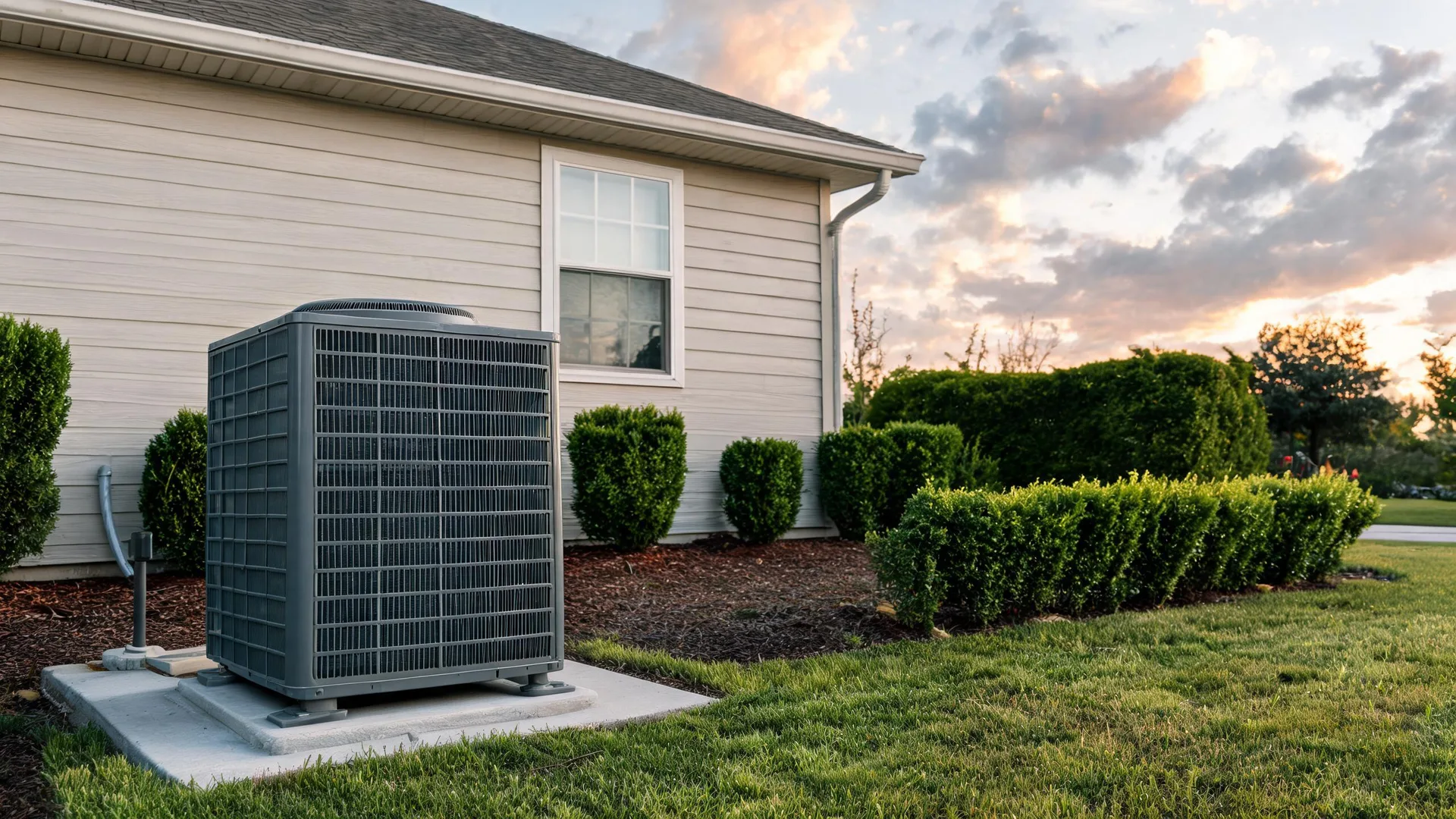
An outdoor heat pump unit mounted on a concrete pad in front of a two-story suburban house.

Heat Pump Maintenance in Hammond, LA

Tell us about the job

Takes about a minute. No obligation.

Tune-up, service, or cleaningHeat PumpTangipahoa Parish, LA
Step 1 of 2

What ZIP code is the job in?

A dirty filter works the whole system harder

When the filter clogs, the blower has to pull harder to move the same air. That strain shows up on both sides of a heat pump. The indoor coil can ice over from restricted airflow, and the outdoor unit ends up running longer to make up for it. A clean filter is the cheapest insurance this system gets.


The coils and drain need eyes on them too

The outdoor coil collects leaves, grass clippings and dust, and that film cuts down how well it can transfer heat in either direction. The condensate drain line can clog with algae, and when it backs up the water has nowhere to go but inside. Checking both during a maintenance visit catches problems before they cause a shutdown.

Skip enough maintenance and the reversing valve or the contactor wears down without anyone noticing.

By the time the heat pump won't switch between heating and cooling, that part has likely been failing for a while.

Half the homes here were built by 1993, so a lot of these heat pumps still have years ahead of them

Half the homes here were built by 1993
Climate zone 2A
Power costs 11.73 cents a kWh statewide

A heat pump installed with a newer home still has most of its working life in front of it. An annual check is what keeps it on track to use all of it. The technician cleans the coils, checks the refrigerant charge, and tests the reversing valve before any of that turns into a breakdown. Catching a weak contactor or a slow leak early means it gets fixed on its own terms, not in the middle of a hot afternoon when the system finally gives out.

Keep it in good shape

If your system is fairly new, a yearly check keeps it in good shape for longer.

Find a contractor
A man in a dark long-sleeve shirt and worn brown work pants, seen from behind, carries a canvas tool bag up the steps toward a gray front door, with a potted shrub beside the entry.
A gray heat pump outdoor unit mounted on a concrete pad next to a residential house with lap siding and stone accents.

The wear is in the numbers, not in how it sounds

A technician checking the refrigerant charge can also tell how the compressor has been running since the last visit. A system low on charge shows it in the temperature split across the indoor coil, even when the air coming out still feels cold enough to pass a casual check. Amp draw on the compressor tells a similar story. A motor pulling more current than it should is working harder to do the same job, usually because of a worn bearing or a start component that's losing strength. None of that trips a breaker or sets off a warning. It just shortens how long the compressor lasts, quietly, until the day it doesn't start at all.

Keep the space around the outdoor unit clear

Grass, leaves, and mulch pile up against the outdoor unit over time. That unit needs open air on all sides to pull heat in or push it out. A couple feet of clearance and a quick check that nothing is growing up against the cabinet is safe for anyone to do and keeps the system from working harder than it should.

Leave the refrigerant and electrical work to the technician

The refrigerant charge, the reversing valve, the contactor and capacitor all sit behind the panel for a reason. Opening that up without the right gauges and training can damage the compressor or create a shock hazard. Between visits, the homeowner's job is the filter and the area around the unit. Anything involving the sealed system or the electrical components waits for the person trained to handle it.

A thorough tune-up means the technician takes the panel off and checks things you can't see from across the room. That includes the refrigerant charge, the condition of the contactor and capacitor, and whether the reversing valve actually shifts when it's told to. A quick visit might swap the filter, glance at the outdoor unit, and call it done. The difference shows up later, not that day. A capacitor that's already weakening can still start the compressor fine on a quick look. It just fails sooner than it would have if someone had tested it under load and caught the sag. Ask what was actually measured, not just what was looked at.

A real tune-up follows a checklist, not a glance. The technician checks the refrigerant charge against what the system calls for, because too little or too much makes the compressor work harder either way. The electrical connections get checked for anything loose or starting to corrode, since a connection that's barely holding on now is the one that fails later. The thermostat gets tested too, making sure it actually calls for heat or cooling when it should and that the heat pump responds correctly. Airflow gets measured, not eyeballed, because a duct or coil that's restricting airflow won't always show it to the naked eye. Each of these takes a few minutes and a meter. Skipping them doesn't change what's wrong with the system. It just decides whether that problem gets found on a scheduled visit or during a breakdown.