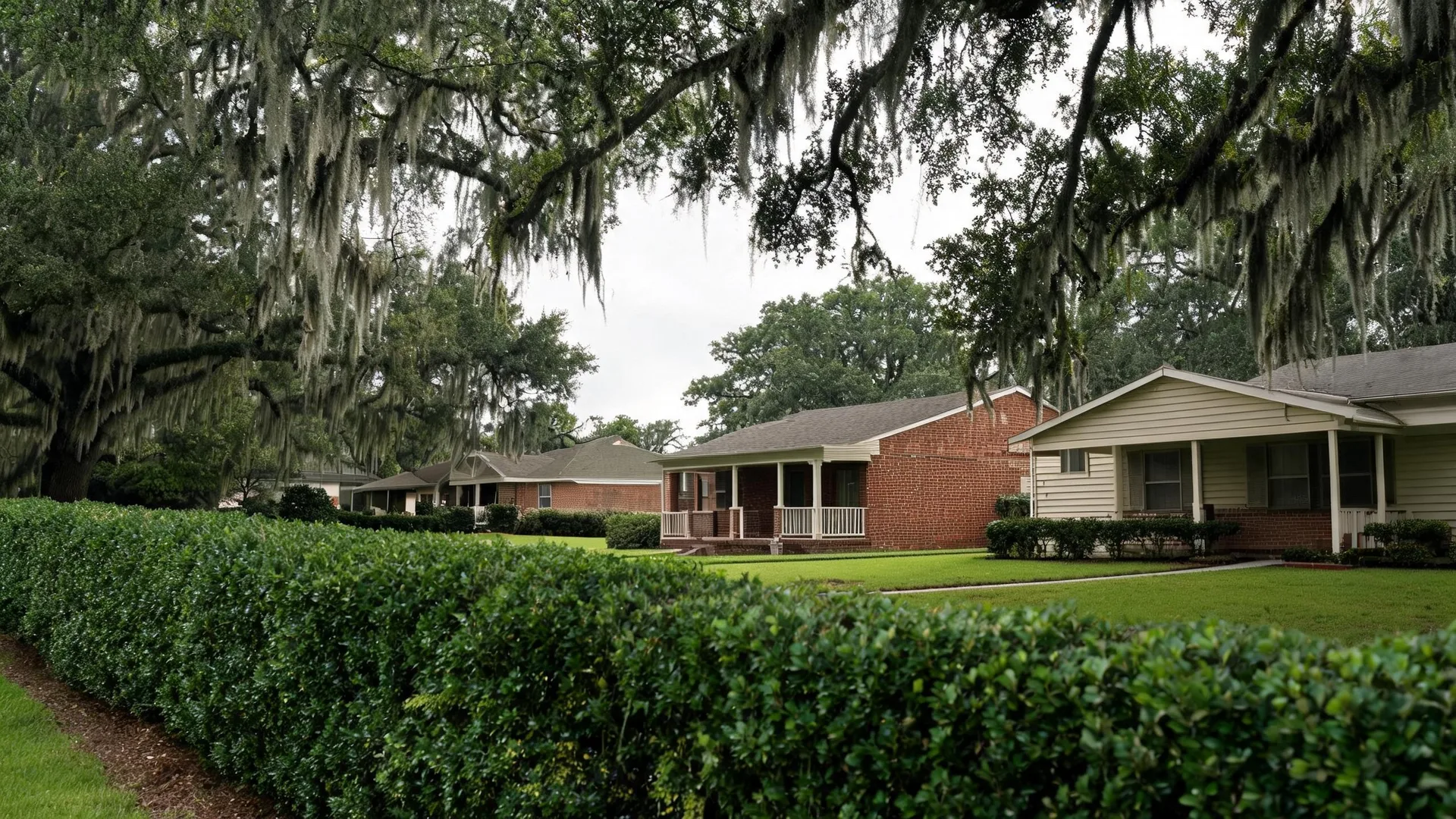
Single-story brick and siding houses with lawns behind a long trimmed hedge, framed by large oak branches draped with Spanish moss under an overcast sky.

Heat Pump Maintenance in Farmerville, LA

Tell us about the job

Takes about a minute. No obligation.

Tune-up, service, or cleaningHeat PumpUnion Parish, LA
Step 1 of 2

What ZIP code is the job in?

Keep the filter clean

A dirty filter chokes airflow across the indoor coil, and a heat pump that can't move air has to work harder to heat or cool the same room. Check it on a regular schedule and rinse or replace it when it looks gray instead of white. This is the one thing a homeowner can do that actually prevents a service call.


Clear the outdoor unit

The outdoor unit needs open air on all sides to pull in or release heat. Keep leaves, grass clippings and fallen limbs away from the cabinet, and don't stack anything against it. In winter, if ice builds up past a light frost and doesn't melt off during the unit's normal defrost cycle, that's a sign to call someone rather than chip at it yourself.

A heat pump in Union Parish works hardest in November, the first month it switches over to heat.

Have it checked in October, before that first cold month asks the most of it.

112 damaging wind events in ten years means this heat pump rarely gets an easy season

112 damaging wind events from 2015 to 2024
Power costs 11.73 cents a kWh statewide
Climate zone 3A
An older county, and a yearly check still does the jobHalf the homes in Union Parish were built in 1987 or earlier, and over a third are mobile homes.

Union Parish recorded 174 severe weather events between 2015 and 2024. That includes wind, hail and tornadoes, all of it landing on a unit that sits outside with nothing between it and the weather. Hail dents the cabinet and can bend the fins that let it release heat. Wind throws branches and debris into the coil. None of that stops the unit from running, but it can make it work harder without anyone noticing until the system falls behind on a hot or cold day. A yearly check gives someone a chance to find that damage before it causes a breakdown.

Book it before the season

It starts running hard in the first month of the season here. Book the check the month before.

Find a contractor
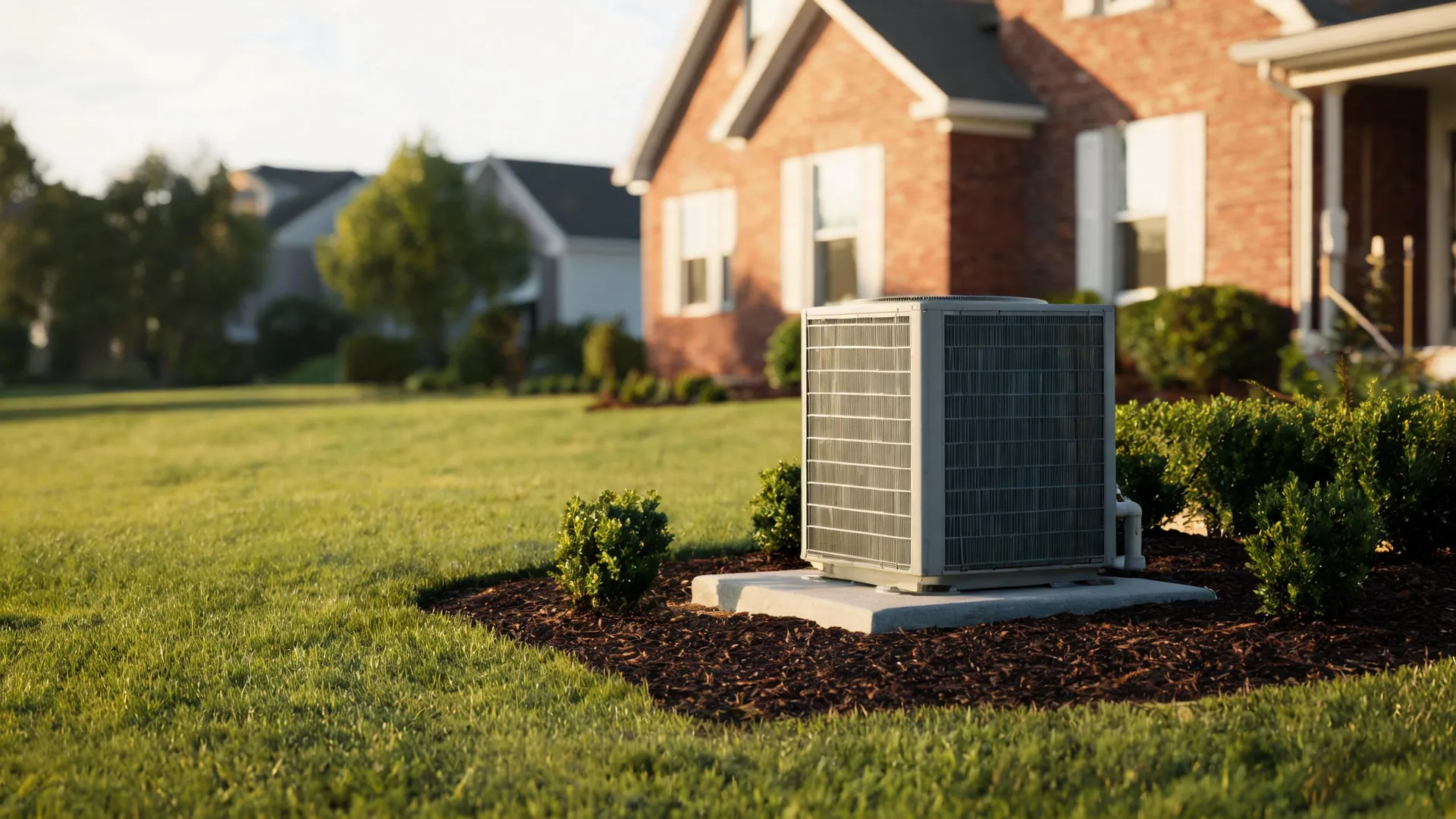
A gray heat pump outdoor unit mounted on a concrete pad next to the stone-accented exterior wall of a house.

What's wearing out while it keeps running

A heat pump does not get a season off. It cools in summer, heats in winter, and switches back and forth during the months in between whenever the thermostat calls for it. All that cycling wears on parts a homeowner never sees. The reversing valve that switches it between heating and cooling can start sticking. Refrigerant charge drops slowly from a slow leak, long before the system stops heating or cooling altogether. The contactor that sends power to the outdoor unit pits and burns a little every time it closes. None of this shows up as a dead system. It shows up as a system that runs longer to do the same job. A tune-up checks refrigerant pressure against what the unit is supposed to have. It checks amp draw on the compressor and the condition of the contacts. It checks whether the defrost cycle kicks in and shuts off when it should. A homeowner can keep the filter clean and the cabinet clear. Finding a weak capacitor or a reversing valve that is starting to stick takes someone opening the unit up and testing it.

The coil has to stay clean on both sides

The indoor coil picks up dust the filter missed, and the outdoor coil picks up pollen, grass and whatever blows into the cabinet. Either one caked over makes the system pull heat out of the air less easily, so it runs longer and the compressor works harder for the same result. A clean coil is the difference between a system that keeps up and one that quietly falls behind.

The drain matters as much as the coil

Moisture collects on the indoor coil and is supposed to run off through the condensate drain. Algae and debris build up inside that drain line over time and slow it down. When it backs up, water sits where it shouldn't, and some systems shut themselves off rather than let it overflow. Clearing that line is part of what a yearly check should cover, not just the coil itself.

A quick visit checks that the system turns on and blows air, then calls it done. A thorough one puts gauges on the refrigerant lines and checks that pressure against what the unit is rated for, not just whether the air coming out feels cool. It measures amp draw on the compressor instead of guessing from how the unit sounds. It pulls the panel off the outdoor unit to look at the contactor and capacitor, not just the filter. It runs the system in both modes, heating and cooling, to see that the reversing valve actually switches and the defrost cycle actually kicks in. Anyone can glance at a unit and say it looks fine. Testing it under load is what finds the part that is about to fail before it does.

A tune-up covers more than the parts already mentioned. Electrical connections loosen a little every time the system cycles, from the vibration of the compressor starting and stopping, and a loose connection runs hotter than it should. Someone checking the unit will tighten those and look for any wire insulation that's starting to wear through. The blower motor bearings get checked too, since a motor that's starting to wind down puts out less airflow long before it actually quits. Thermostat calibration matters as well. If it's reading the room wrong by even a couple degrees, the heat pump runs longer than it needs to just to satisfy a thermostat that's lying to it. None of these fail all at once. They drift, a little at a time, and a yearly check is what catches the drift before it turns into a breakdown.