






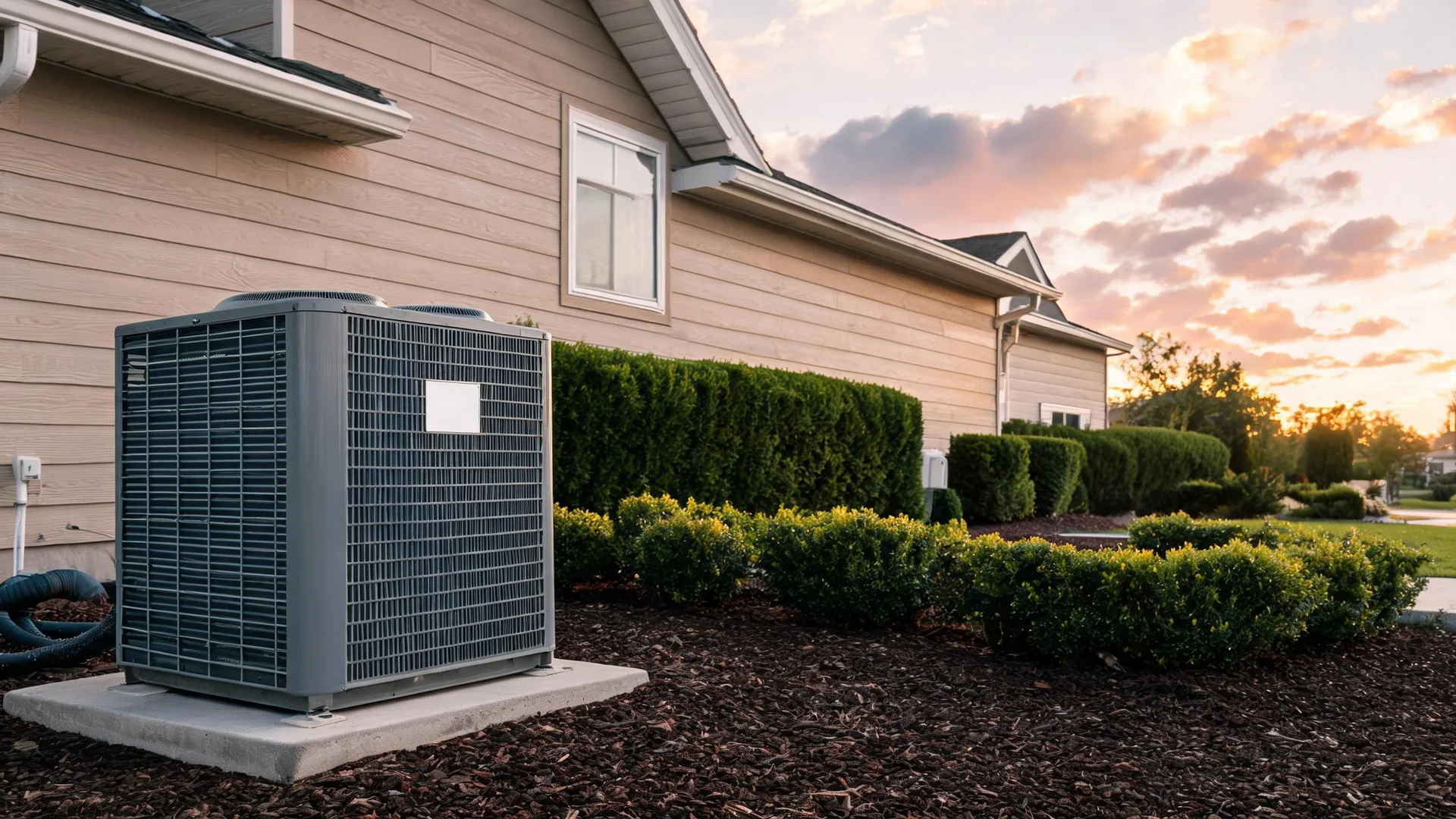
An outdoor heat pump unit mounted on a concrete pad in front of a two-story suburban house.

Heat Pump Maintenance in Denham Springs, LA

Tell us about the job

Takes about a minute. No obligation.

Tune-up, service, or cleaningHeat PumpLivingston Parish, LA
Step 1 of 2

What ZIP code is the job in?

Livingston Parish recorded 89 severe weather events between 2015 and 2024, most of them damaging wind. That matters for a heat pump because the outdoor unit sits outside year round, taking whatever blows through. Wind drives debris into the coil and the fan. Hail can bend the fins without leaving a mark you'd notice from a few feet away, and this parish has seen its share of both. Add in the power outages that come with bad storms here, and a heat pump can go into the next heat wave or cold snap already compromised, with no sign of it until it's asked to run.

Your heat pump switches over to heat in November and keeps cooling going through March in reverse.

Have it checked in October, before it's asked to do either one.

Half the homes here were built by 2002, new enough that a yearly check is likely still protecting a system in good shape

Half the homes here were built by 2002
Power costs 11.73 cents a kWh statewide
Climate zone 2A
Still new enough to protectA yearly check keeps a system built since 2002 running the way it should

A maintenance visit is the point to catch storm damage before the next run, not after. A tech can check the coil fins for bends and clear out whatever wind blew into the cabinet, before that debris restricts airflow. Hail damage especially is easy to miss on your own since it can bend fins without cracking anything or leaving a dent you'd see in a walk-by. If a storm knocked out power at your place this year, that's worth mentioning when you schedule, since a hard restart after an outage is when a weak part tends to show itself.

Check it before storm season

Storm season beats up outdoor units here. Have it checked for damage and debris before you need it.

Find a contractor
A man in a dark cap, dark jacket and tan pants walks up gray porch steps toward a dark front door, carrying a worn brown leather duffel bag, with a potted shrub at left.
A gray air-source heat pump mounted on a concrete pad next to a house with gray vinyl siding, surrounded by gravel and flanked by green shrubs and white hydrangea flowers.

It never gets an off season

A heat pump doesn't get an off season. It runs the compressor to heat the house in winter, then runs that same compressor to cool it in summer. The parts inside the outdoor unit never really get the rest a furnace gets once summer comes. That steady use shows up first in whatever moves. The contactor pits and burns a little every time it cycles the compressor on and off, and enough cycles can leave it sticking or failing to make contact at all. The reversing valve is what lets the system run backward to heat instead of cool. If it sticks partway, the system can blow air that isn't as warm or as cool as it should be, and it won't shut down or throw an error to tell you that. None of this announces itself. A system can keep running while working harder than it needs to, and a visual check from across the yard won't catch a worn contactor or a sticking valve.

The filter does more here than in a furnace

A dirty filter chokes airflow across the indoor coil no matter which way the system is running, so it drags down both your heating and your cooling instead of just one. Skip it long enough and the coil can ice over in heating mode or freeze solid in cooling mode, and either way the system has to work past that buildup to do anything at all.
A skipped year doesn't show up as a breakdown

Refrigerant charge drifts low, the coil picks up a layer of dirt, the contactor wears a little more, and the heat pump still turns on and still moves air. What changes is how hard the compressor works to get the same result, and that's the part that doesn't come back once it's gone.

A tune-up gets at what you can't see from the thermostat. A tech checks refrigerant charge against what the system calls for, not just whether it's blowing cold or warm, since a system can run low and still move air. The same visit checks suction and discharge pressures, which tell you whether the compressor is working the way it should or straining to get there. Electrical connections get checked too, since a loose one generates heat and wears out whatever it's feeding. The coil gets looked at front and back, not just the side you'd see walking past, because dirt builds up where airflow is weakest first. None of this shows up as a symptom until the part it was protecting finally gives out.

A real tune-up checks what the system does under load, not just whether it turns on. That means running it in both modes, not just the one that happens to match the weather that day, since a heat pump that heats fine can still have a reversing valve that won't switch over clean. The tech checks temperature split across the indoor coil to see if it's moving the heat it should be moving. Defrost control gets checked too, since that's what clears frost off the outdoor coil in winter, and a bad sensor or stuck cycle leaves ice building up with nothing to stop it. The condensate drain gets cleared so it isn't backing up into the cabinet. Belts aren't part of this, since the motors in a heat pump connect direct, but every electrical connection carrying that load gets checked for heat damage and wear.