A nighttime street scene featuring a row of lit white colonial-style houses with wrap-around porches, flanked by oak trees draped in Spanish moss.

Heat Pump Maintenance in Bossier City, LA

Tell us about the job

Takes about a minute. No obligation.

Tune-up, service, or cleaningHeat PumpBossier Parish, LA
Step 1 of 2

What ZIP code is the job in?

Bossier Parish sees more than its share of storms

Between 2015 and 2024, Bossier Parish recorded 217 severe weather events, including damaging wind, hail and tornadoes. A heat pump's outdoor unit sits through all of it, exposed to wind-blown debris and hail.


Power cuts hit heating and cooling both

Nearly half of Louisiana households went at least 24 hours without power in 2024. A heat pump runs on electricity, so an outage means no heat and no cooling until power is back, whatever the season.

Bossier Parish recorded 70 hail events between 2015 and 2024.

The outdoor coil sits right out in that, so a maintenance check should include a look at the fins for damage.

October is the month to get it checked, before heat starts in November

Cooling runs May through September
Heat runs November through March
70 hail events from 2015 to 2024

A quick visit gets you a glance and a gauge reading. A thorough one gets you numbers written down and compared against what the manufacturer specifies for that unit, not eyeballed against a general feel for what's normal. Ask whether the tech is pulling the panel off to look at the contactor and capacitor, or just checking that the system kicks on. A system that starts up fine can still have a contactor pitted from arcing or a capacitor reading weak, and neither shows up unless someone looks. The outdoor coil should get checked for bent fins and matted debris, not just a glance from a few feet back. And the reversing valve should actually get cycled during the visit, since that's the only way to catch one that's starting to stick before it leaves you without heat on the day you need it most.

Check it before storm season

Storm season beats up outdoor units here. Have it checked for damage and debris before you need it.

Find a contractor
A man in a cap, gray long-sleeve shirt and tan work pants carries a worn canvas tool bag up porch steps toward a dark gray front door beside a potted shrub.
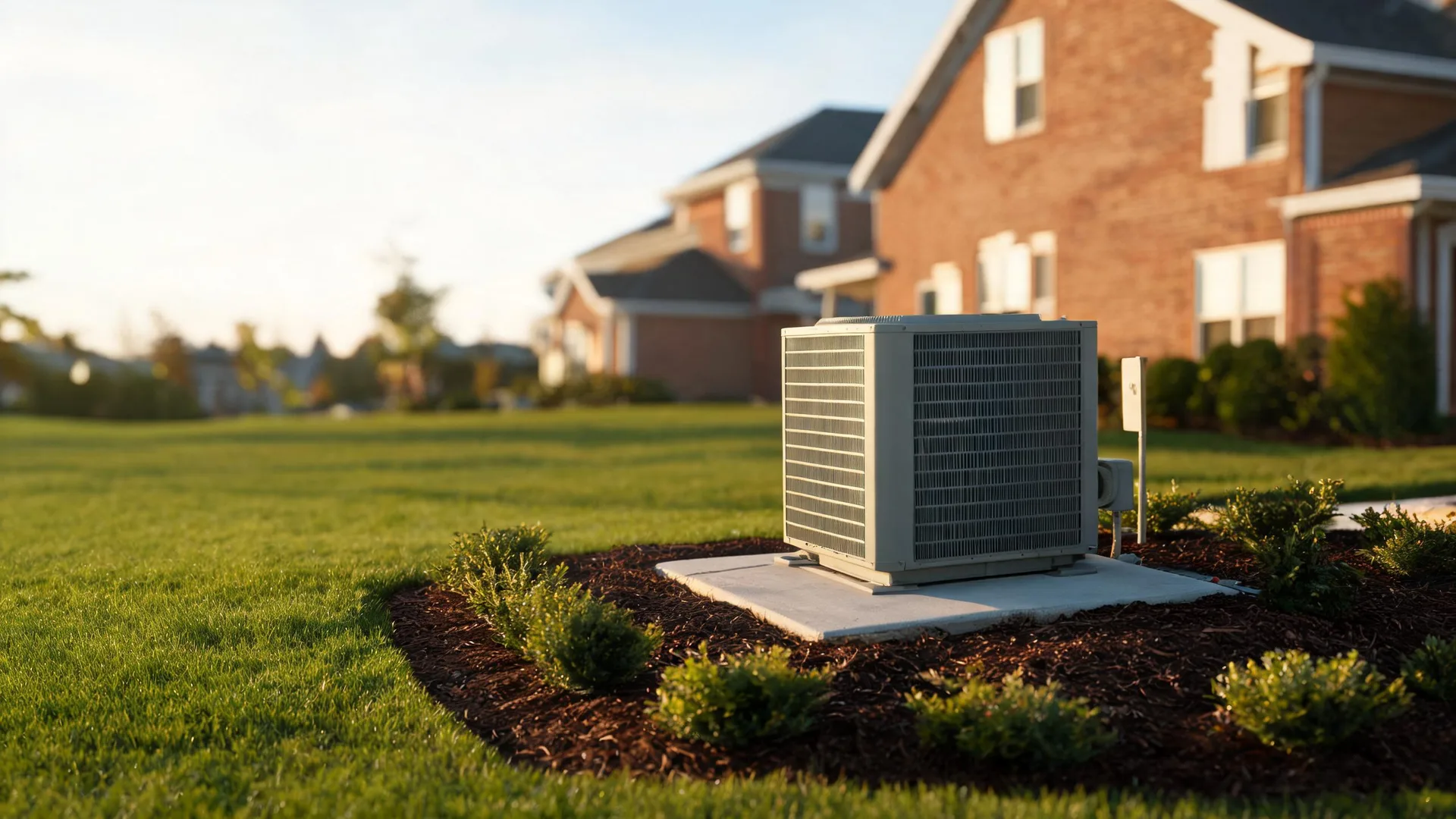
A gray outdoor HVAC unit mounted on a concrete pad beside a house with gray lap siding and a stone foundation.

Put it on a yearly schedule

A heat pump checked every year runs that way for its whole life, not just the first one. Have this year's check added to the calendar now, same month, so it's not something that only happens when the weather reminds you.

The reversing valve sticks

A heat pump has a reversing valve that switches it between heating and cooling. If it sits unused or collects grime, it can stick in one position. Without a check, you might not find out until the day you need the other mode and it won't switch.

The coil loses its grip on heat

Dirt and grime on the outdoor coil cut down how well it can pull heat from the air or push it out. The compressor has to run longer to make up for it, and a compressor that runs long and hot wears out sooner. A clean coil is what lets the whole system work the way it was built to.

A heat pump only moves as much heat as its airflow allows, and the filter is what controls that. A clogged filter starves the indoor coil. In heating mode that coil is working hard to give up what little heat it holds, so a weak airflow makes the system run longer to keep up. In bad cases the coil ices over and stops working altogether. The outdoor coil has the same problem in reverse. Caked on dirt or matted grass clippings keep it from pulling heat out of the air. Then there's the drain. A heat pump pulls moisture out of the air same as an air conditioner does, and that water has to go somewhere. A clogged condensate line backs up, and that water ends up where it shouldn't, sometimes in the system, sometimes on the floor.

A proper tune-up starts with the refrigerant charge. Too little and the system works harder for less heat or less cooling. Too much and it can wash oil out of the compressor. A tech checks pressures and temperatures against what the manufacturer specifies, not a guess. The electrical side gets checked too. Contactors, capacitors and wiring wear down over time, and catching that wear before it fails outright is the point of the visit. The outdoor fan motor and compressor get checked for amp draw, since a motor pulling more current than it should is a motor on its way out. The thermostat gets checked as well. A heat pump that isn't calling for the right mode at the right time will lean on backup heat strips when it doesn't need to, and that's wear the system didn't have to take on.