Two white Southern-style homes with wraparound porches lit by landscape lighting at night, flanked by live oak trees hung with Spanish moss.

Heat Pump Maintenance in Belle Chasse, LA

Tell us about the job

Takes about a minute. No obligation.

Tune-up, service, or cleaningHeat PumpPlaquemines Parish, LA
Step 1 of 2

What ZIP code is the job in?

The signs are easy to miss at first

A heat pump losing its edge doesn't usually stop working, it just works harder than it should. The air from the vents feels a little cooler in winter or a little warmer in summer than it used to. The outdoor unit runs longer to hit the same setting. Frost builds up on the outdoor coil and doesn't clear during the defrost cycle. None of this looks like an emergency, so it gets ignored until the system can't keep up at all.


A check catches what a glance can't

A technician on a regular visit checks refrigerant charge, cleans the outdoor coil and tests the reversing valve before any of that shows up as warm air or a short cycle. Low charge that goes unnoticed wears on the compressor. A dirty coil makes the whole system run longer for the same result. Catching these on schedule keeps the system running the way it was built to, instead of waiting for it to tell you something is wrong.

A dirty filter chokes airflow across the indoor coil, and the system can freeze up or short cycle trying to push air past it.

Checking the filter, both coils and the condensate drain is what keeps a heat pump moving the air it's rated for, in both directions, all year.

Here, cooling starts in April. Have the heat pump checked in March.

Cooling runs April through October
Heat runs December through February
Power costs 11.73 cents a kWh statewide
One visit a year is enough for what this parish throws at it33 severe weather events hit Plaquemines Parish between 2015 and 2024.

Half the homes in Plaquemines Parish were built in 1997 or later, so if your heat pump came with the house, there's a good chance it's not an old unit. That matters for what a yearly check can do. Fewer hours on the compressor and the reversing valve means a technician is more likely to catch a small problem, like a low charge or a valve that's just starting to stick, before it turns into wear that can't be undone. Mobile homes make up more than a quarter of the housing here, and a heat pump on one works the same as any other, so the same visit applies, just make sure the ductwork and connections get checked along with the unit. A system still early in its life holds up to a yearly check better than one already worn down. Keeping it that way is the point.

Book it before the season

It starts running hard in the first month of the season here. Book the check the month before.

Find a contractor
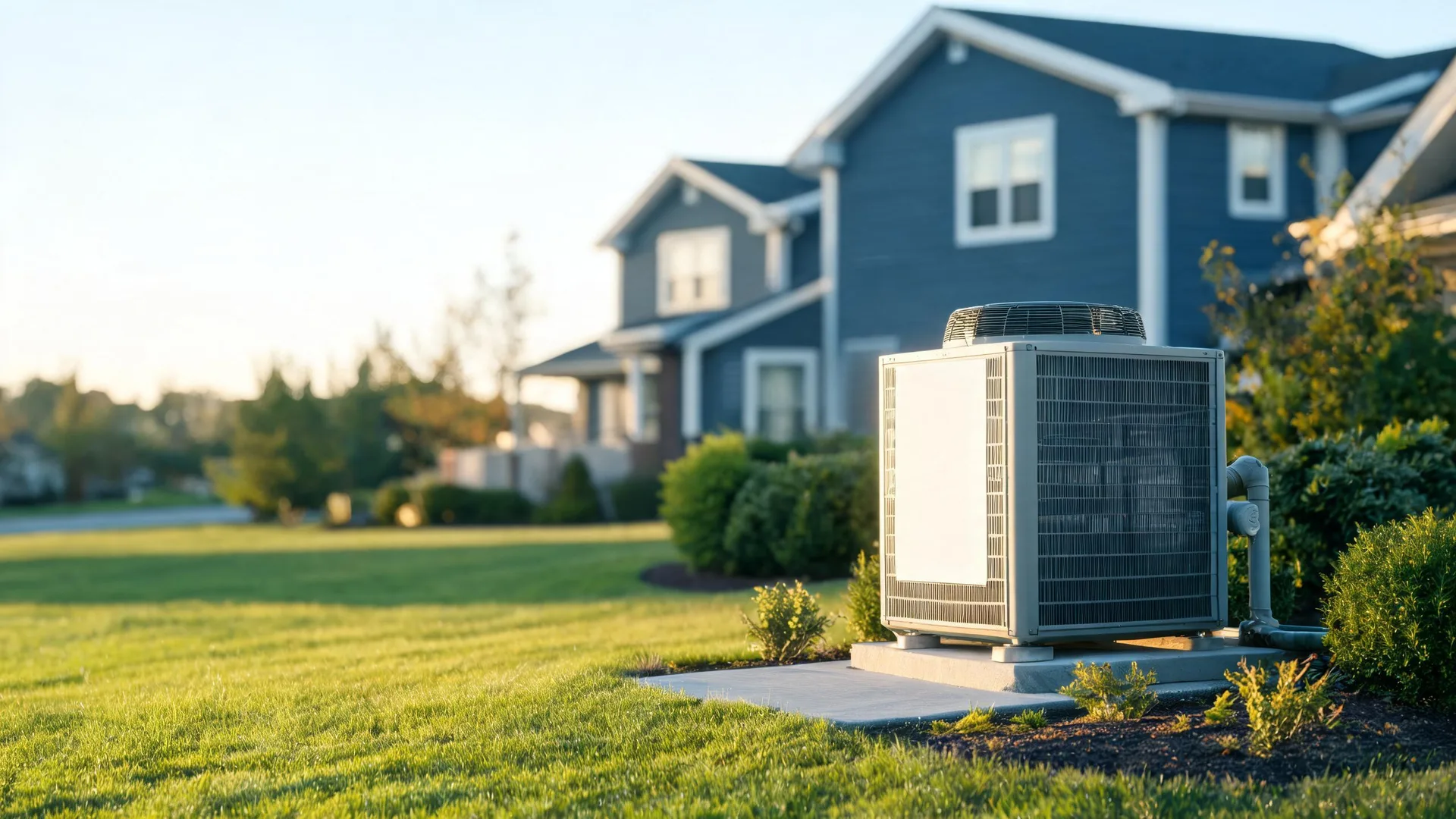
A gray air-source heat pump mounted on a concrete pad next to a house with gray vinyl siding, surrounded by gravel and flanked by green shrubs and white hydrangea flowers.

What's wearing without tripping anything

A heat pump runs in both directions, so the parts that wear don't get a season off to begin with. A tune-up catches the wear while it's still small. Contacts inside the outdoor contactor pit a little more each time the compressor cycles on. A capacitor loses some of its charge over time, and the compressor it starts draws harder on a weak one without tripping anything. A fitting can seep refrigerant slowly enough that nothing shuts off, it just shows up as a pressure reading that's a little low. None of this trips a breaker. It just means the compressor works harder to do the same job, cycle after cycle, and a yearly check is what catches it while the fix is still small.

A quick visit checks that it runs

A fast tune-up gets the system blowing cold or warm and calls it done. It confirms the heat pump turns on, moves air and the thermostat talks to it. That tells you the system works today. It doesn't tell you what shape it's in.

A thorough one checks why it runs well

A full tune-up measures refrigerant pressure against what the system is rated for, checks the temperature split between the air going in and the air coming out, and tightens or cleans the electrical connections at the contactor and capacitor. It also runs the system in both heating and cooling to test the reversing valve under load, not just at idle. That's the difference between a system that works and one that's still working the way it's supposed to.

Between visits, the filter is the one thing worth checking yourself. Pull it out, hold it up to a light, and if you can't see through it, swap it or wash it depending on the type. Keep the area around the outdoor unit clear too. Leaves, grass clippings and anything stacked against it block the airflow the coil needs to work. After a hard freeze, look at the outdoor unit and make sure it isn't buried in ice that isn't clearing on its own between defrost cycles. Inside, keep furniture and rugs off the supply and return vents so air can actually move through the rooms. None of this replaces a technician checking refrigerant charge or the reversing valve, but it keeps the system from working against itself in the meantime.

A tune-up is a fixed list, not a once-over. The technician checks refrigerant charge against the system's rated pressure, inspects the reversing valve, and cleans the outdoor coil so it can actually reject or pull heat the way it's supposed to. The indoor coil gets checked too, along with the blower wheel, since a coated wheel moves less air even when the motor runs fine. Electrical connections at the contactor and capacitor get tightened, because a loose connection generates heat right at the point least able to handle it. The condensate drain gets cleared, since a clogged one backs up and shuts the system down on a safety switch rather than a real failure. Last, the system runs in both modes, heating and cooling, because a reversing valve that works fine in one direction can stick in the other.